
April Program Report: Snow Crystal Photomicrography, presented by Kathy Hrechka
by Andy Thompson, MSDC Secretary
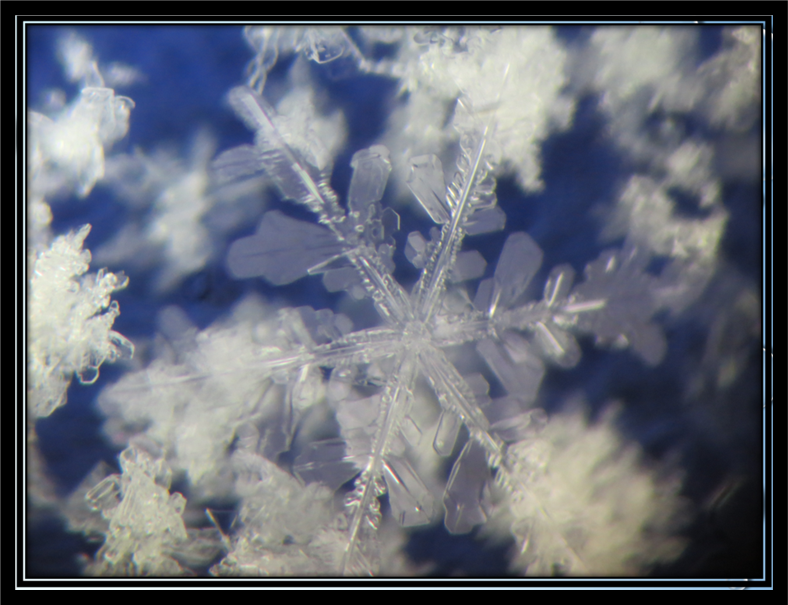
Quick Overview of Kathy’s Presentation
Our April program presenter, MSDC member Kathy Hrechka, shared the fruit of her more than 11 years of research photographing and documenting snowflake crystals collected at her home in Alexandria, VA. Her passion to study the specific mineral “ice” stems from her decades of studying and collecting the wider universe of microminerals.
Kathy’s presentation shared how she collected the ice crystals, used her microscope to examine them, and experimented with multiple cameras to best capture the complexity and beauty of the micro ice crystals. Her presentation shared the challenges she encountered which are unique to studying snow crystals given they are delicate and readily melt. By sharing a hundred slides, she documented the wide diversity of intricate patterns associated with the crystals’ formation specific to the temperature and humidity present at the time of the crystals’ formation. Their shapes included stellar dendrites, columns, capped columns, plates, stellar plates, needles, rime, graupel and more.
Kathy credited her interest in snow crystals in part to her growing up playing in beautiful snowy Wisconsin and rock collecting during her early years. For the origins of the scientific study of snow crystal photomicrography, she referenced the late 1800s and shared the leading research currently being published in the early 21st century.
Introduction
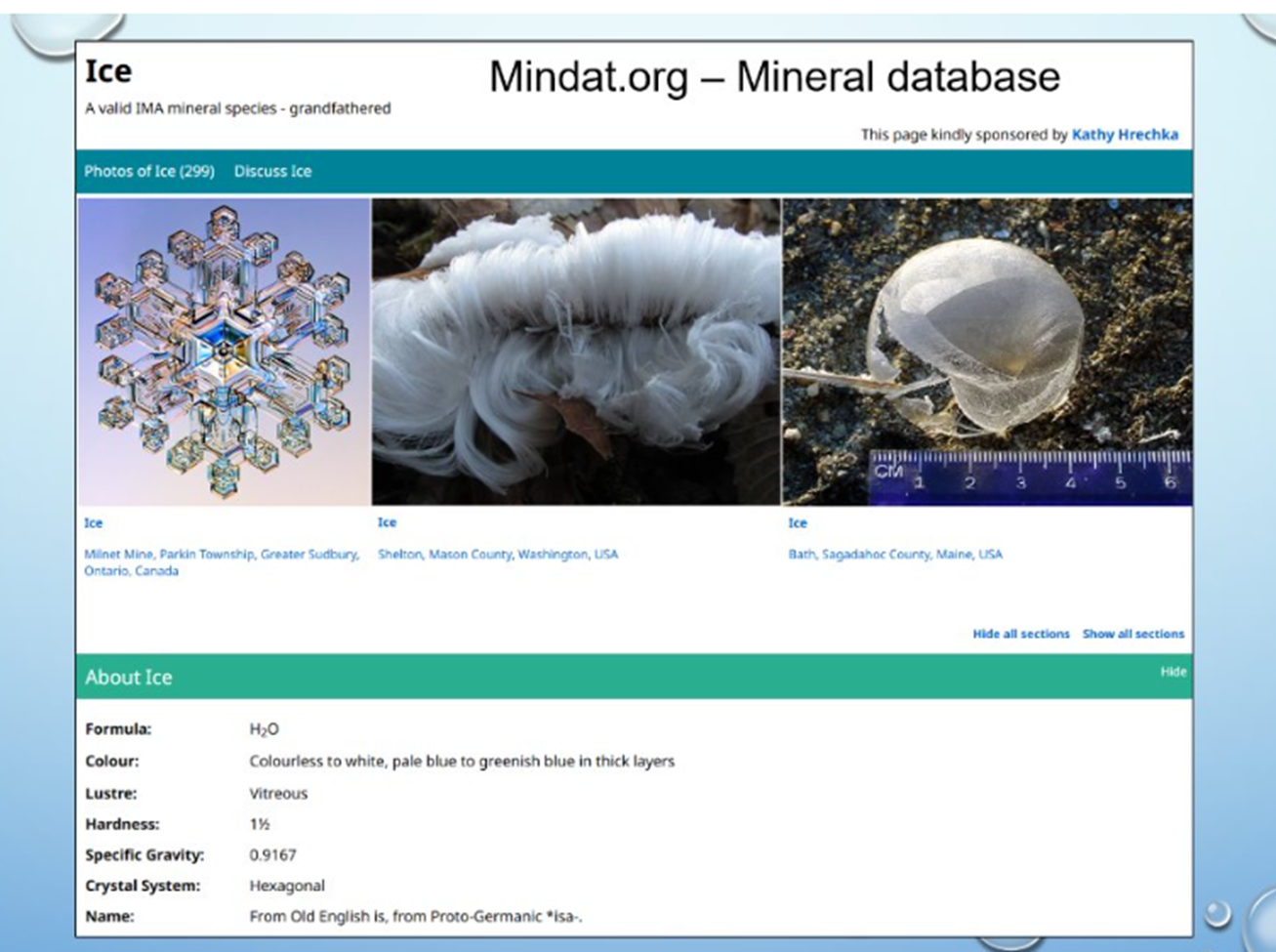
For many years, Kathy has been passionate about her research with ice crystals. She noted it began, in part, because of her hearing sounds of clinking needles while walking during a gentle snow fall. That curiosity turned into a commitment. She began her presentation by calling attention to Mindat.org, the world’s largest, free, non-commercial online database of minerals and their localities. Its entry for the mineral “ice,” shown in the slide below, is “kindly sponsored by Kathy Hrechka.”
Also, as part of her ongoing commitment to sharing research information about this little-known realm of ice microcrystalography, in 2019 she contributed an abstract of her research that was published in the Rochester Mineralogical Symposium Technical Session shown below.
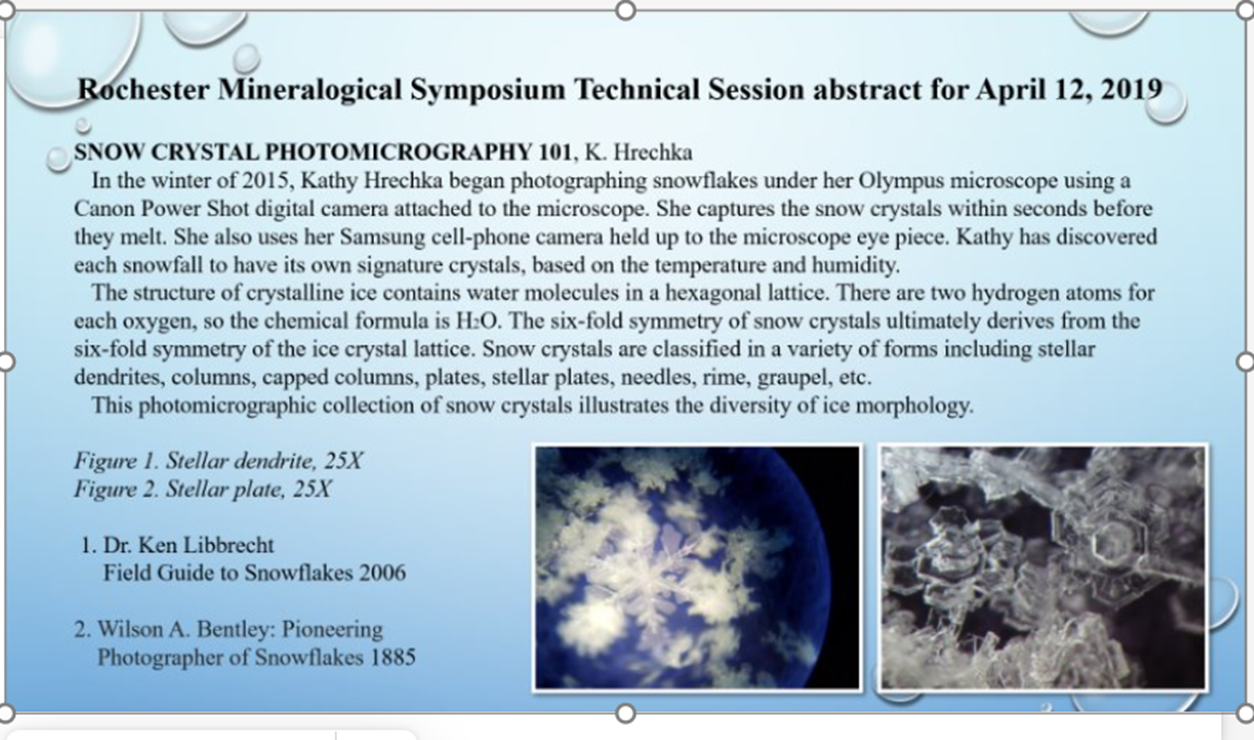
The above text gives a concise overview of her earlier work which text she read to her MSDC audience. It also shows two of her 2019 images of ice crystals, a stellar dendrite (left) and stellar plate (right). Importantly, it also names the first documented ice crystal researcher, Wilson “Snowflake” Bentley who, on his Vermont farm in 1885, took the first photo of ice crystals.
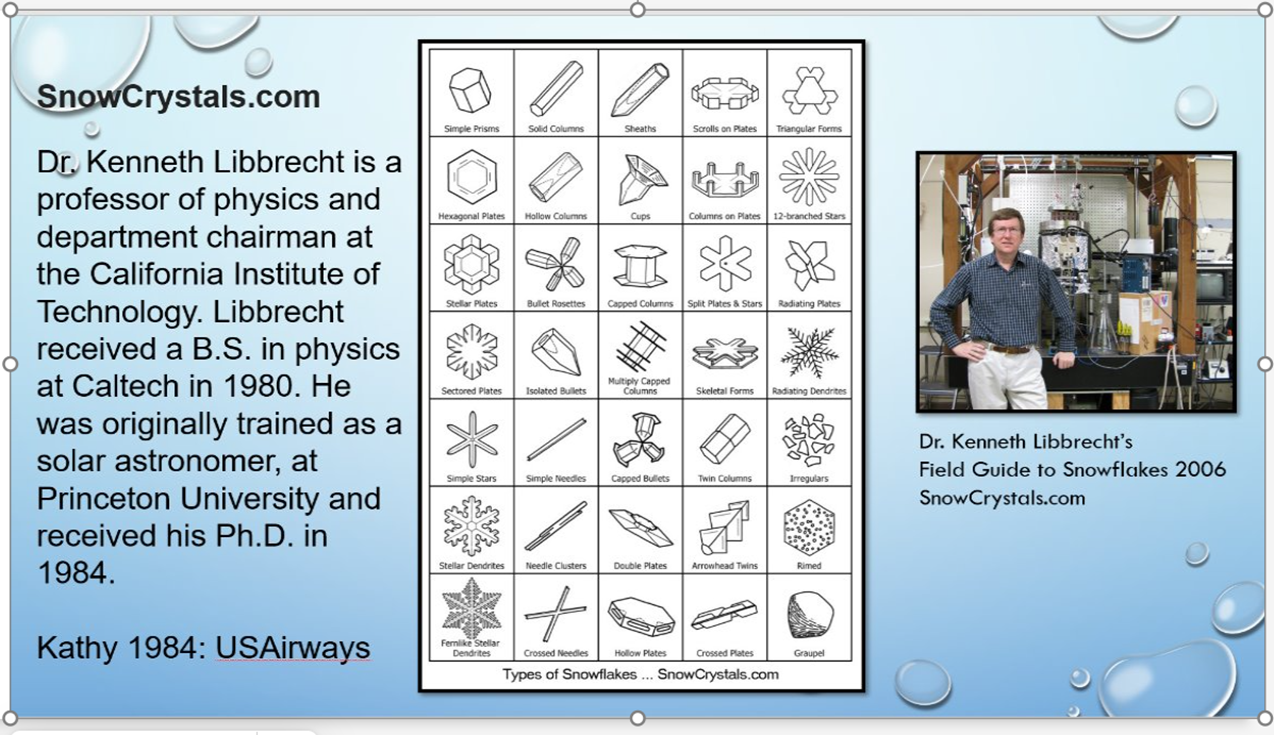
The second name on the slide is that of Caltech professor of physics Dr. Ken Libbrecht who in 2006 wrote the field guide to snowflakes and, later, more than a half a dozen additional books. Together, his publications provide thousands of photos and scientific analyses of the variables that control ice crystal formation from their earliest originating seed stage (nucleation), through their diverse crystal formations and to their melting demise, as Kathy shared during her presentation.
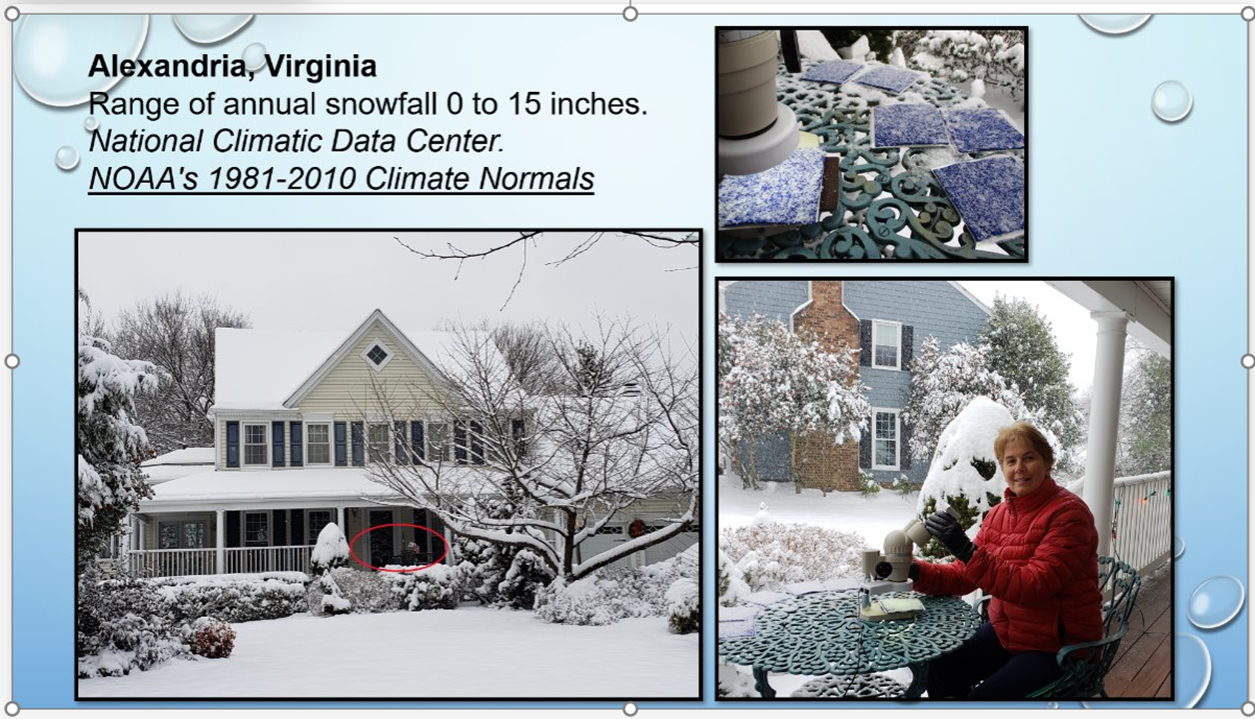
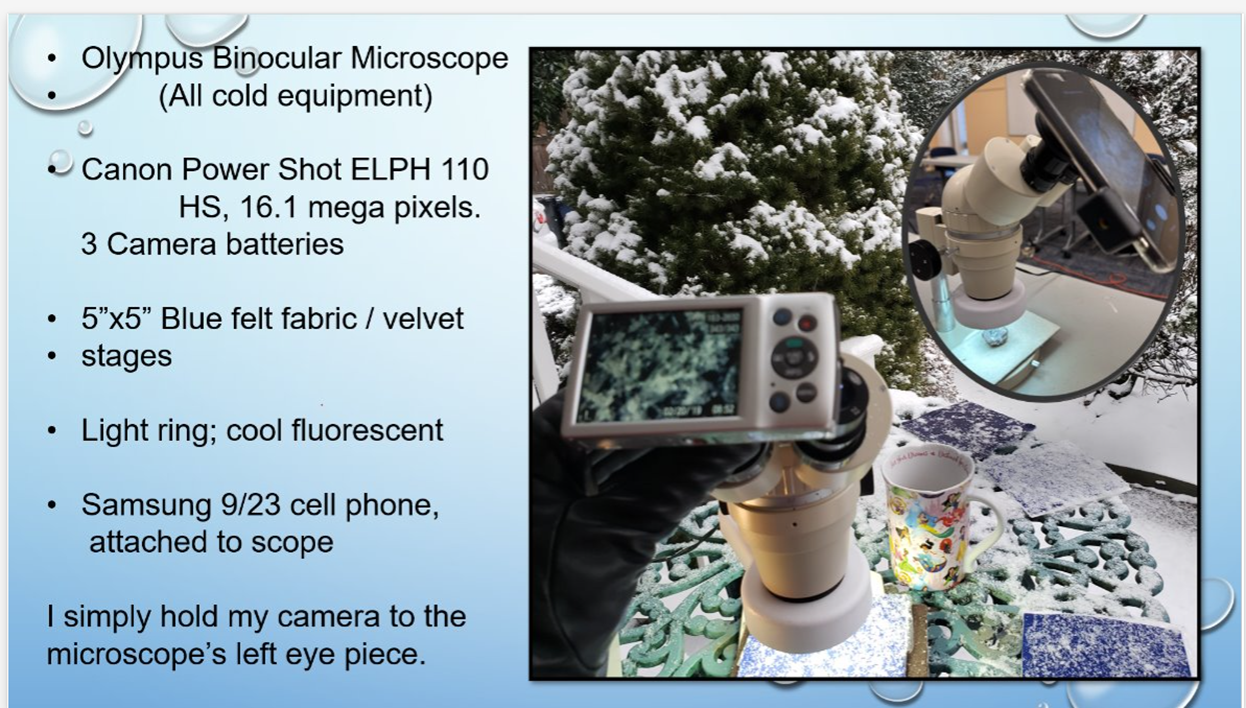
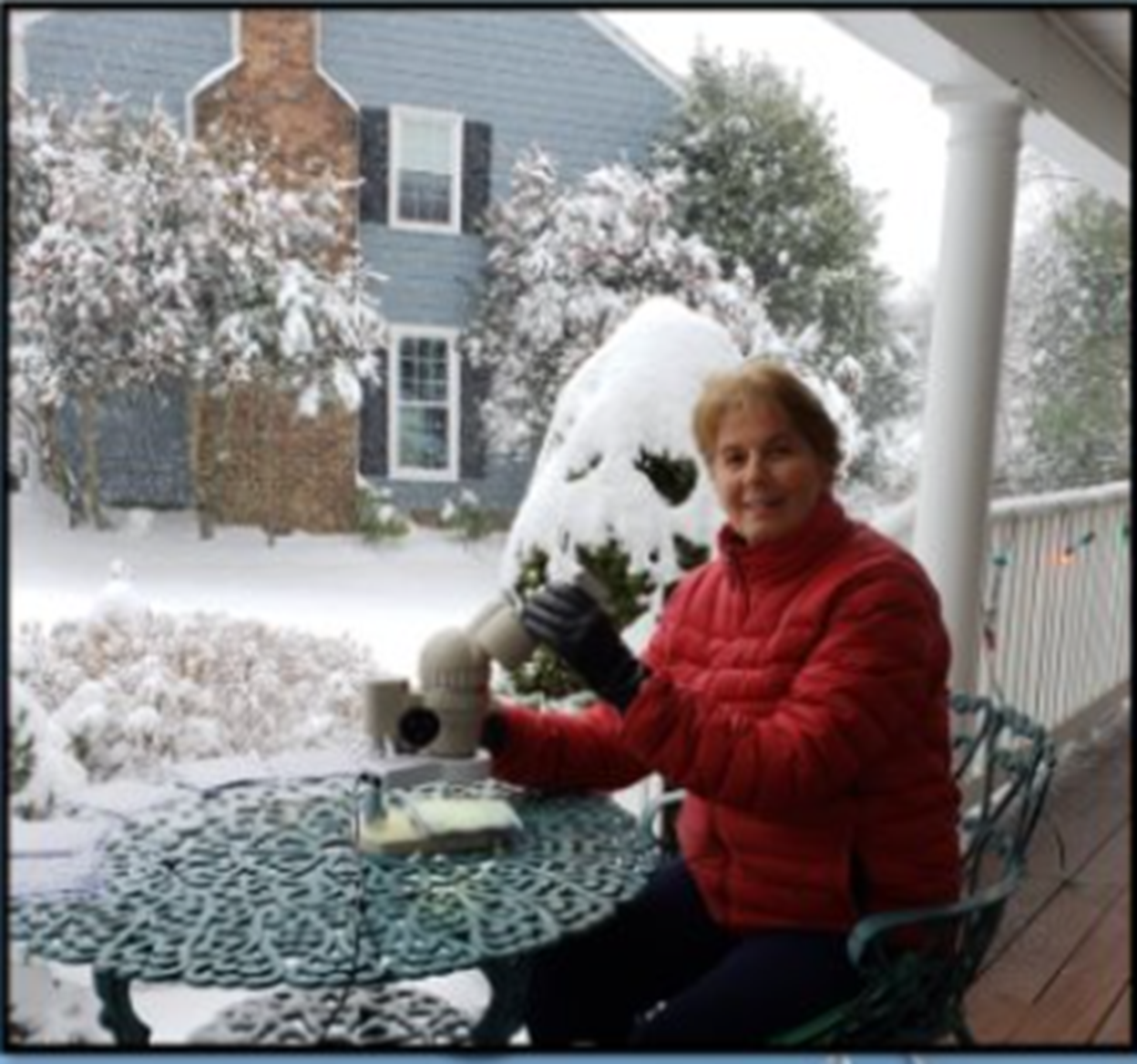
Kathy’s “lab” and photo studio was, in part, her front porch, which in winter is where she captured her ice crystals. In the chilly air outside, she worked with her microscope, cameras, and other equipment to capture and mount ice specimens and to take their photos.
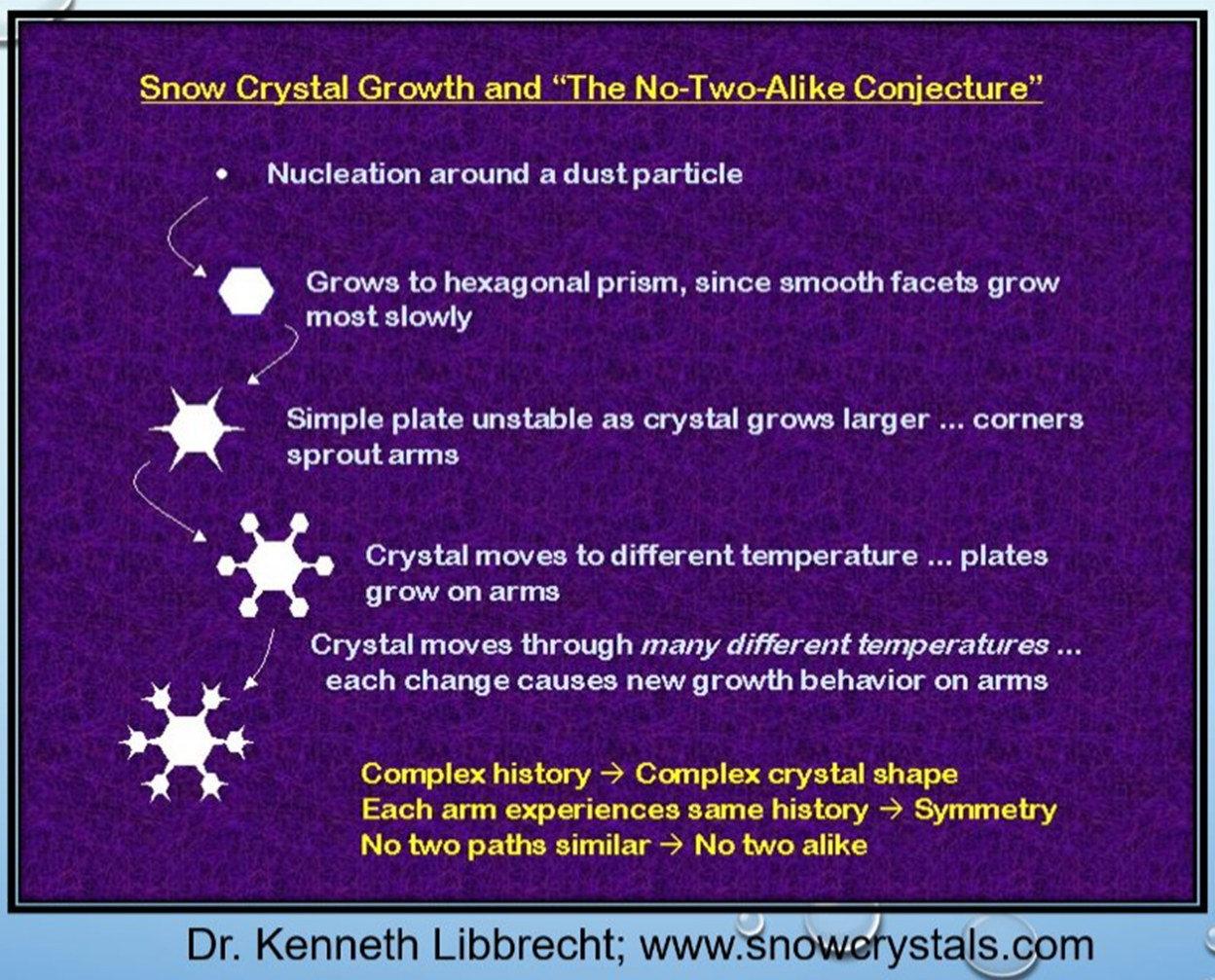
The Growth of Snow Crystals
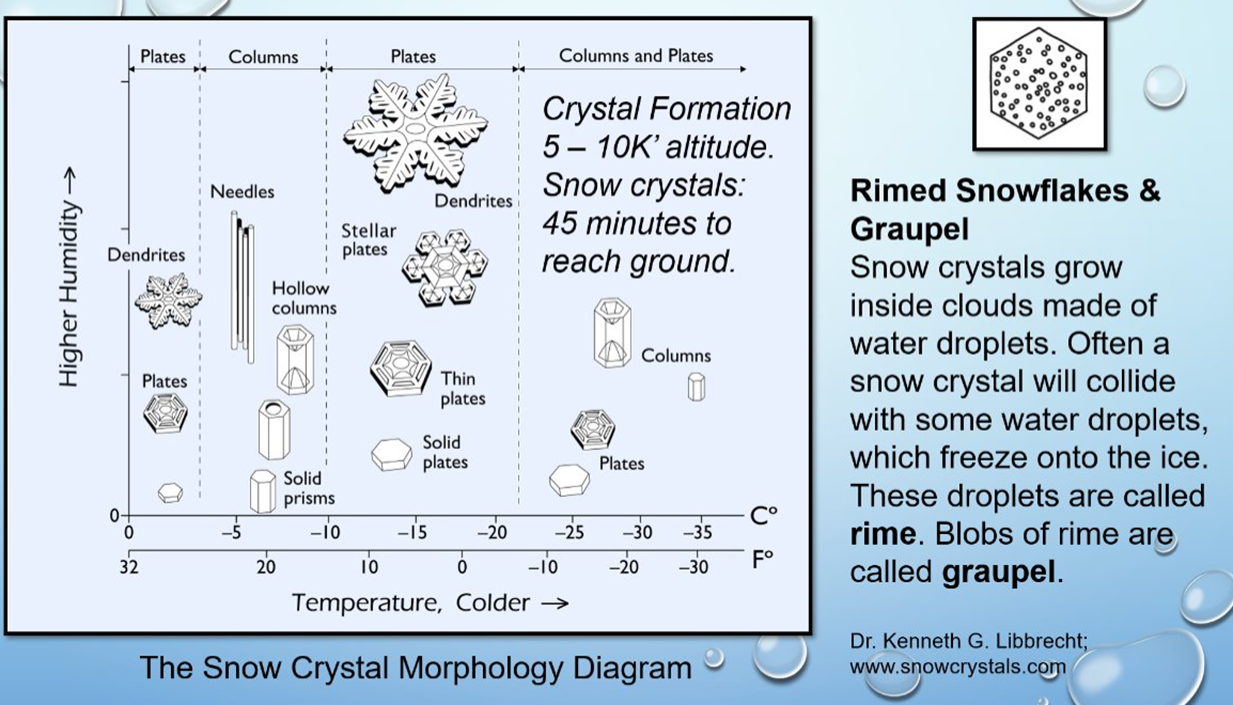
Kathy’s presentation shared her experiences with collecting and working with the temperature sensitive ice crystals. She used Professor Libbrecht’s published findings to document the specific dynamics of the initial crystal formation, and their morphing into the diverse plates, facets, arms, tubes. She said it can take 45 minutes from the time of their high-altitude formation until people see them as falling snow.
Two of the most prominent variables that determine the shape of the crystals are temperature and humidity, as Libbrecht documented below.
Kathy showed the amazing diversity of 35 shapes of snow crystals illustrated in the slide below.
Reader: Due to a technical glitch we were initially unable to capture Kathy’s presentation on video. Also, we cannot in this report show all of her slides. The slides in this synopsis were chosen to give the reader a sense of the role the two main variables of temperature and humidity play in the photographic results. Readers interested in seeing all of Kathy's slides used in her presentation can find them in the link here: Snow Crystals K Hrechka.pptx
Kathy said it was “quite exciting” to see in her microscope an up-close image of a capped-column crystal. Overcoming the many challenges she encountered in her attempts to capture the diverse crystal formations was truly “an adventure.” Her early work began in 2015 with the Thor snowstorm.
As noted in the middle image of the slide below, when a descending ice crystal encounters high humidity it results in the “Sectored Plate” picking up additional water which freezes onto the crystal as it descends to Earth.
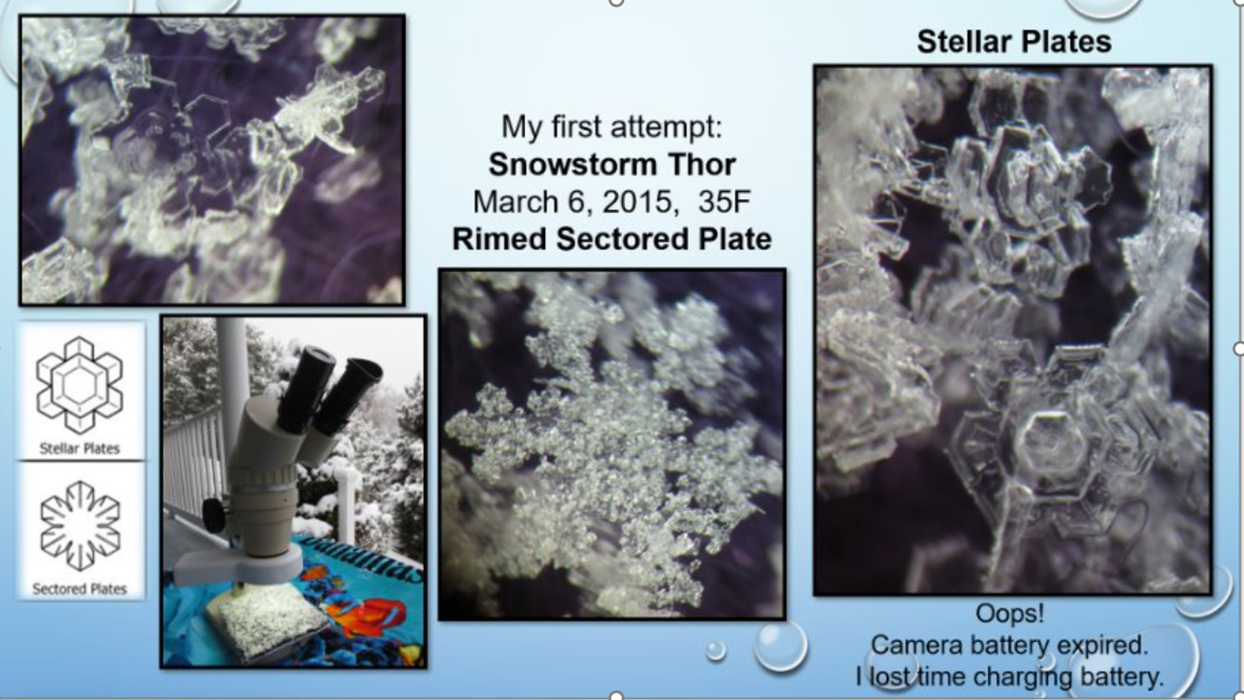
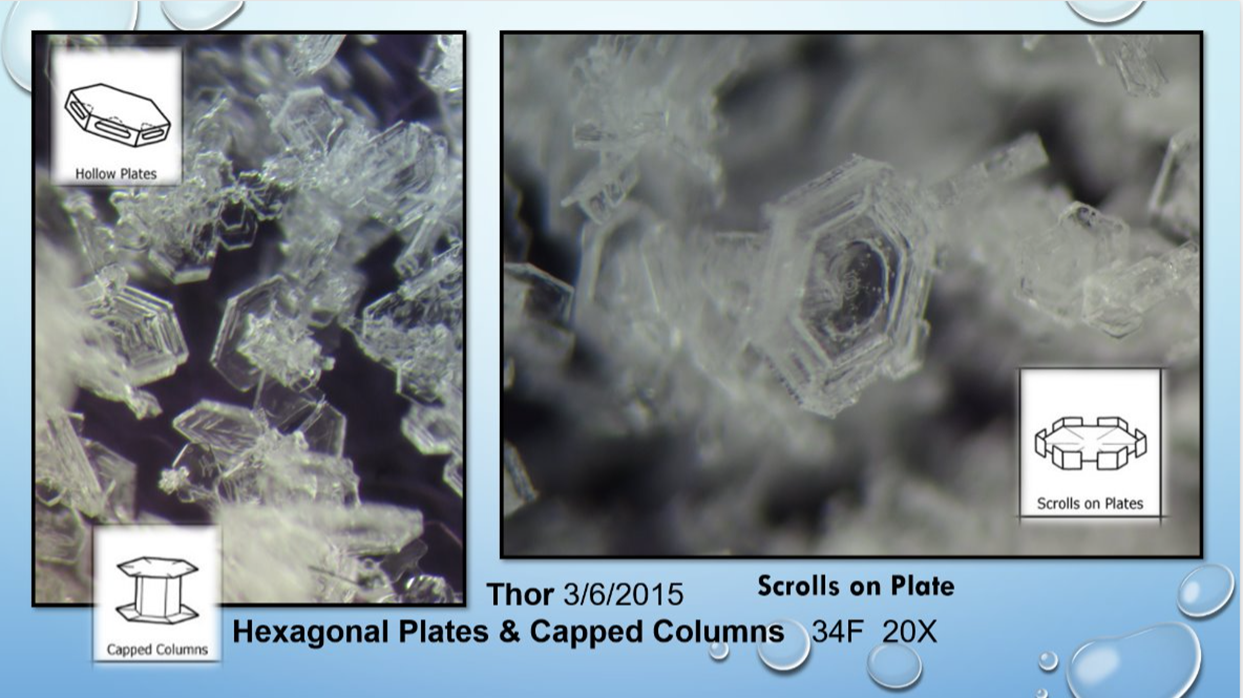
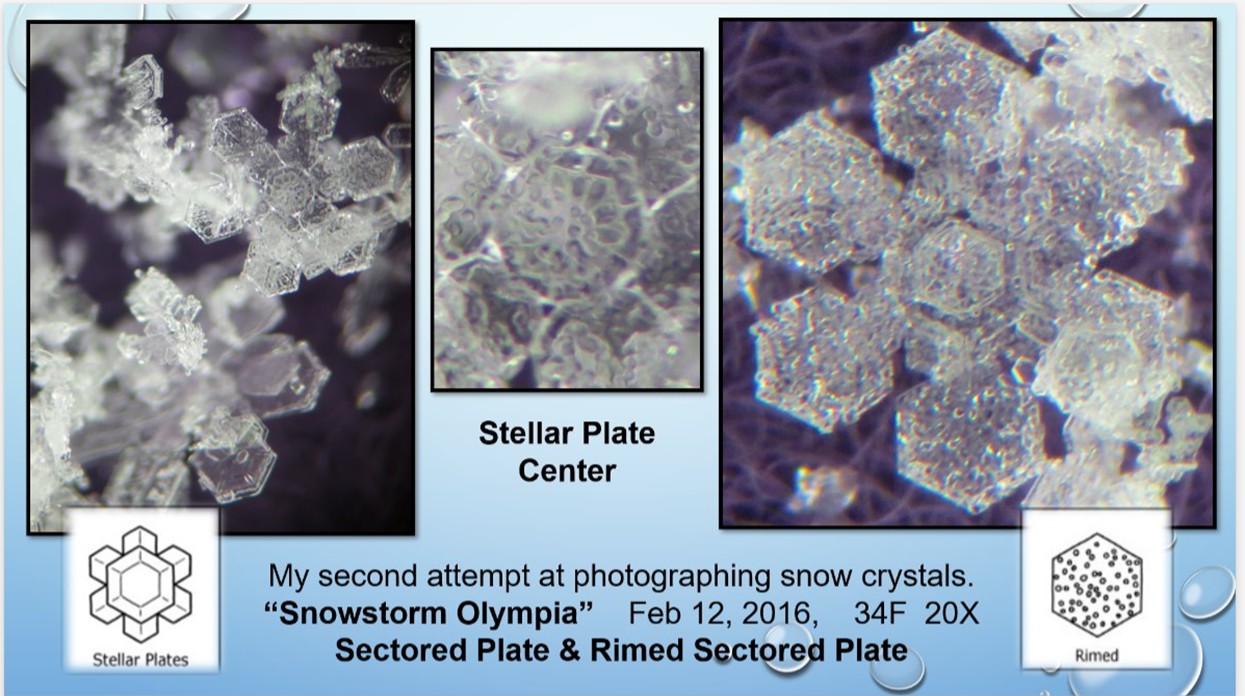
The following two slides provide two images of additional shapes of plates, columns, a sectored plate and rimed sectored plate, respectively.
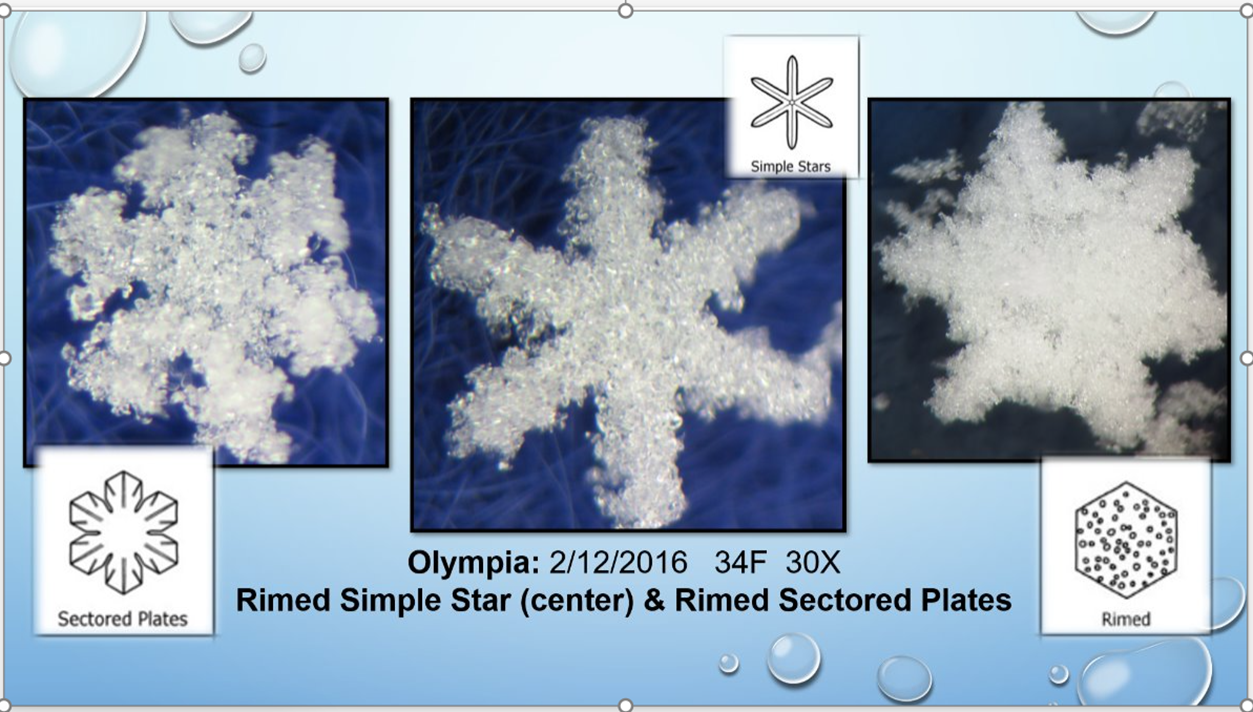
The slide below shows three images which illustrate crystals which formed and experienced high humidity in the clouds resulting in an abundance of rimed, fuzzy, stars and plates.
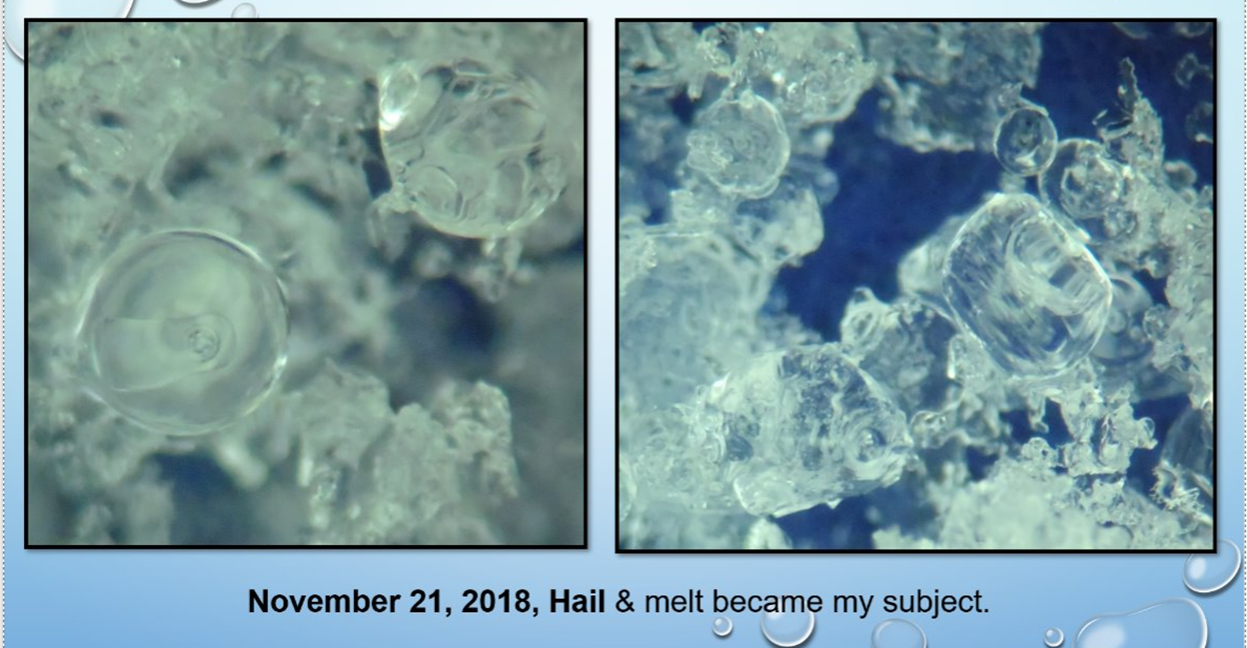
Kathy’s photos below were taken during a later 2018 hail storm and show what happens when the crystals melt and are on their way to becoming water.
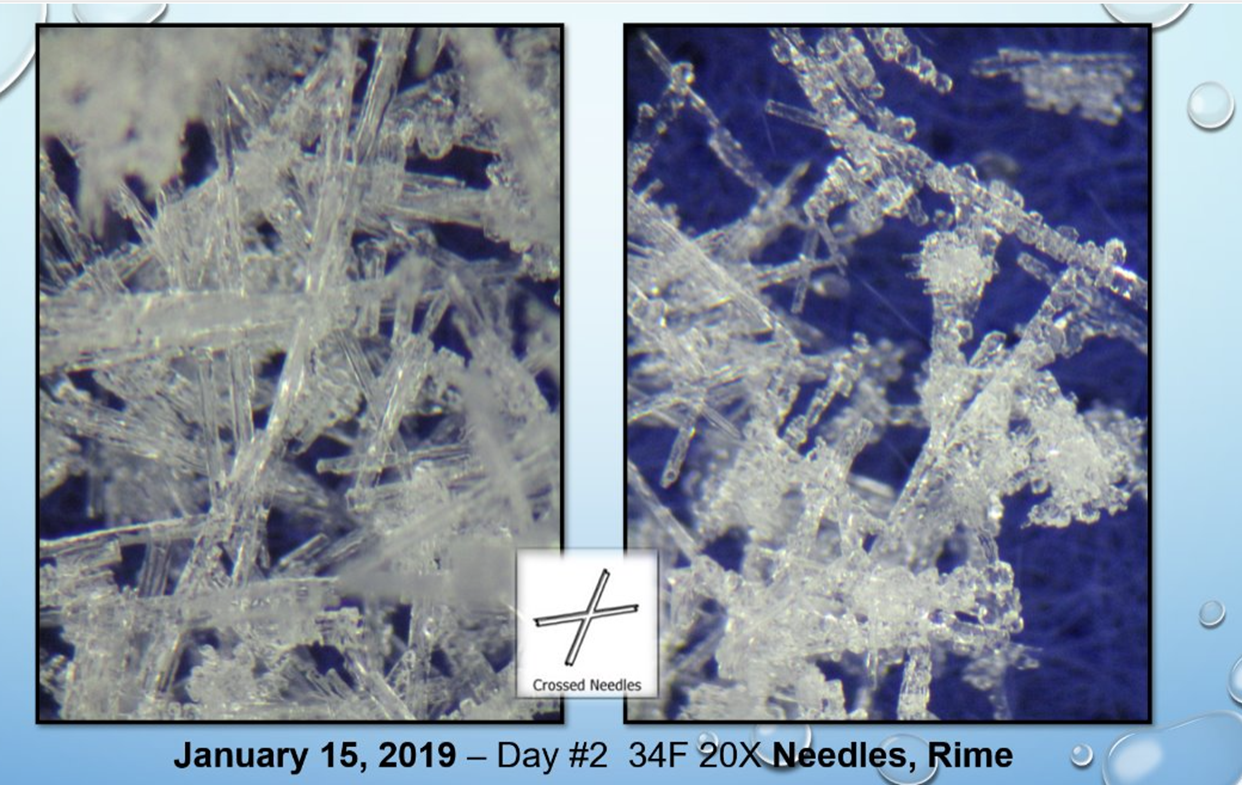
Her research during a 2019 January snowfall provided excellent images of needles and rime.
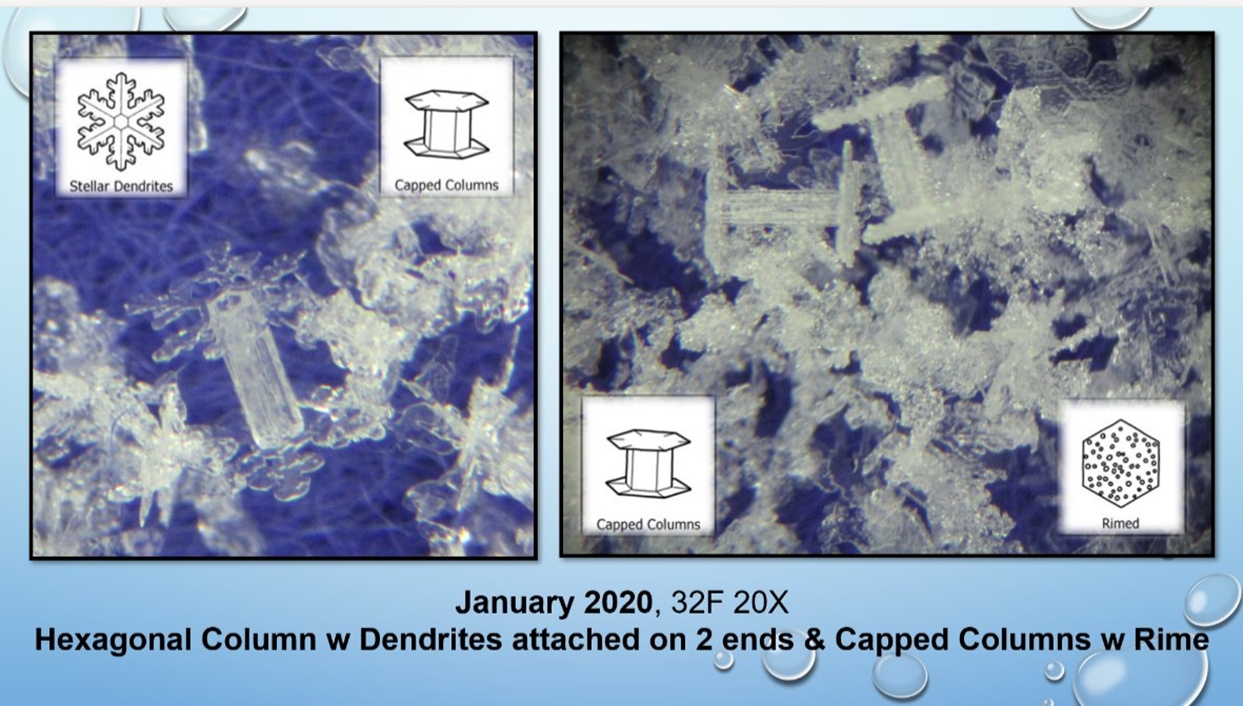
The following year another snow fall allowed her to capture images of crystals with hexagonal columns with dendrites and, in the photo on the right, crystals with capped columns with rime.
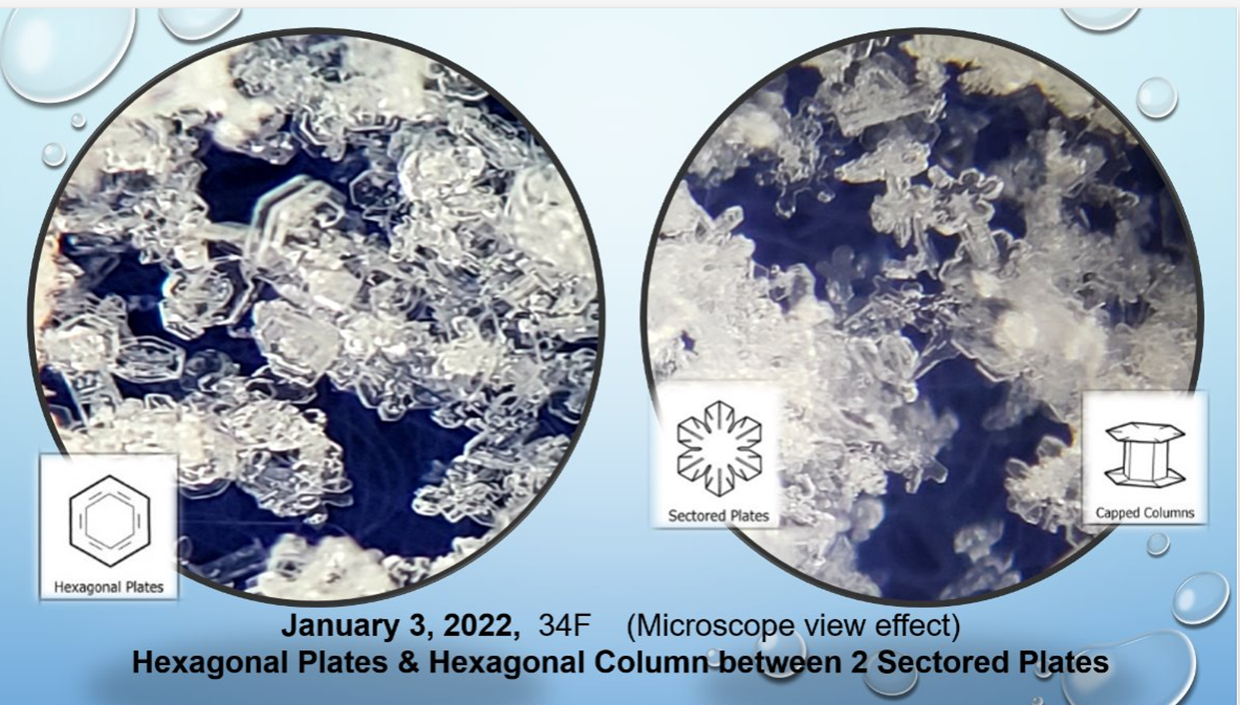
A January 2022 snowfall provided Kathy with an opportunity to capture a “microscopic view effect” of hexagonal plates and columns between 2 sectored plates.
The December 5th storm of 2025 provided an opportunity to work with a favorable 29°F temperature and 80% humidity. The colder temps gave Kathy more time to set up the crystals for photographing without fear of them quickly melting or having to hold her breath for fear of causing them to melt.
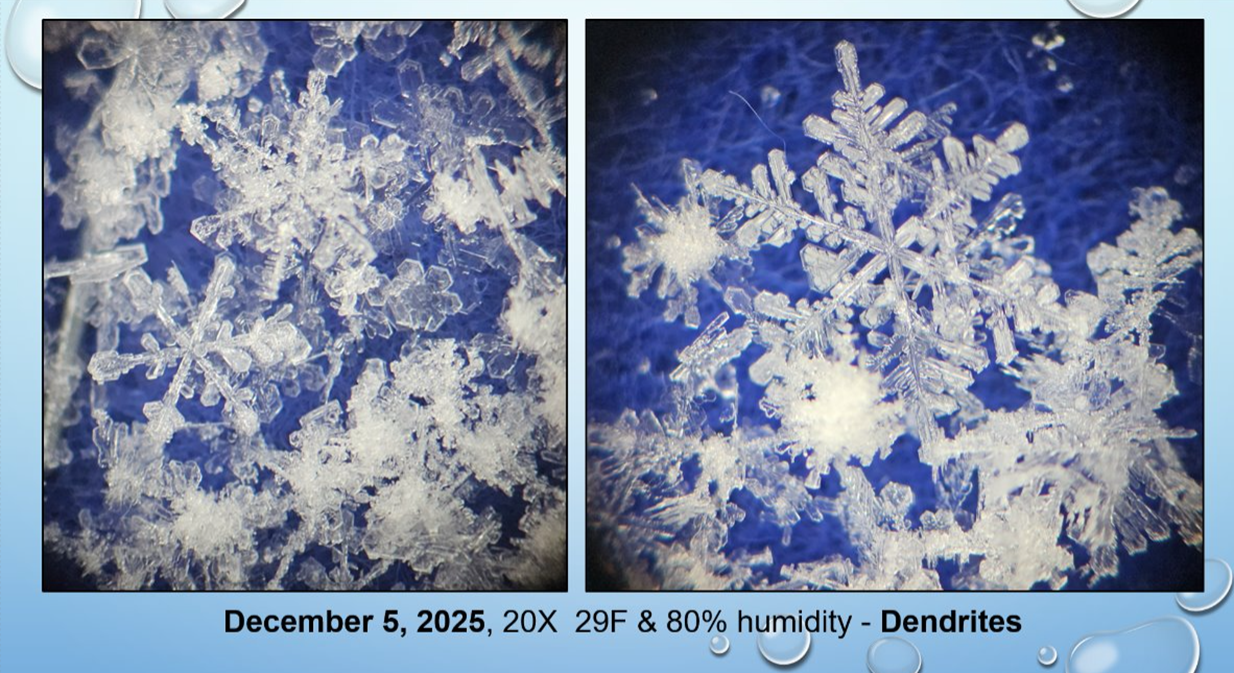
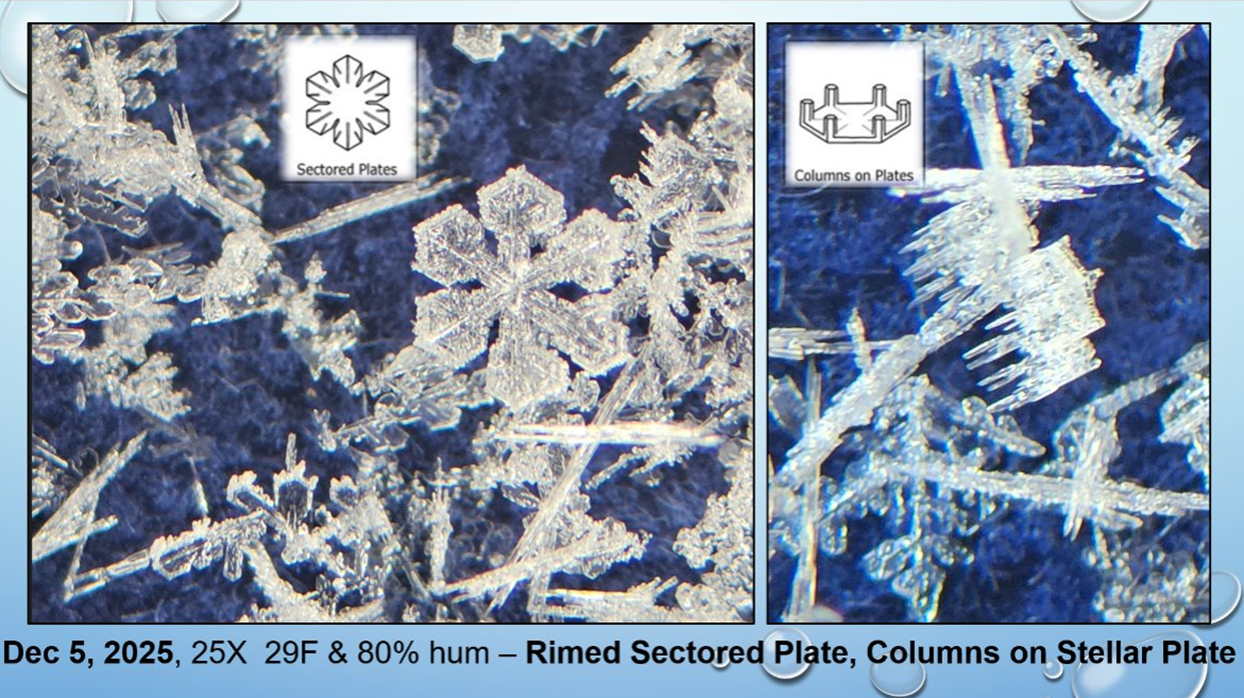
The same storm allowed her to capture the interesting rimed sectored plates and columns on stellar plates shown below.
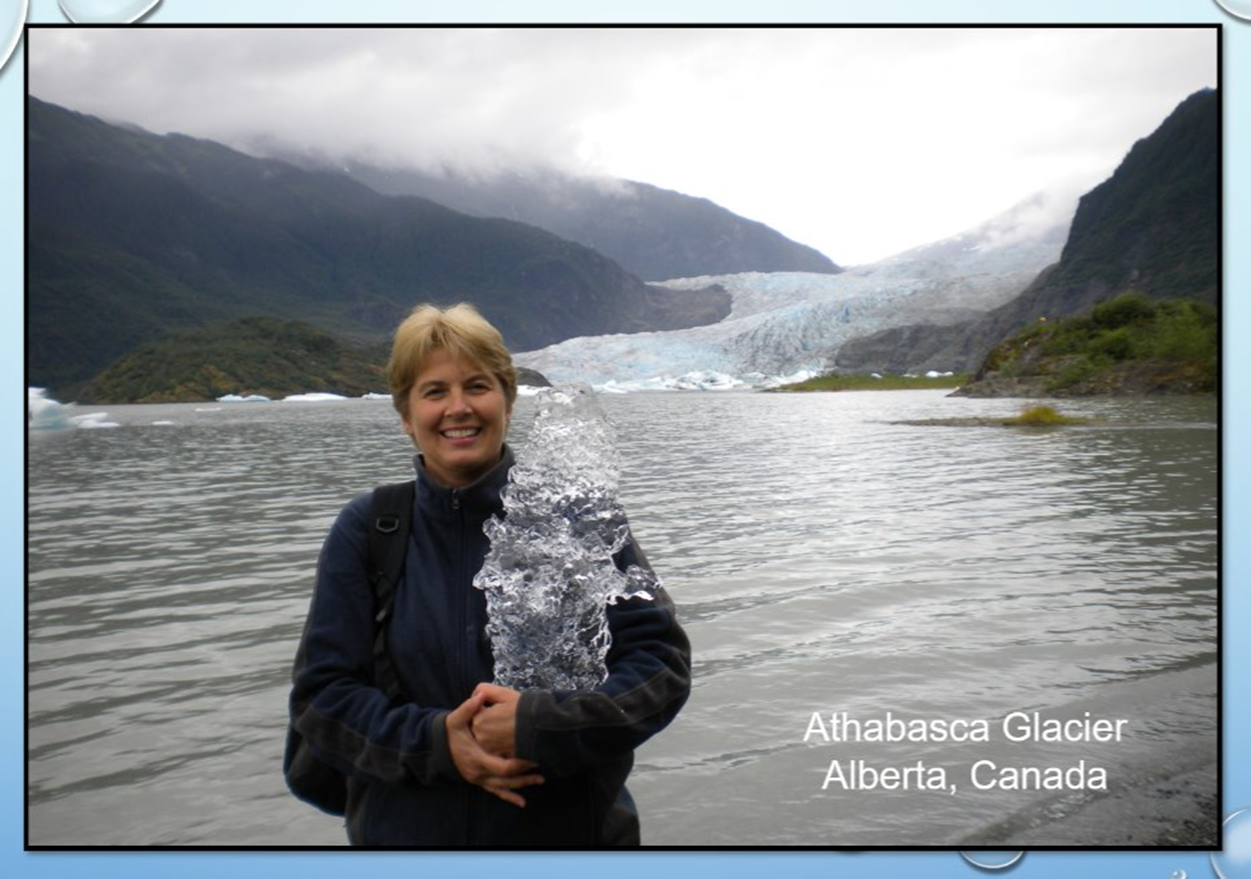
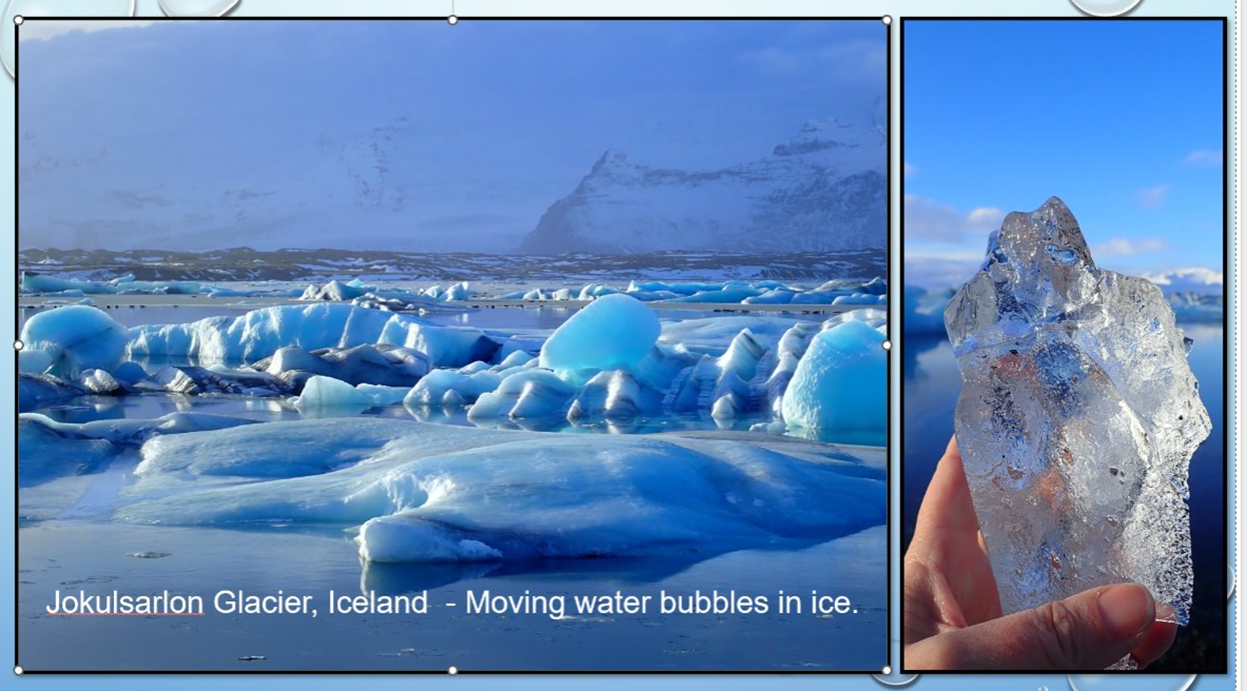
Along with her research conducted at her home lab in Alexandria, Virginia, she also took advantage of travels abroad, including to Alberta, Canada and to a glacier in Iceland to inspect ice crystals.
The latter visit to the Jokulsarlon glacier allowed her to handle ice (in the image below on the right) with visible inclusions of water bubbles that moved within the ice.
Concluding Remarks
Kathy concluded her presentation with additional references, including to “snowcrystals.com.” That link provided a “snowstorm” of references to additional data, including resolving the question if any two snow crystals are alike (they are).
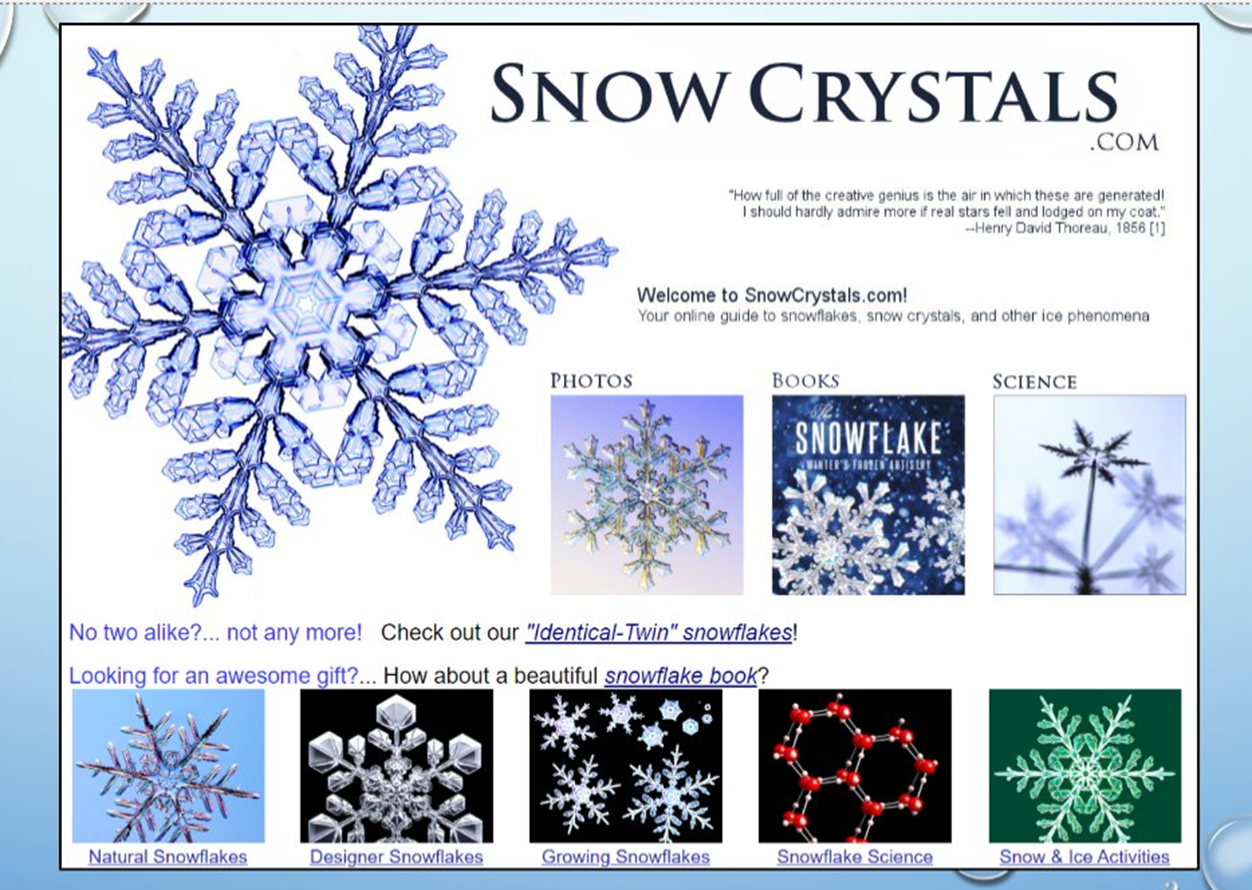
That data-rich link, shown above, was provided by Professor Kenneth G. Libbrecht and contains lots of snowflake information. The site has had over 26 million visits since 1999. If you go there, you will see why Kathy found Dr. Ken to be such a valuable resource.
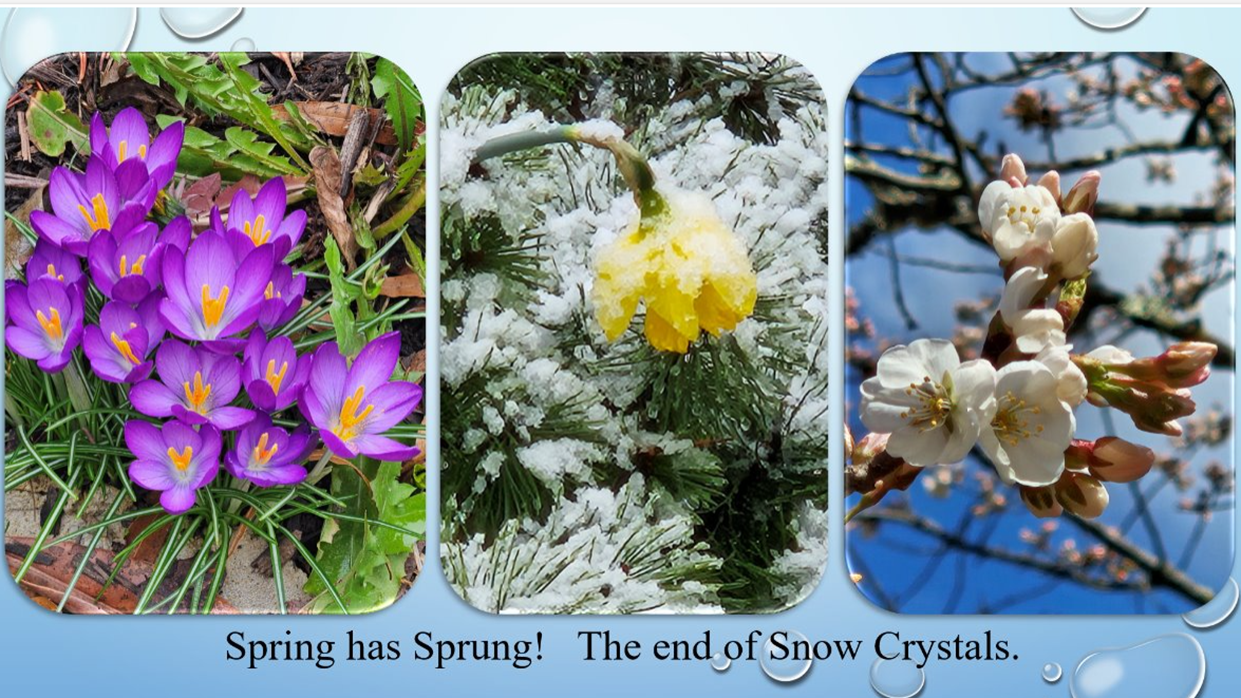
Kathy’s closing slide offered a sign of hope for better times ahead.
Post Script
If time allows, after each monthly presentation, there is often a Q and A session of diverse related discussions. After Kathy’s session, one contribution, from Jamil, stood out as particularly worthy of quoting:
“Kathy is the first mineral collector to figure out how she can get the minerals to come to her, and for free, rather than for her having to go out searching for specimens.”
Readers: When possible, MSDC and its presenters are often able to provide you with a video of our monthly presentations. Due to a technical snafu mentioned above, we were not able to capture Kathy’s April 1 presentation on video. But if we are able to provide it down the road, we will alert our readers and it will show up on MSDC's YouTube channel: Mineralogical Society of DC - YouTube
30