
Bisbee: King of Arizona's Mineral Localities, presented by Les Presmyk
Synopsis by Andy Thompson, MSDC Secretary
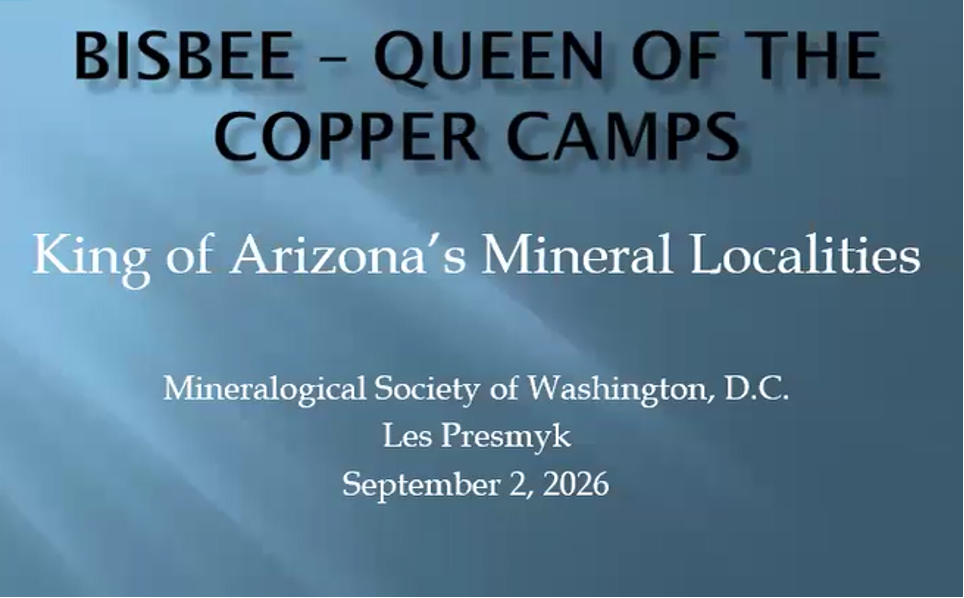
As a life-long mining engineer and mineral collector, Les Presmyk has for 64 years engaged at both levels. He told his MSDC audience: “I have had the honor of being able to share my love for Arizona minerals and Arizona mining history.”
For more than four decades Les served as a mining engineer with several mining companies. Today he is Arizona’s 13th State Mine Inspector and a past president of the Tucson Gem and Mineral Society and the Mineralogical Society of Arizona.
His presentation to MSDC documented the Bisbee District mines’ wealth of copper and its 325 mineral species found to date. This abundance of mineral wealth, he noted, puts Bisbee on a par with Franklin, NJ and Tsumeb, Namibia. Les’ presentation covered:
· The history of Bisbee’s mining industry
· How its extraordinary minerals were formed
· Bisbee’s many mines and their mineral species
Readers, we provide this overview and a few stories and photos from Les’ presentation to encourage you to watch the tape of his extraordinary presentation. His richly illustrated talk, along with Q&A, lasts a little over one hour. You can enjoy it by clicking on the link HERE.
The History of Bisbee’s Mining Industry
Les began his overview of the history of the Copper Queen Mine in Bisbee, Arizona by explaining that its commercial success was highly important in enabling the Arizona Territory to gain statehood. The actual mining, however, began decades earlier with the discovery of a lead outcrop by John Dunn, a U.S. army soldier stationed in the area. Many of the earliest mines were discovered by soldiers because they were among the first Americans to move into the Arizona Territory.
There was some initial legal wrangling because Dunn’s claim initially was not filed in his name but only in the name of his supposed partner, George Warren. Dunn was described by some as the town drunk, and he filed only on his own behalf. Legal arguments ensued and mining production began. Over time, ownership was properly settled.
Later, Dr. James Douglas, a Canadian-born metallurgist working for the Phelps Dodge Mercantile Company of New York, traveled to Arizona looking for domestic copper sources. After buying mining claims at Morenci, a considerable distance from Bisbee, Douglas made a side trip by horseback and stagecoach to Bisbee and purchased the adjoining Atlantic claim. That set Phelps Dodge on course to become one of the largest copper companies in the world.
Eventually, Phelps Dodge brought in Ben Williams and his brother from the mines already established in Michigan’s Upper Peninsula copper country. For the subsequent century the Bisbee copper production boomed, along with mining significant quantities of other metals which Les illustrated below.
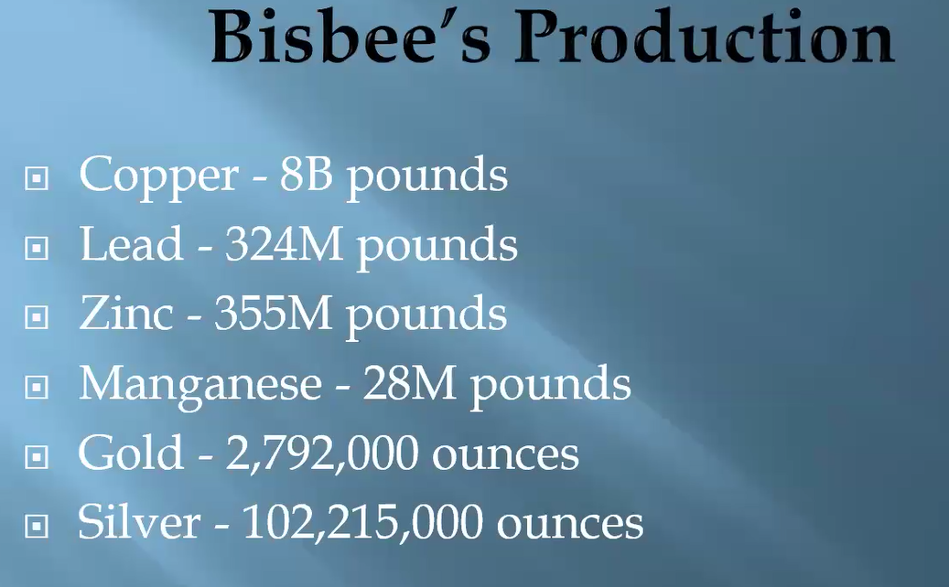
That high level of productivity was when the Copper Queen mine became particularly integral to the district’s future.
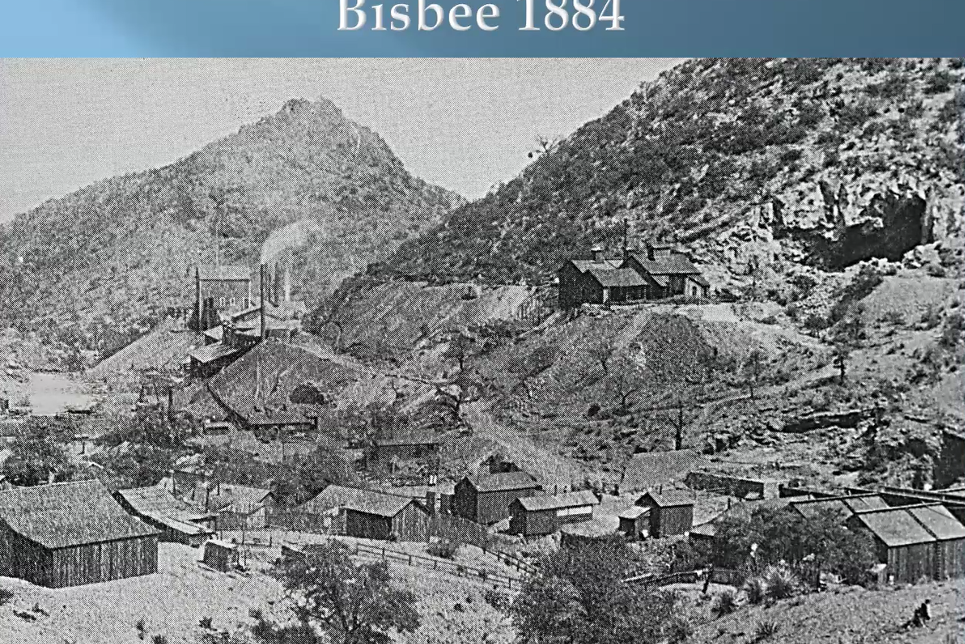
The Williams brothers supplied the mining and smelting know-how the district previously lacked, as evidenced in the above photo’s smoke stacks to the left of the photo. Together, the brothers ran the Phelps Dodge’s Bisbee operations for the next 15 to 20 years.
Some Miners Recognized that Mineral Specimens were Valuable by Themselves
Les also credited Ben Williams with helping to establish Bisbee’s long-standing mineral collecting culture. In the pocket-rich ore of the 1880s and 1890s, Williams recognized that a fine azurite or malachite specimen could fetch far more from an eastern mineral dealer (“a few dollars”) than the same material would if sold as ore (“a few cents”). A cache of Williams’s own mineral specimens, previously unknown, surfaced only about 25 years ago, when his estate was being auctioned off. California dealer Bill Larson happened to see the notice and purchased the boxes of Williams’ minerals.
Les commented “I am sure Ben Williams appreciated the beauty but also the economic value of the minerals.” That appreciation for the value of the individual mineral specimens, Les noted, was the beginning of Bisbee and Arizona becoming central to today’s culture of mineral collecting.
How the Bisbee Minerals Helped Arizona Gain Statehood
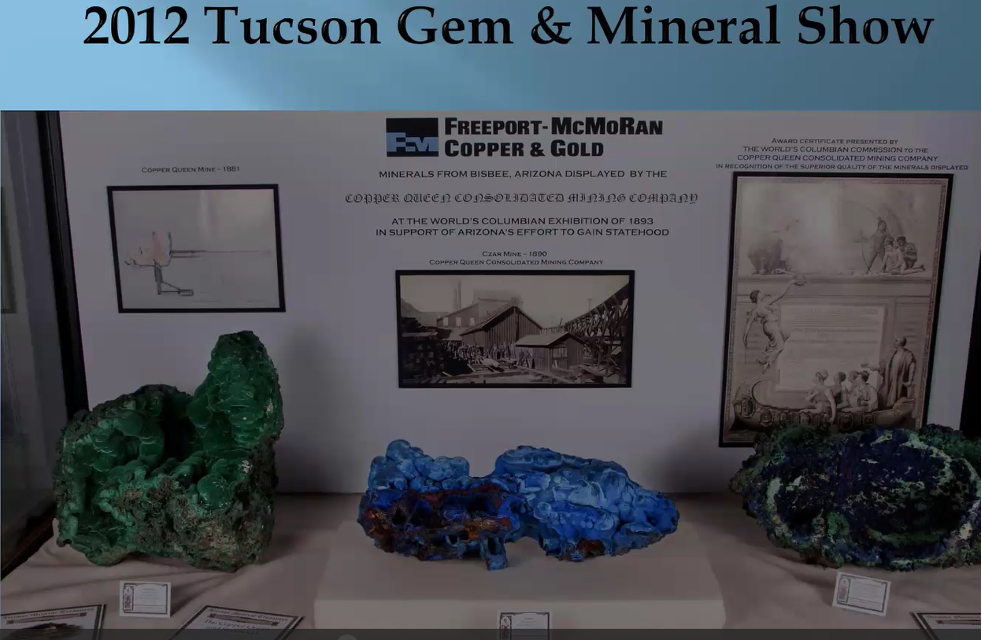
Les told the story of how President Lincoln and other U.S. political leaders initially were unaware of the extraordinary mineral value of the Arizona territory’s copper and other ore bodies. They feared that Arizona and New Mexico, if granted statehood, would become welfare states. Watch the video of Les’ talk to learn how the Columbian exhibit of 1892 in Chicago helped educate the nation about the wealth of those two territories’ mines. Note also the central role the specific malachite and azurite specimens shown below played in educating the nation’s leaders and general public about the financial importance of the Bisbee mines’ copper and other ores.
How Bisbee’s Extraordinary Minerals Formed
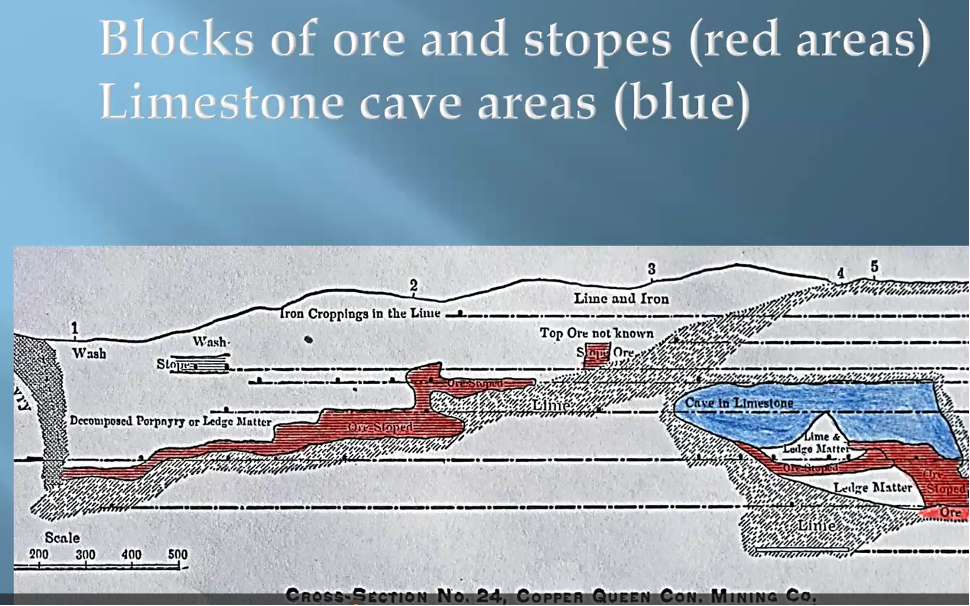
In the second of Les’ three major points of his presentation, he explained the unique geologic factors that shaped both Bisbee’s mining and its mineral specimens. He explained that the Bisbee District’s sulfide ore, geologically speaking, initially was embedded in limestone. Over time, the sulfides weathered into oxide minerals such as azurite, malachite, cuprite, and native copper.
In the areas which later became the Bisbee mines, the oxide minerals occupied less volume than the sulfides they replaced. That left open voids, shown in blue in the illustration below, sitting above the remaining ore. The miners learned that hitting one of these caverns was a sign the ore body lay below in the ore stopes shown in red.
To the Frugal Mine Company Goes the Economic Survival
You will learn from the video of Les' talk that by the early 1900s, Phelps Dodge shared the district with the Calumet and Arizona Mining Company, a subsidiary backed by copper interests from Michigan’s Keweenaw Peninsula. Calumet acquired the rich Irish Mag mine after Phelps Dodge passed on it. The mine had been offered to Phelps Dodge first, but its owner had once insulted Ben Williams, and Williams asked Douglas not to buy it.
By the early 1930s, Phelps Dodge could see its own ore running out within a few years, while the Calumet and Arizona held some 45 more years of reserves. But those reserves that were deep, in sulfide ore, required capital the Depression-era Calumet company no longer had. Phelps Dodge, which had preserved cash rather than paying it out in dividends, bought out the Calumet and Arizona mines which were productive for the next 45 years under the Phelps Dodge name.
Bisbee’s Many Mines and their Mineral Hghlights
In the third component of Les’ presentation he focused on what draws collectors to Bisbee today: 325 recognized mineral species and counting. That total is unmatched by any other Arizona locality. He also provided stories of about a dozen mines in the Bisbee District and highlighted the extraordinary minerals associated with those mines, some being type minerals. A few of Les’ examples are provided below.
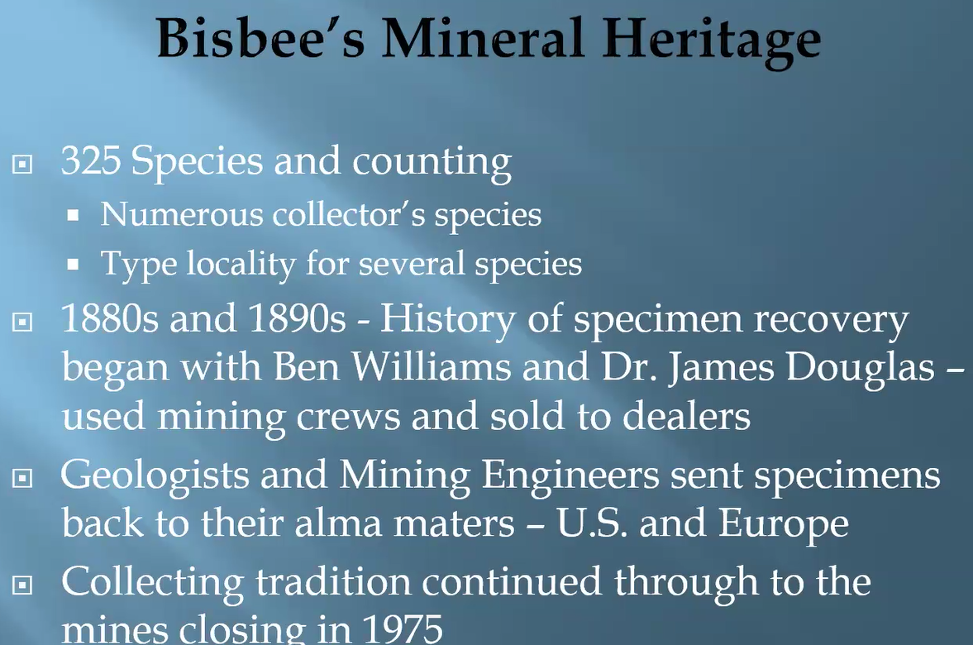
This mineralogical heritage places Bisbee alongside places like Franklin, New Jersey, and Tsumeb, Namibia. “It’s one of the top mineral localities in the world.” Below are a few of the mines and minerals Les discussed.
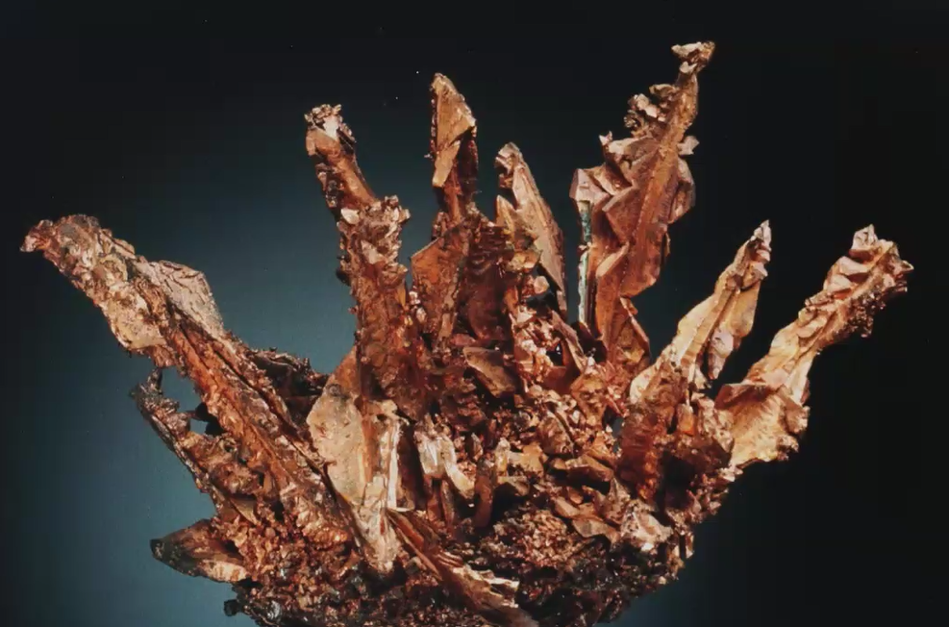
Some believe the above copper specimen is the finest example to come out of the Bisbee mining district. Typically, when discovered, the copper specimens are found discolored and need to be cleaned, as was the case with the above specimen.
The Campbell Mine yielded, among other finds, malachite pseudomorphs after azurite in several distinct styles from different stopes — bladed crystals in one, and railroad-spike-like forms with curved azurite matrix in another — recovered around the late 1940s and early 1950s where two exploratory drifts, driven as an escape route, intersected a pocket about eight feet apart vertically.
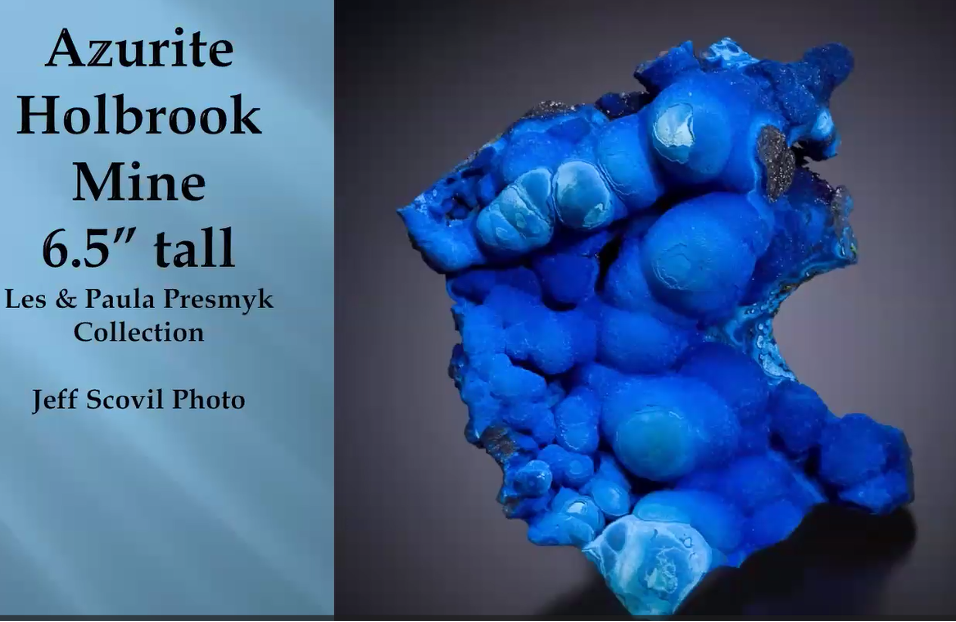
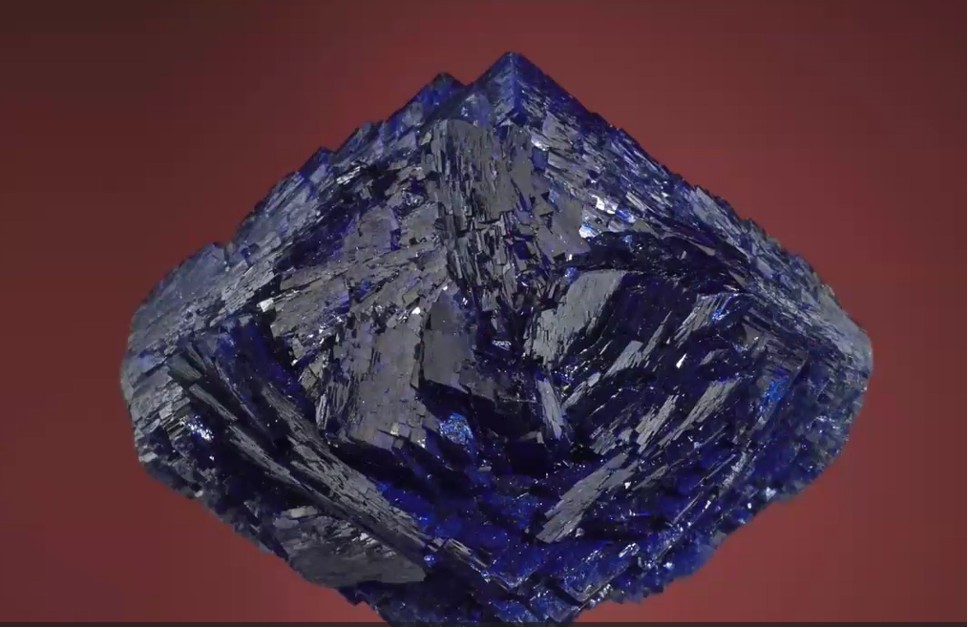
The Holbrook extension of the Lavender Pit was mined out in the early 1970s as the pit reached its closest point to downtown Bisbee and cut into old backfilled underground workings. The mine produced a fair amount of azurite and malachite in the process. The large azurite blue specimen shown above, Les said, as a “true botryoidal mineral from anywhere is uncommon. It is rare.”
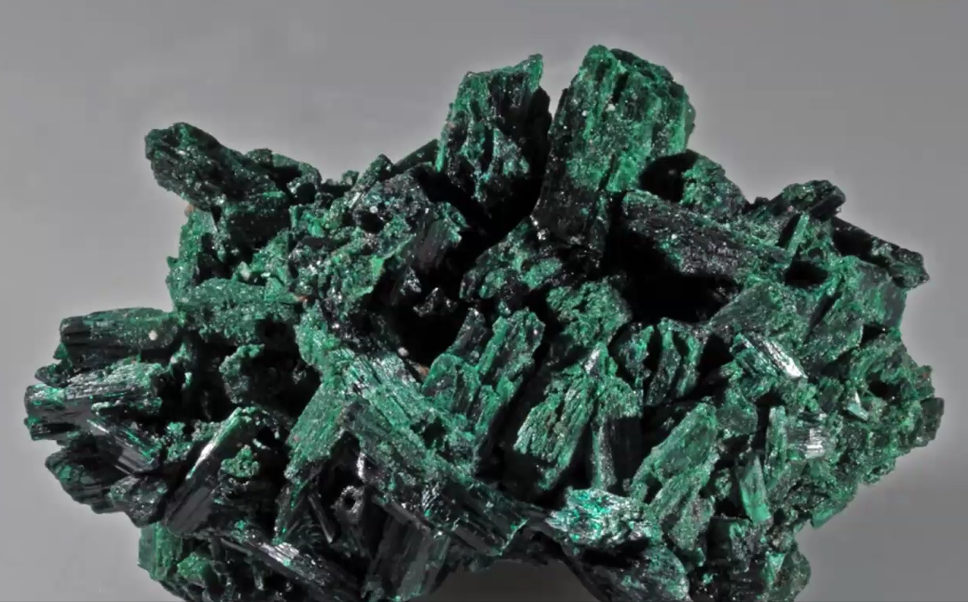
The Shattuck Mine hosted a 100-foot-high stope whose entire ore mineral was brochantite, which the mine produced commercially for several years, typically as massive or crystalline material.
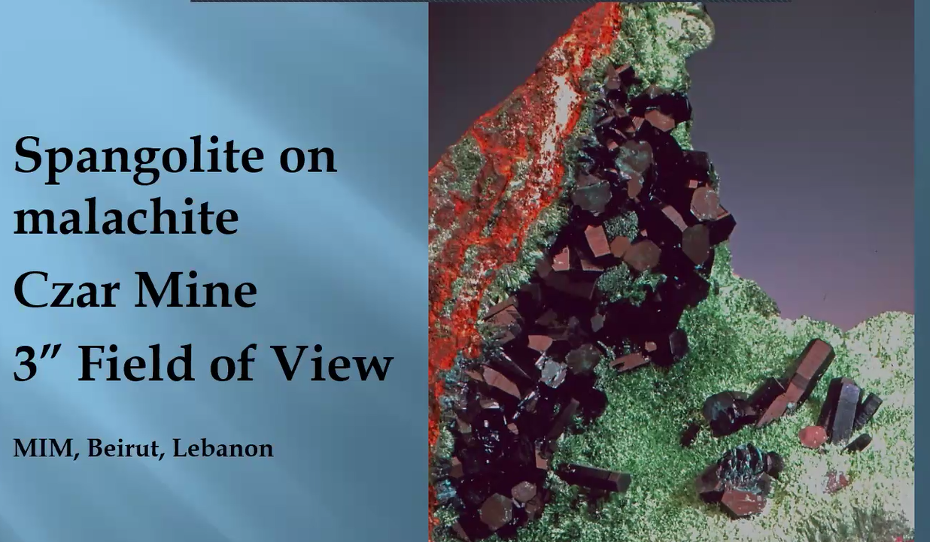
“One of the best, rarest minerals from Bisbee is spangolite.” This specimen, when it was photographed, belonged to the Houston Museum. It originally came out of Ed Swoboda's collection.” Les continued, “this is probably the single most outstanding example of spangolite from anywhere.” Although the above specimen came from the Czar Mine, others have been found in several local mines as well.
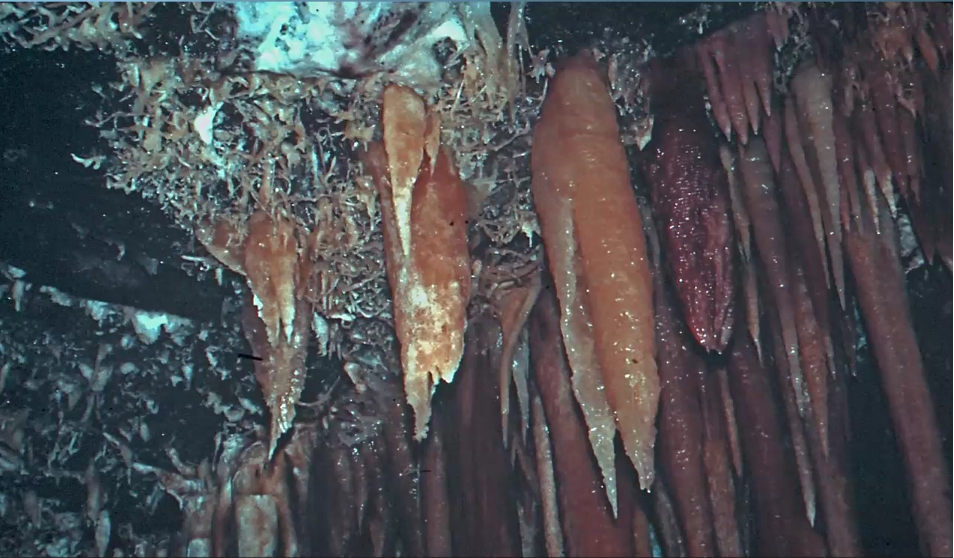
The Higgins Mine contained a cavern with stalactites five to seven feet long shown above that Les and fellow Bisbee native Eddie Lopez explored in 1980. Their visit was occasioned in part because after the Copper Queen Mine closed in 1975, the City of Bisbee decided to preserve the site’s heritage. In early 1976 the city employed the newly retired miners to lead tours of the historic mine.
By 1980, the city wanted to expand the tours into a portion of the Higgins Mine which presented several challenges. The cavern’s last 75 feet, for example, included a steep vertical climb up a manway, “not very good for compliance with ADA and not suitable for most of the general public.”
Additionally, most of the original caves no longer existed either because they had collapsed due to nearby mining or because the mining companies used the caves’ caverns as voids for dumping waste rock and backfilling rather than hauling it to the surface. Nonetheless, Les noted "there are several of the caves in Bisbee that, on a smaller scale, rival anything that you would see in Carlsbad, Mammoth, or Kartchner Caverns."
A Typical Sunset in Arizona
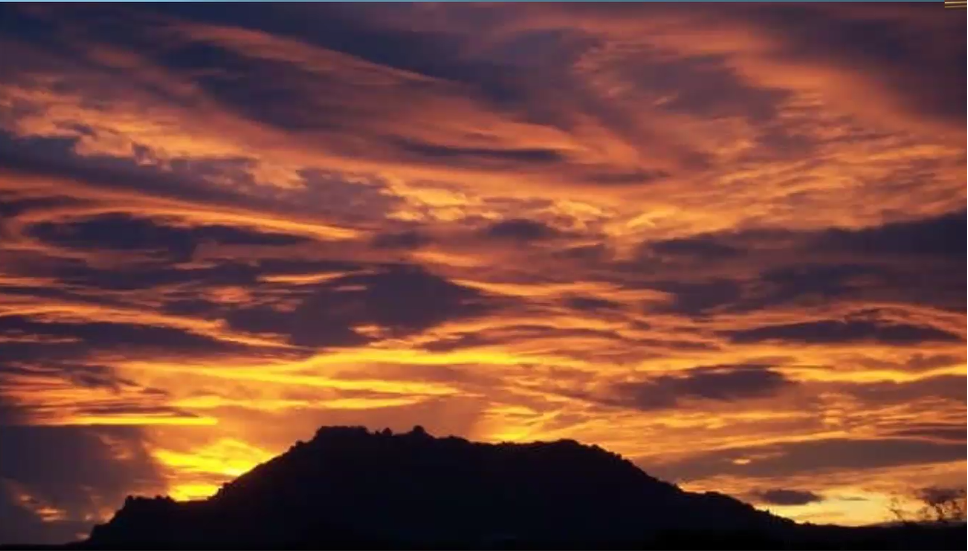
After having shown so many beautiful Arizona minerals, Les said that if his slides were not sufficient to evoke envy among his audience, he provided one last image which he said was typical of the beautiful sunsets Arizonans get to enjoy most evenings.
President Dan Teich thanked Les for his wonderful presentation and opened the floor for a Q&A session.
Ken Rock asked whether any fine specimens are still coming out of the Bisbee District. Les said no because modern surveillance, remote sensors, and Freeport-McMoRan’s willingness to prosecute trespassers have largely ended the informal collecting that once went on in the hills.
Other questions turned to the district’s workforce and immigrant history. Les described the miners known as “Cousin Jacks,” as Cornish miners who emigrated directly from England as well as from Michigan’s copper country. The workers were part of the broader pattern of experienced miners moving freely between western mining camps in Bisbee; Butte, Montana; Idaho’s Coeur d’Alene district; and elsewhere.
He also spoke about contract mining and wages and that top contract miners in the late 1970s could earn as much as a mine superintendent. For Les, having worked for decades with multiple generations of those miners, and at greater length, he was keenly aware of the historic segregation faced by Hispanic miners in Bisbee and nearby Gilbert and Miami.
Les said that over generations, the wages those miners earned put their children and grandchildren through college and into professional careers. For Les, his relationships with the workers was personal. One second generation worker was surprised when Les asked him about how his father was doing. The young man had not known that Les knew and for years had employed his Dad.
Having fielded the above and additional interesting questions, Dan thanked Les for a talk which Dan said was both historically fascinating and a genuine joy to hear, noting the club’s own connection to Bisbee copper through the James Douglas specimens in the Smithsonian’s collection.
Les offered to field follow-up questions by email and, noting this year will be his 64th consecutive Tucson show, said he has eight or ten other Arizona-focused presentations ready to go if MSDC would like to have him back.
With the above and other questions addressed Dan again thanked Les and the audience applauded Les’ wonderful presentation.