
March Program Report: Calcified Clams from Rucks' Pit, A Field Trip into Paleontology, presented by Dan Teich
Synopsis by Andy Thompson, MSDC Secretary
Quick Recap of Dan’s Presentation
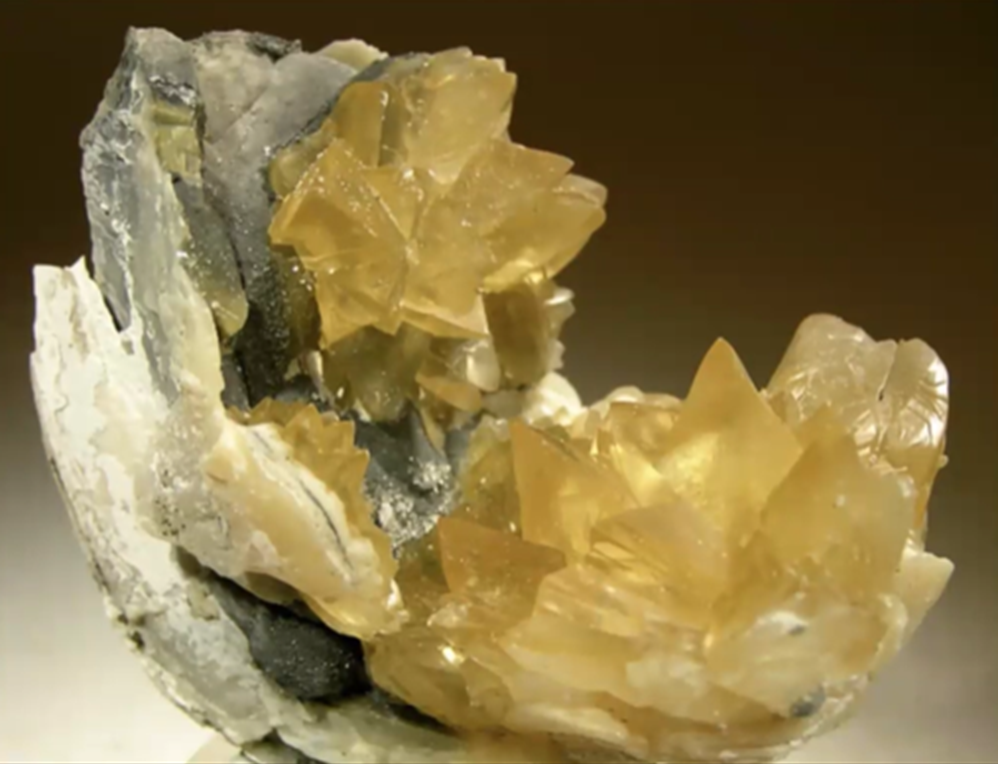
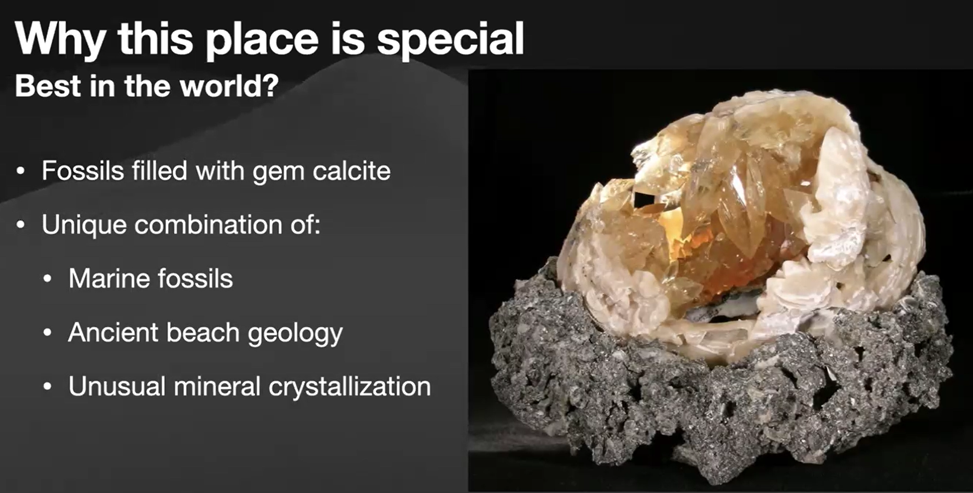
Dan Teich's presentation in March featured the unique honey colored calcite crystals that grew in Rucks' Pit in Florida more than a million years ago. He shared detailed insights about the crystals’ formation inside ancient clam shells. He explained the calcite’s geologic context, crystal growth patterns, and remarkable fluorescent properties of these specimens, including photos of some of the finest radial calcite crystals in the world. The discussion covered:
· evolution of the Florida coastline and mineral deposits,
· specific conditions needed for crystal growth,
· the mining history and strata of the site, and
· current availability of specimens through organized digs.
Readers: the purpose of this Program Report is to encourage you to watch the entire video of Dr. Dan Teich’s excellent presentation. Click on the link below to watch the fascinating YouTube video which includes a short intro to Dan, MSDC’s President, and to watch his spellbinding 40-minute presentation and 28-minute Q & A session. The Golden Calcite Clams of Rucks' Pit, Florida - Dan Teich
Where in Florida is Rucks' Pit?
“It’s in the middle of nowhere” Dan noted and “about 35 feet above sea level, for now.”
That being the case, why would mineral collectors even care about this place and what interesting minerals could possibly come out of there?
To help his audience dig into this beach site quarry Dan provided the map below.
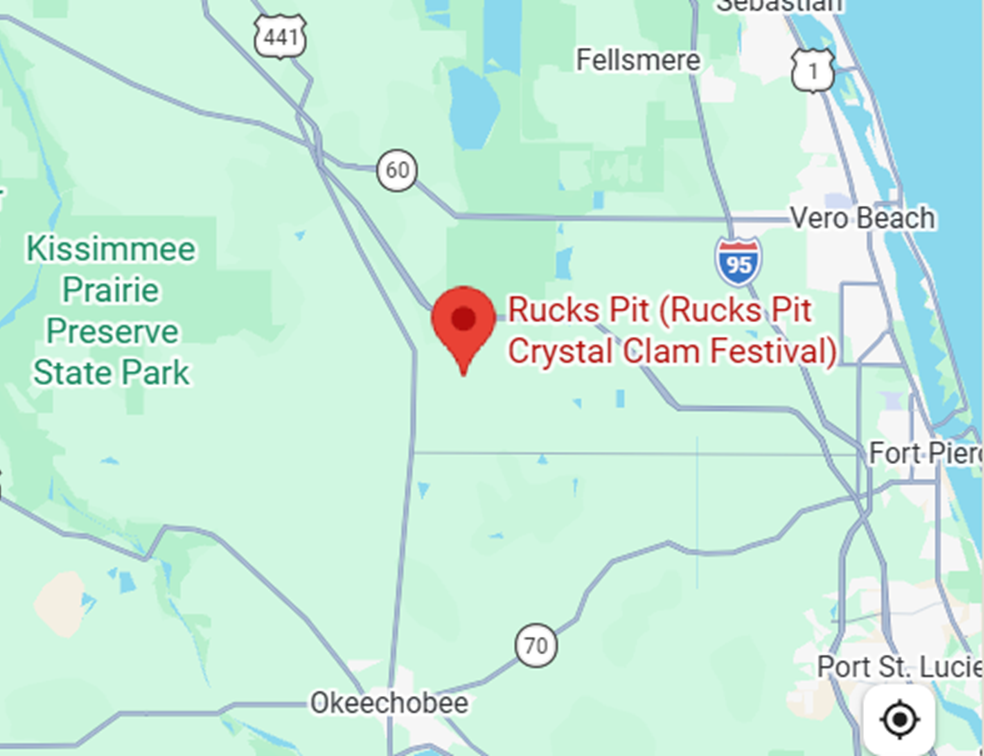
Geographically, Rucks' Pit is about half-way down the Florida peninsula on its east coast. This digging and collecting site is about 50 miles inland, southwest of Vero Beach. More familiarly, it is also known as the Fort Drum area, about 95 miles southeast of Orlando, and about 85 miles northwest of Palm Beach.
Historically, about 1.5 million years ago, Dan said Rucks' Pit was once “the very edge of where beach” met the Atlantic Ocean. Before then, about two or three million years ago, the beach line coast of Florida was further inland to the west, a wide region running north to south now known as the Osceola Plain. Its ancient contour is shown below and follows the squiggly black line.
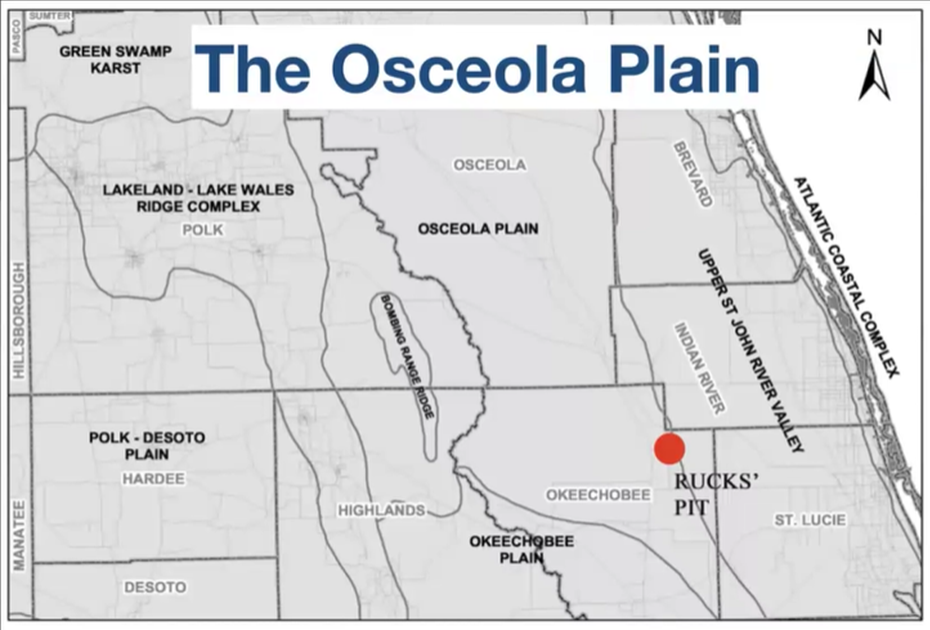
Importantly, Rucks' Pit is at the red dot halfway between that ancient Plain and today’s Atlantic coastline, between the old paleo beach and today’s new coastline.
Dan’s study site for collecting is actually within the eastern part of the Osceola Plain. It, and the more western part of the Plain were formed roughly in the early Pleistocene, about 2 to 3 million years ago, when sea levels were much higher. Describing Ruck’s Pit, Dan said:
“Our study site was (once) at the edge of warm, shallow coastal waters. Beaches, nearshore sands, and there was lots and lots of marine life back then. If you want to think about it, it basically was the beach as we see it now in Florida.”
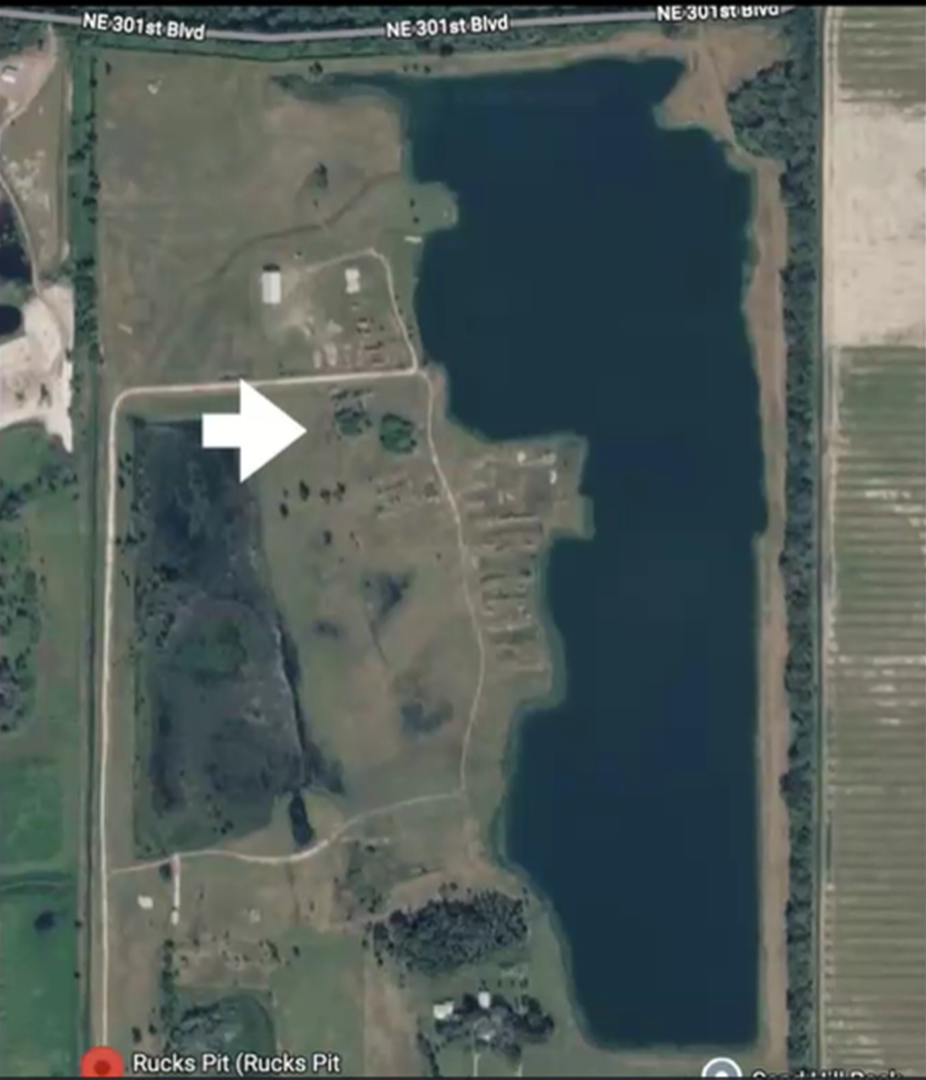
Dan provided a high-altitude view of Rucks' Pit shown below as the two green spots to which the arrow points. That area is today’s dig site and focus of his presentation.
The Study Site: Layers of Sand and the Process of Discovery
When the collecting site at Rucks' Pit is viewed from above, “you are seeing the very edge where the ancient beach came in.” If we were to take a cross-section and dig down into the sand you would find the four layers shown below.
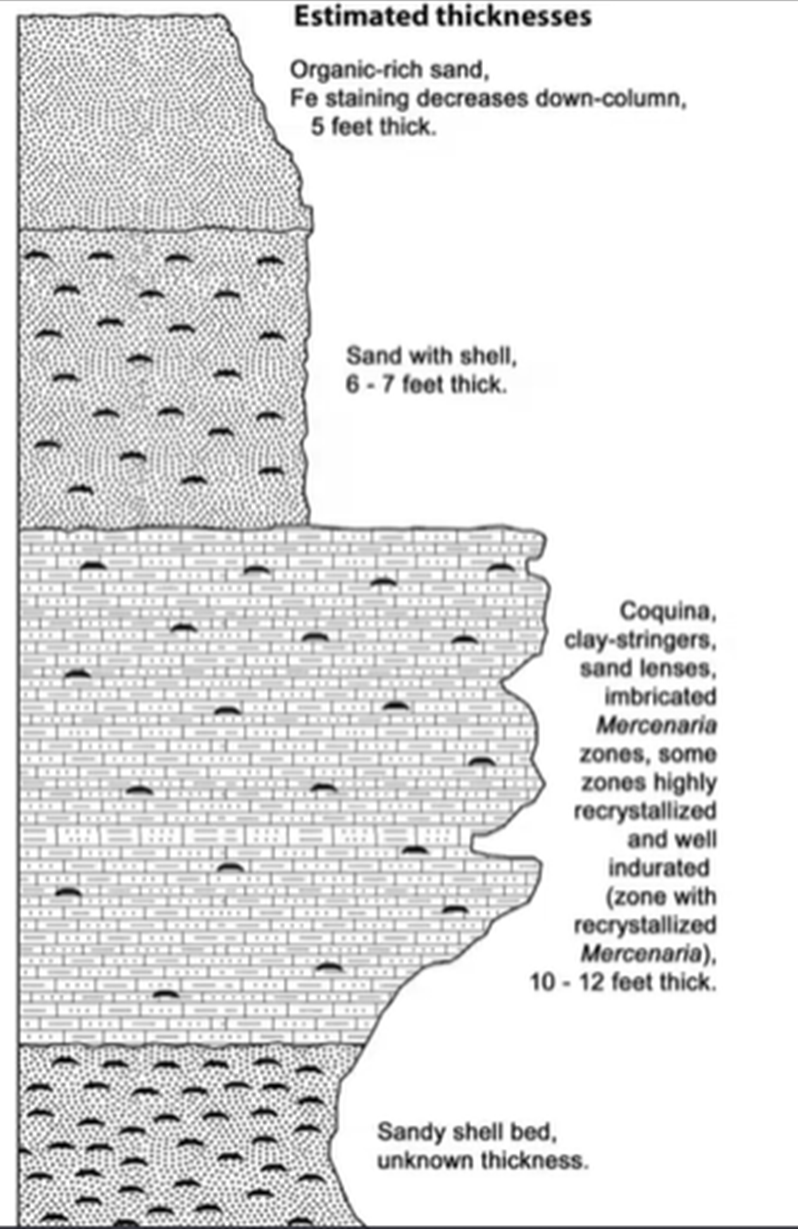
The following slide describes the four cross-section layers.
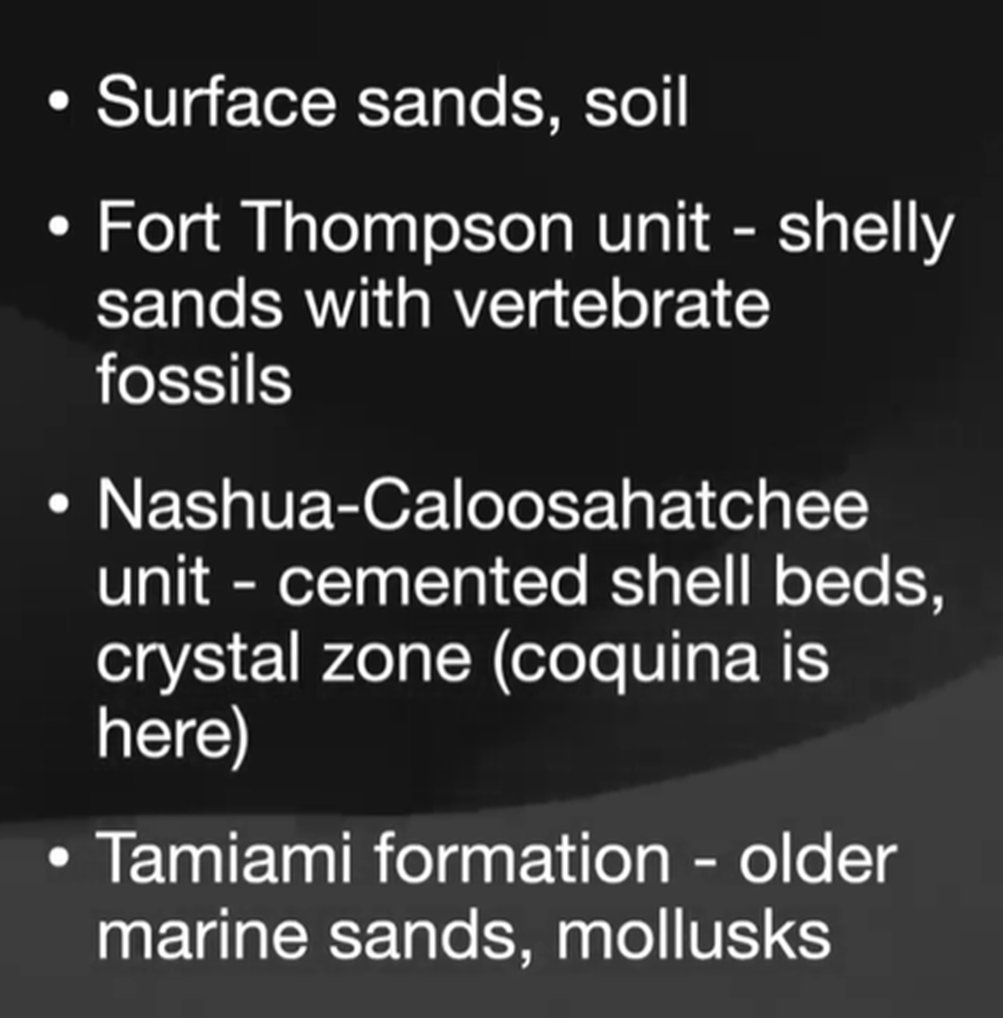
Dan elaborated that the first layer contains iron-stained sand and is rich in organic material. That will become an important contributor to the color of what will become calcite crystals.
The second layer, the Fort Thompson unit, contains shells with vertebrate fossils, including mastodon fragments.
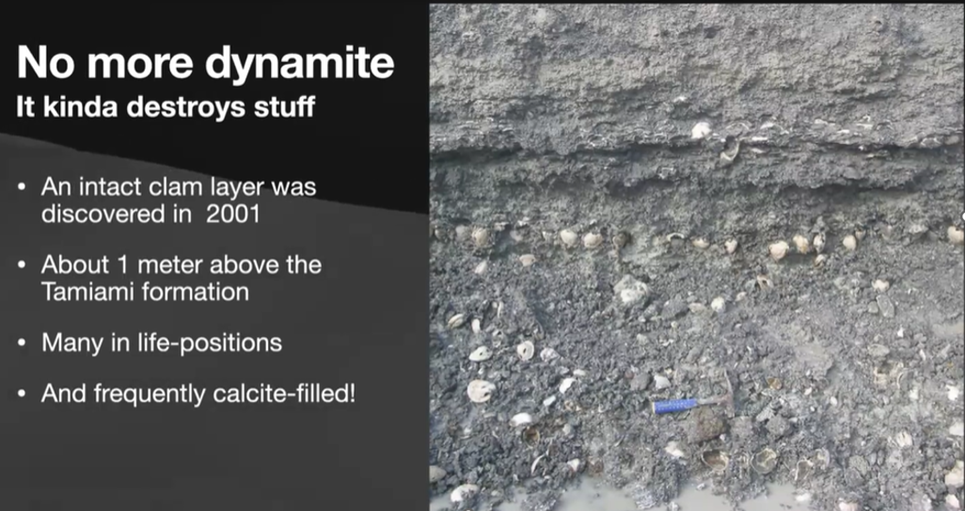
The third layer, the Nashua-Caloosahatchee unit, is mostly coquina, a soft sedimentary rock formed from poorly cemented shell fragments (mostly clams) and marine invertebrates, cemented together with calcite and mixed with sand. That mix became a bit like concrete which the early miners sought to use as aggregate for road fill. They used heavy digging equipment and dynamite to extract the material.
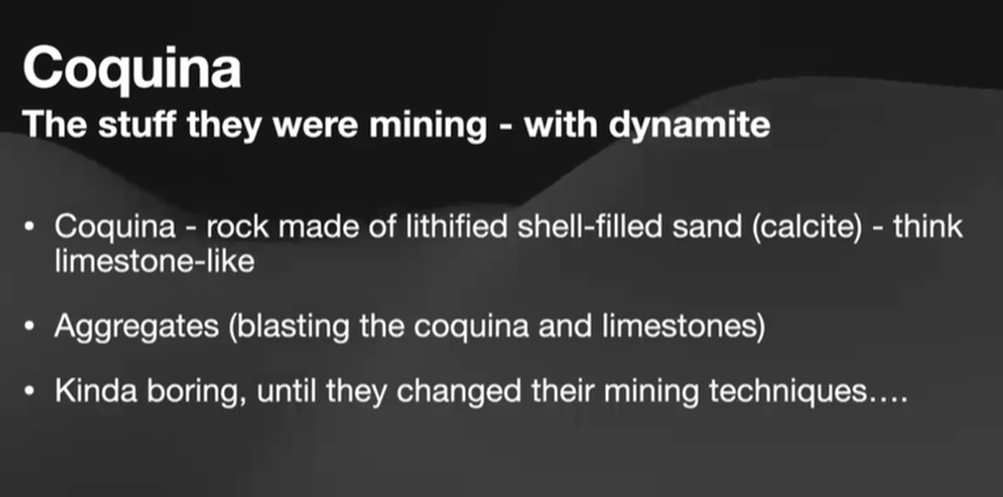
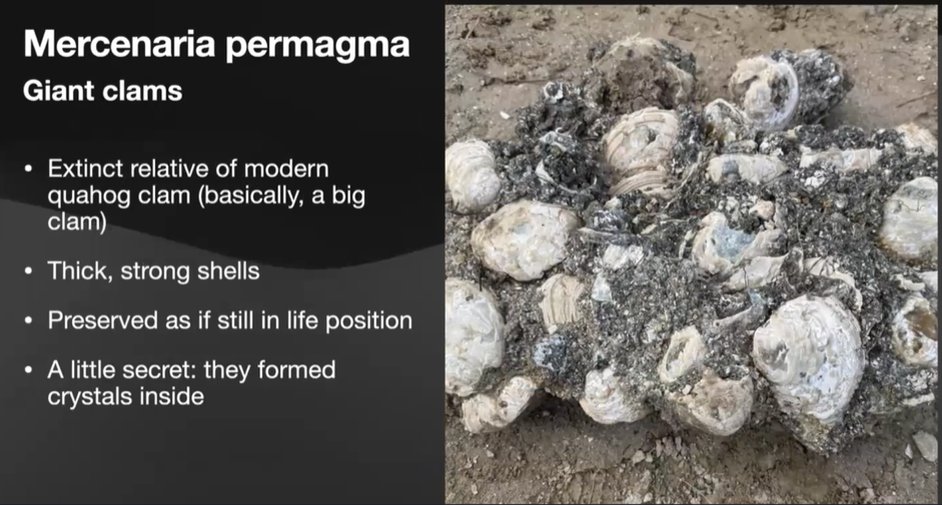
When the miners stopped using dynamite, they discovered something very special, a fourth layer of well-preserved “giant” clam shells, many surprisingly hosting unique golden-colored calcite crystals.
Dan said that in Virginia and Maryland, a few small clam shells have been found with a few calcite crystals, “but nothing, nothing, nothing like this.” Imagine finding a 120-pound cluster of large shells filled with beautiful crystals. What could a collector do with that?
To find out, go to the video on MSDC’s YouTube channel and enjoy discovering Dan’s colorful adventure which includes:
· photos and explanations about the actual quarry setting where the mine’s owner and guides provide access to extensive excavated piles of mud encrusted shells and concrete like clusters,
· the discovery, sorting, and cleaning processes for the cluster he brought home,
· how the large clams were preserved for hundreds of thousands of years,
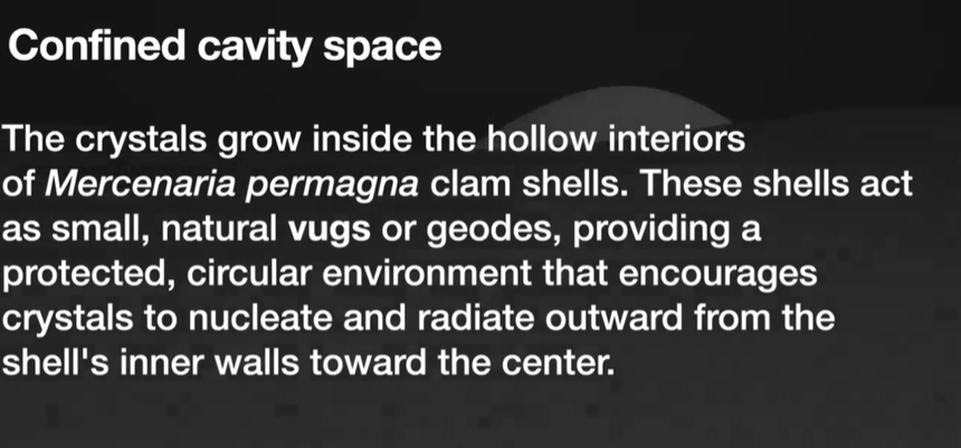
· how the positions in which the clams were buried alive, and their limited interior space influenced the crystals’ growth processes,
· how shells and geodes similarly affect crystal growth,
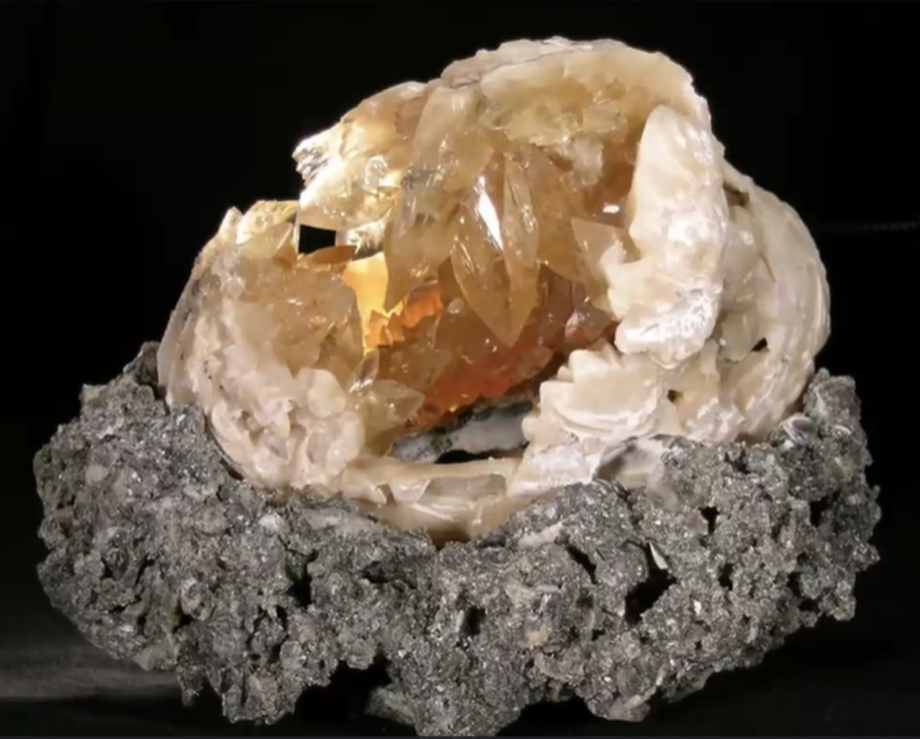
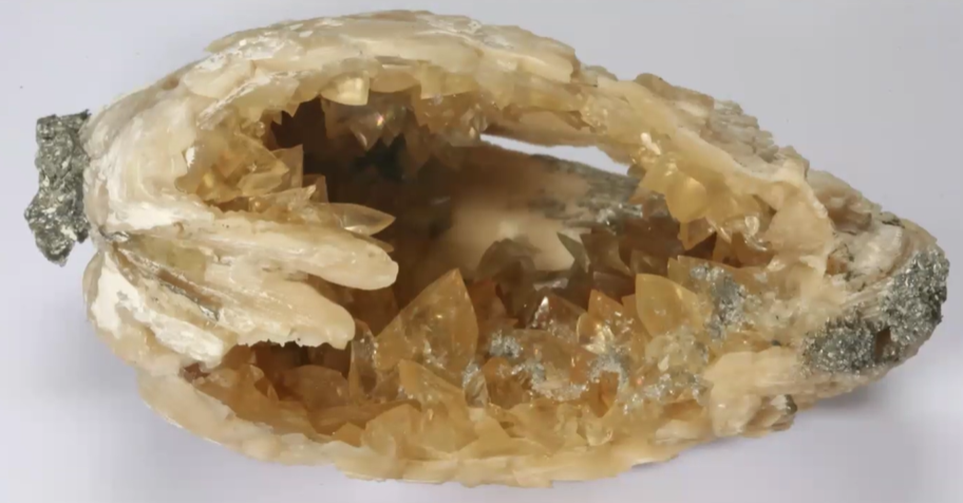
· how the calcite-crystals-atop-coquina specimens could have developed resulting in the image below,
· how the chemistry of the upper layers of sand influenced the stunningly strong honey color of many of the calcium carbonate crystals, and
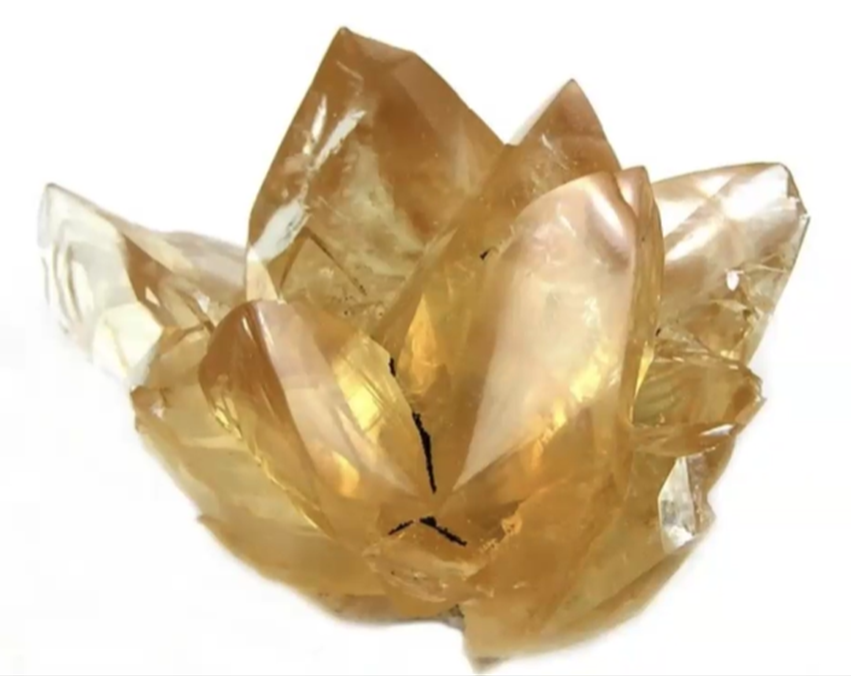
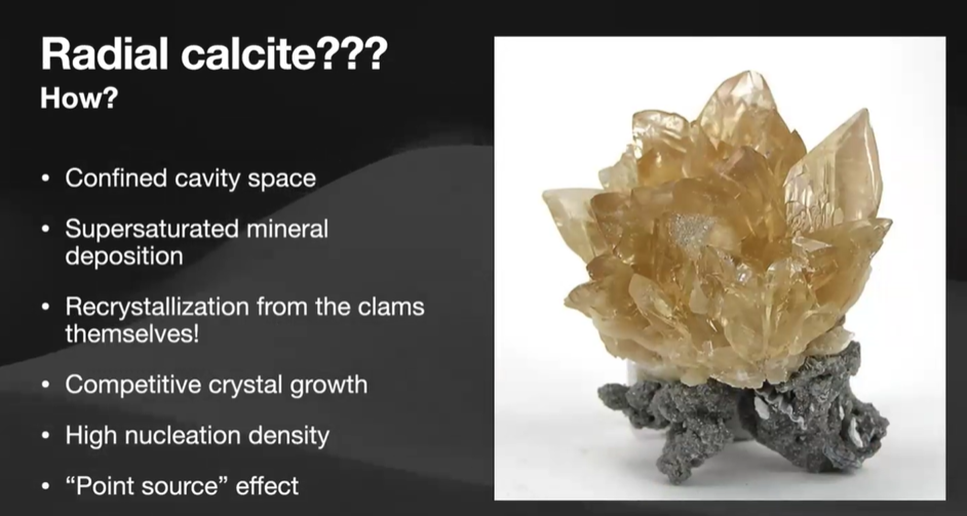
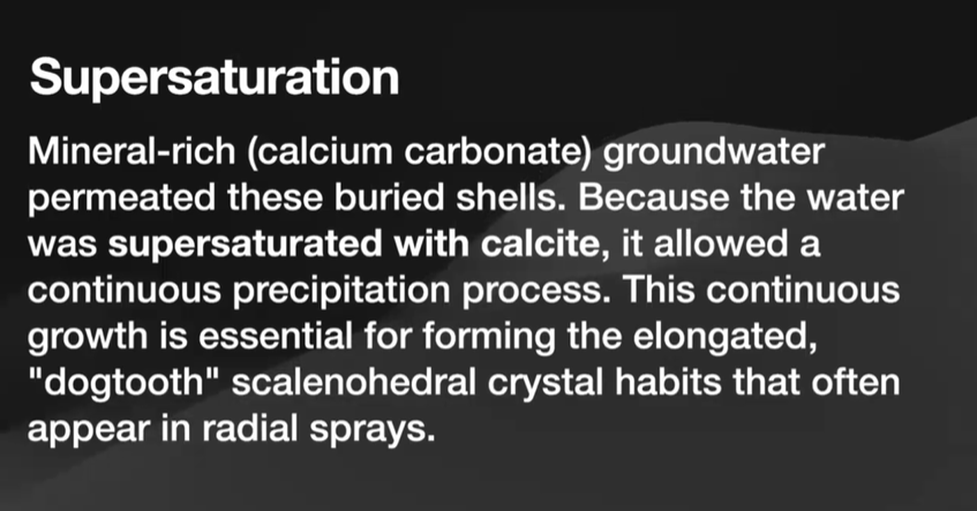
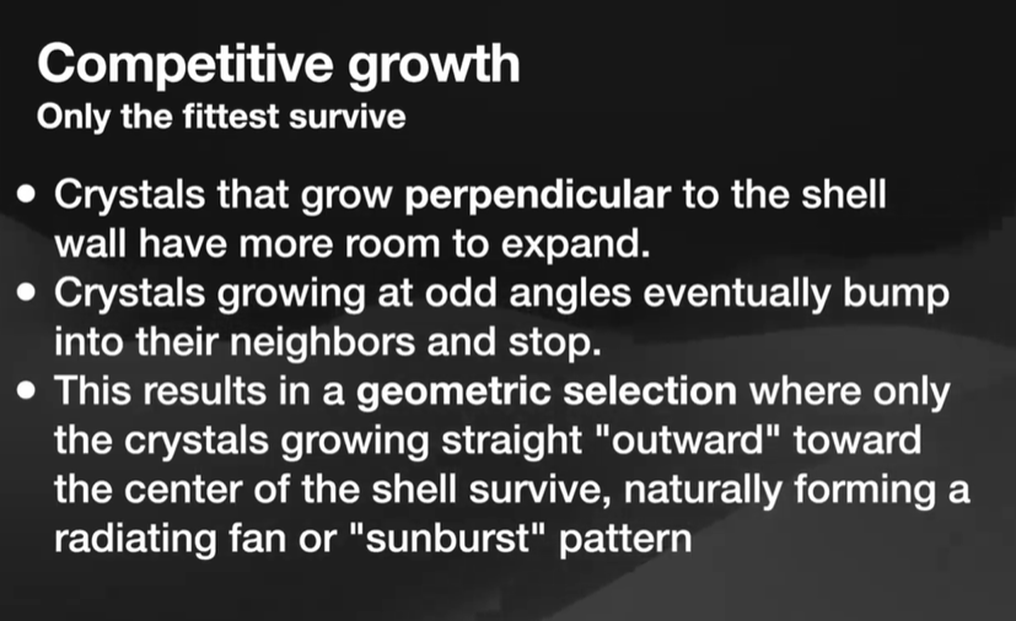
· how the physical conditions within the clam shells produced radial, sunburst, and other crystal formation patterns.
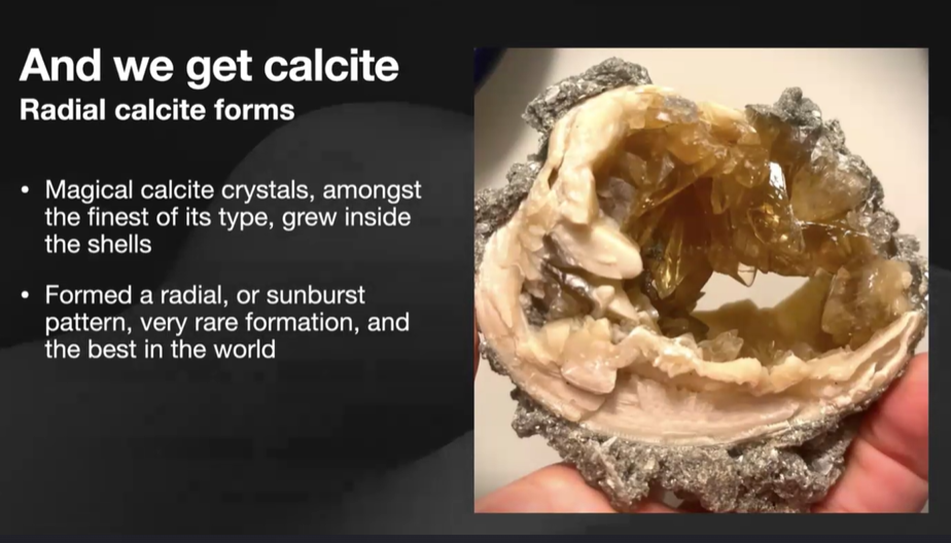
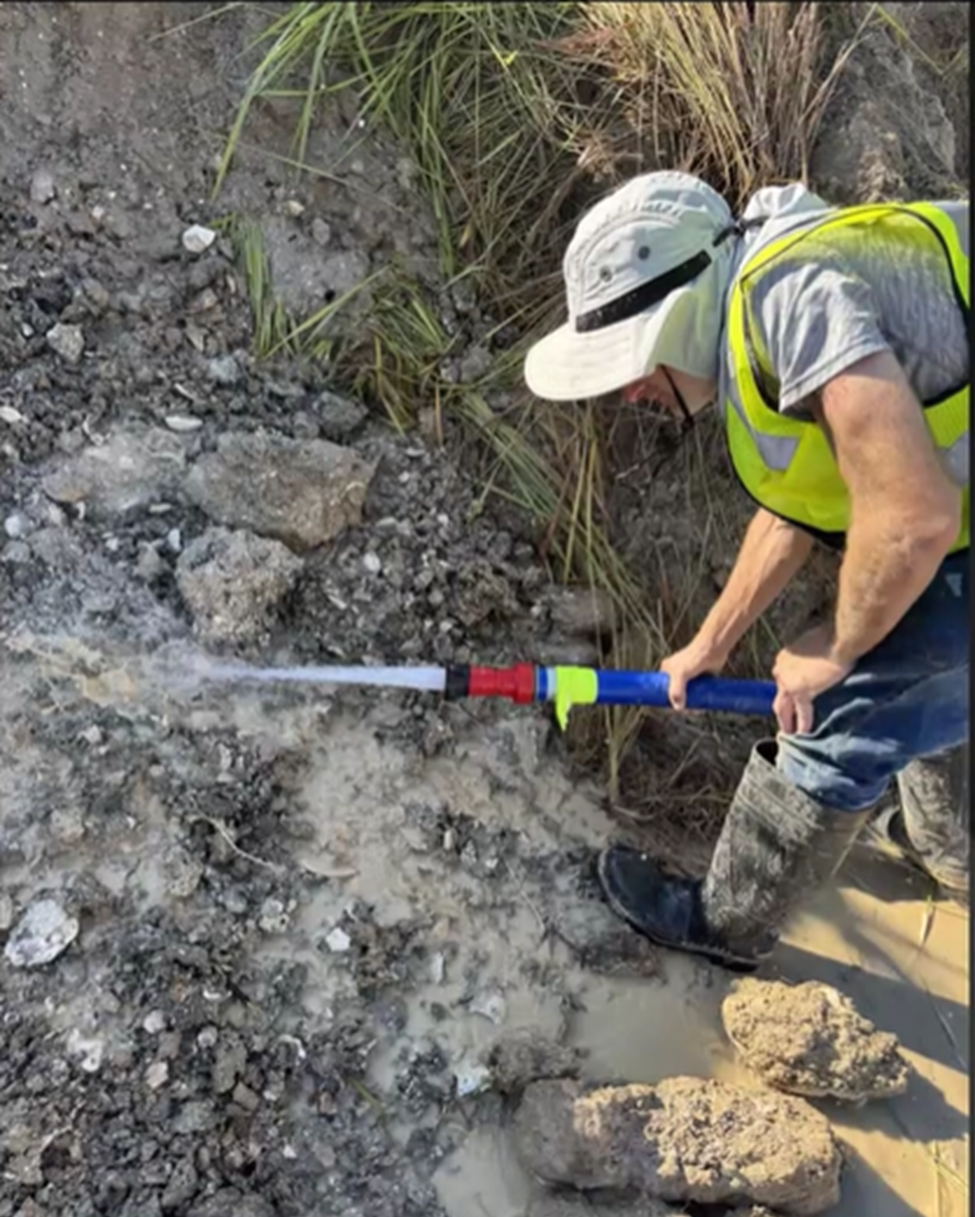
Another surprise is shown below where you can see the effects of blasting off the top half of the clam shell with a high-pressure water gun.
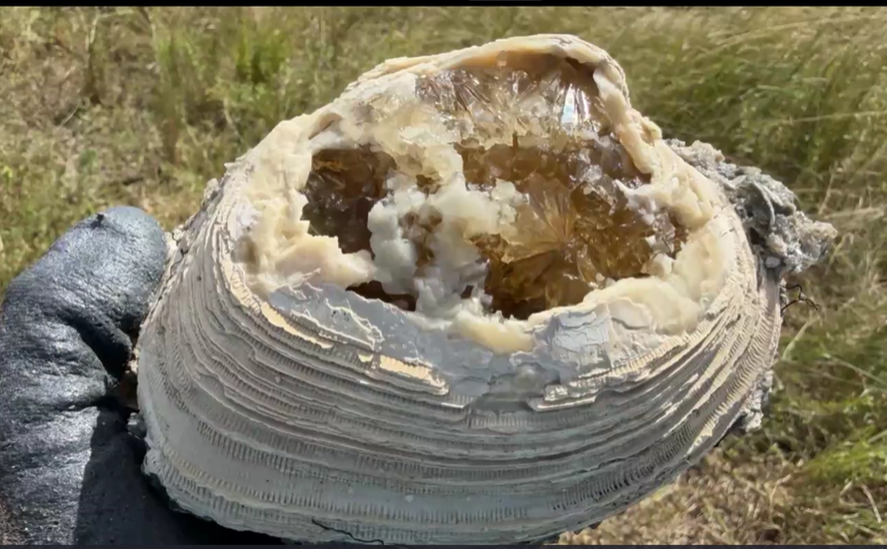
As Dan noted, “you can see the radial nature of the crystals. It looks like wheels in there.”
In reviewing the many crystal formation processes and surprising results, Dan said “This is not normal… that just doesn't happen… the clams form their own crystals?”
Collectors interested in fluorescent minerals will be delighted to see how these golden calcite crystals both fluoresce (white) and phosphoresce (an eerie green).
As a final caveat, Dan added: Rucks' Pit is on private property and can only be accessed through established digs that have been granted permission by the land owner.
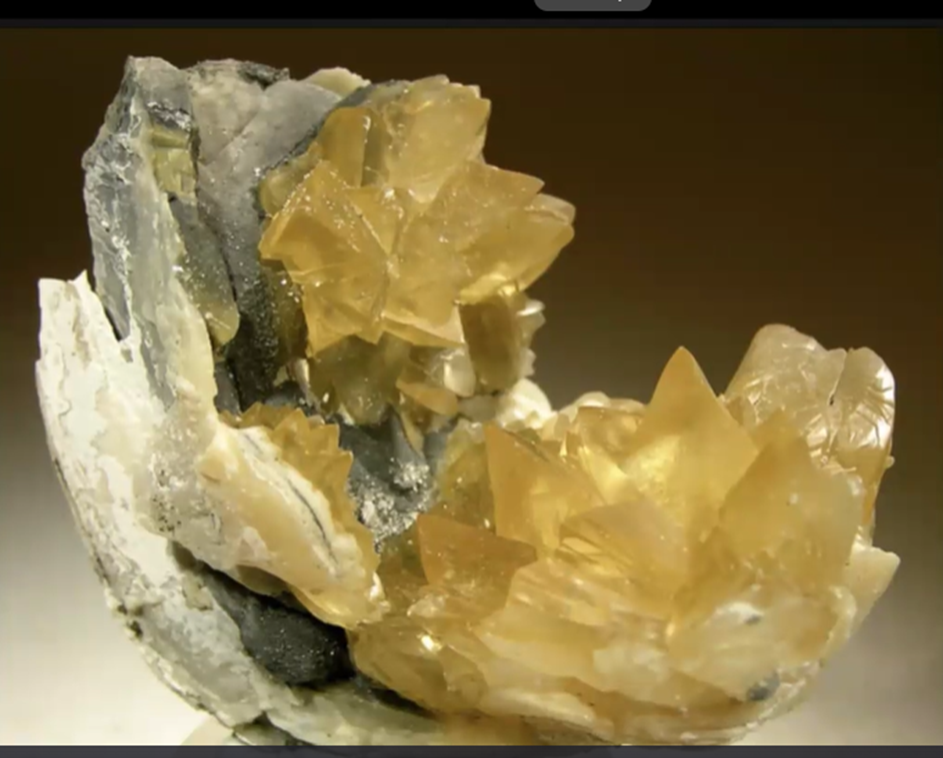
The YouTube video elaborates all the above and gives more insights about factors that influence the crystal formation processes including: nucleation (crystal density), radial vs. single crystals, their rate of growth and why some grow in unusual shapes, as below. Click on: The Golden Calcite Clams of Rucks' Pit, Florida - Dan Teich
At the conclusion of the talk and grateful applause, Dan invited questions which helped his audience connect the mineralogical dots. Some members shared their own experiences collecting calcite crystals and even shared related history.
Saint Augustine’s late 17th century Spanish Fort Saint Marcos, for example, survived the British sieges of 1702 and 1740 because its 18-foot-wide walls were built entirely of coquina. Its softness literally absorbed the British cannon balls rather than shattering hard rock walls.
Members provided information about MSDC sister clubs’ upcoming gem shows. Kenny Reynolds shared images of his two extensive displays of his very diverse minerals and also of fluorescent minerals which were on display at the Montgomery County Gem, Mineral, and Fossil show, March 21-22.
The audience again applauded Dan’s presentation and he thanked everyone for coming.