
June Program Report: Recent Acquisitions to the National Mineral & Gem Collections, presented by Dr. Michael Wise
Report by Andy Thompson, MSDC Secretary
Dr. Michael Wise presented his MSDC Zoom audience with an extraordinary overview highlighting some of the Smithsonian’s recent acquisitions of gems and minerals. He focused on about 70 of the many minerals obtained over the last four years. They were acquired through selective purchases, individual donations, and with the help of donors such as the Gem and Mineral Collectors Group. His talk complemented Dr. Gabriela Farfan’s presentation last year which focused on colored diamonds, particularly the fancy-colored diamond collection donated and loaned by the Winston family.
Introduction
Laura Dwyer, MSDC member and classmate of Mike’s when both were environmental geology majors at the University of Virginia, introduced Mike and the topic of his presentation. Although Mike is already well known to his MSDC audience, for its newer members and guests she noted he is a geologist and researcher at the Smithsonian's National Museum of Natural History, Department of Mineral Sciences (naturalhistory.si.edu). Mike’s research focuses on pegmatite mineralogy, geochemistry, and the evolution of granitic pegmatite systems. He also plays a leading role in the department’s team for acquiring new mineral specimens.
Quick Overview of Mike’s Presentation
The acquisitions in Mike’s presentation were selected for multiple reasons, including the desire to fill holes in the Smithsonian’s national collection and to obtain minerals representative of important localities. Some specimens were chosen as suitable for public display and others for research purposes.
Mike looked back over the acquisitions of the past four years and chose close to one hundred minerals to share with his audience. He showed their photos, described their mineralogical characteristics, and explained why they were selected. He also shared some of the puzzles and research findings on some unusual specimens.
Mike focused on the individual minerals themselves rather than their mineralogical families. But his examples included about a dozen categories which he worked through from start to finish, including the olivine group, sulfides, calcites, spinels, tourmalines, fluorites, agates, corundums, rare and unusual specimens, diamonds, and carved specimens.
The Olivine Group
Beginning with the olivine group of silicates, Mike showed examples from its two main members, magnesium-rich forsterite and iron-rich fayalite.
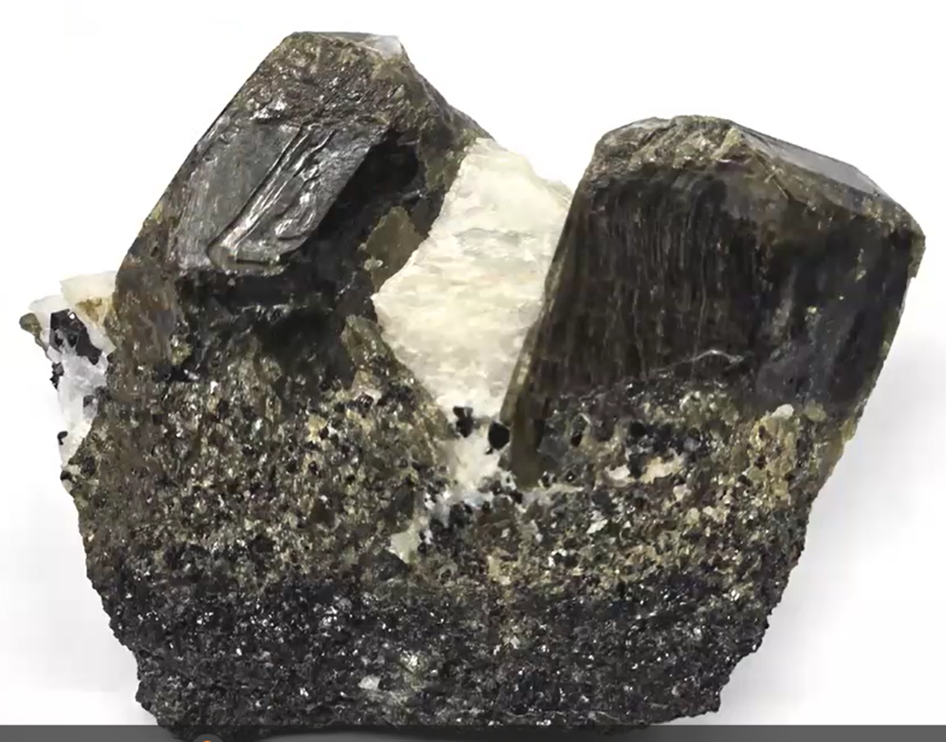
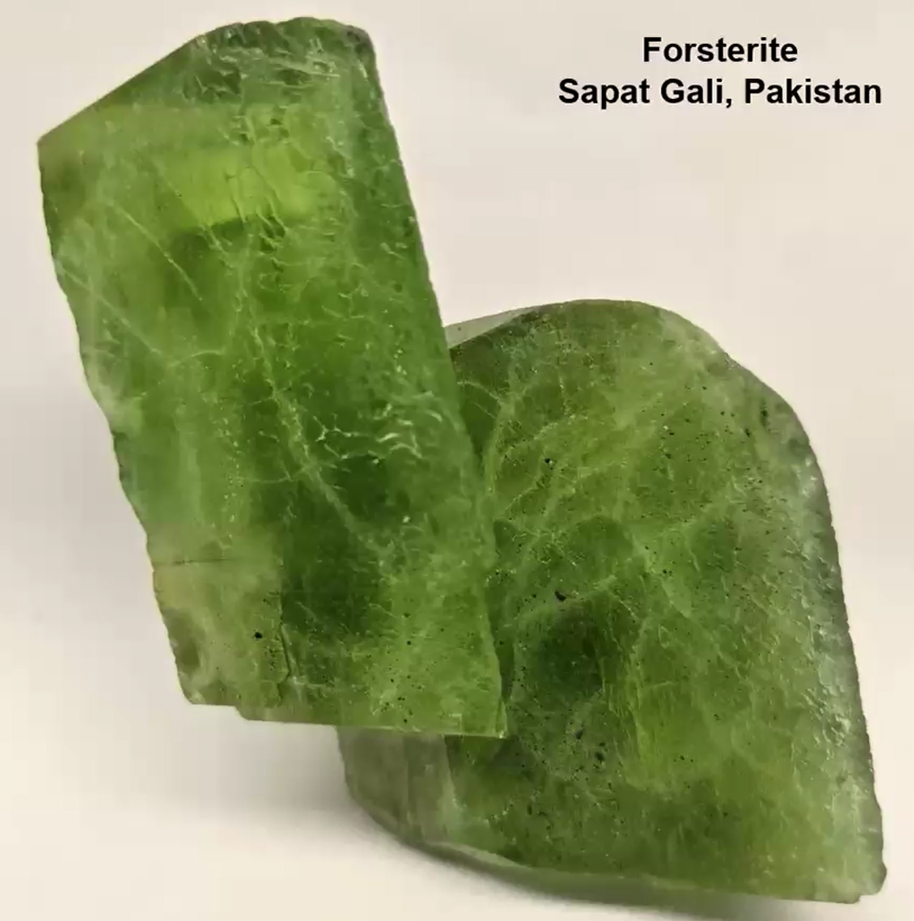
The above mineral was acquired primarily for research purposes rather than for display. The specimen’s lower area exhibits the typical light green forsterite and the dark magnesium is evident toward the two top areas. In contrast, the specimen below from Pakistan, is display-worthy and rare in that most such forsterite specimens end up being sold to be transformed into gemstones. So, according to Mike, this was a good find.
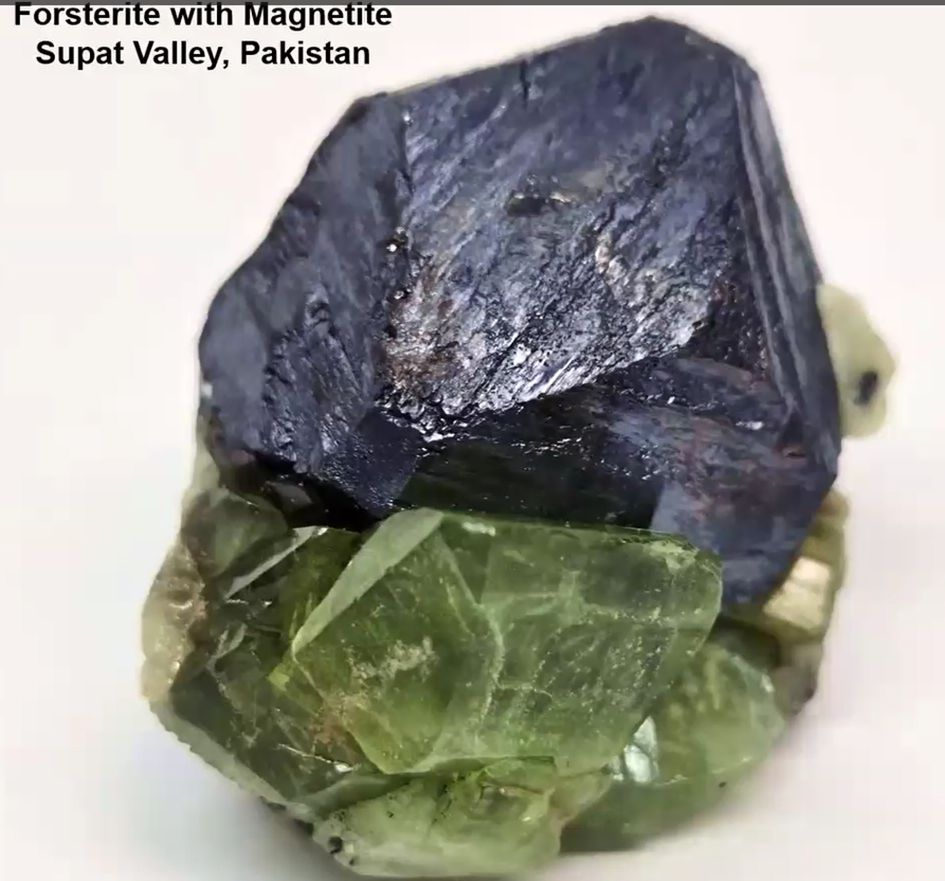
The lovely specimen below is an iron-rich dark magnetite atop a green forsterite. When cabinet space allows, it will be put on display.
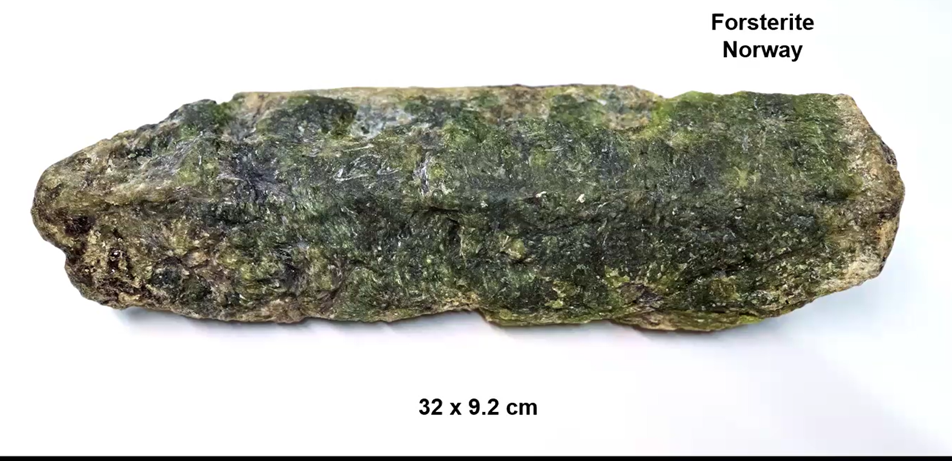
In contrast to the above thumbnail specimen, below is a “monster-sized forsterite from Norway.” Mike said this was the largest he has ever heard of. “Simply because of the sheer size of it we felt this was something we could not pass up.”
The Epidote Group
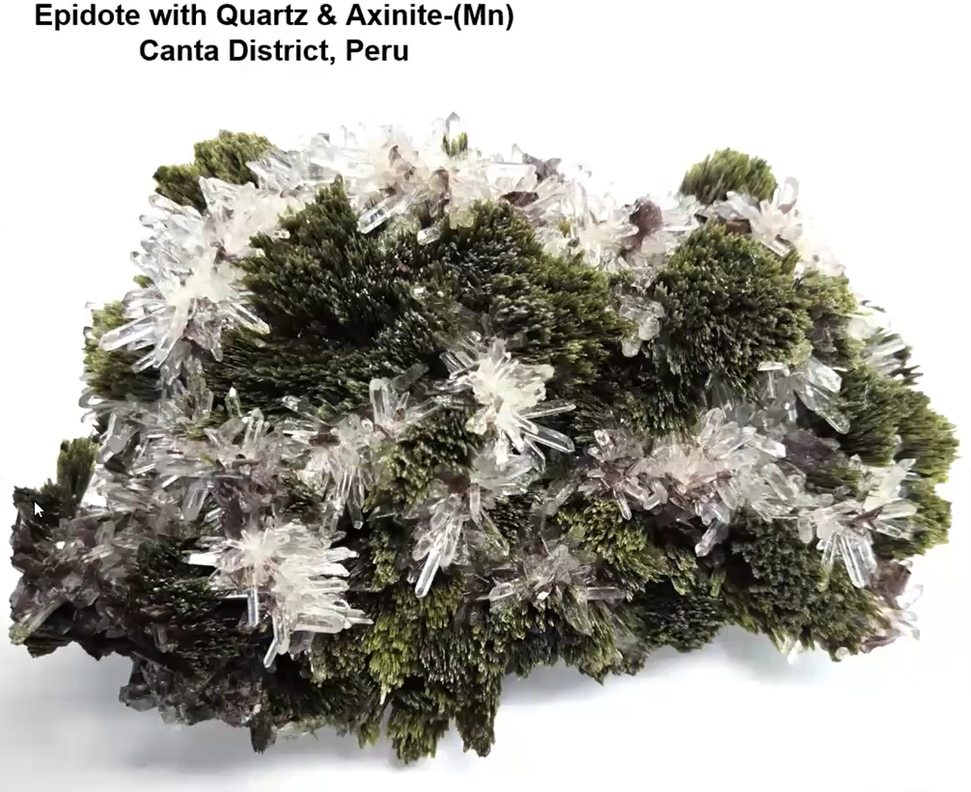
Mike showed several extraordinary specimens of epidote sprays with their characteristic shades of green. A few years ago, the team discovered these very interesting specimens which came out of Peru. Mike said “these are fantastic.” For the specimen below, the white crystal sprays are quartz, the purplish brown are axinite (Mn), and the epidote is green. Mike said it was the epidote crystals he found to be fabulous.
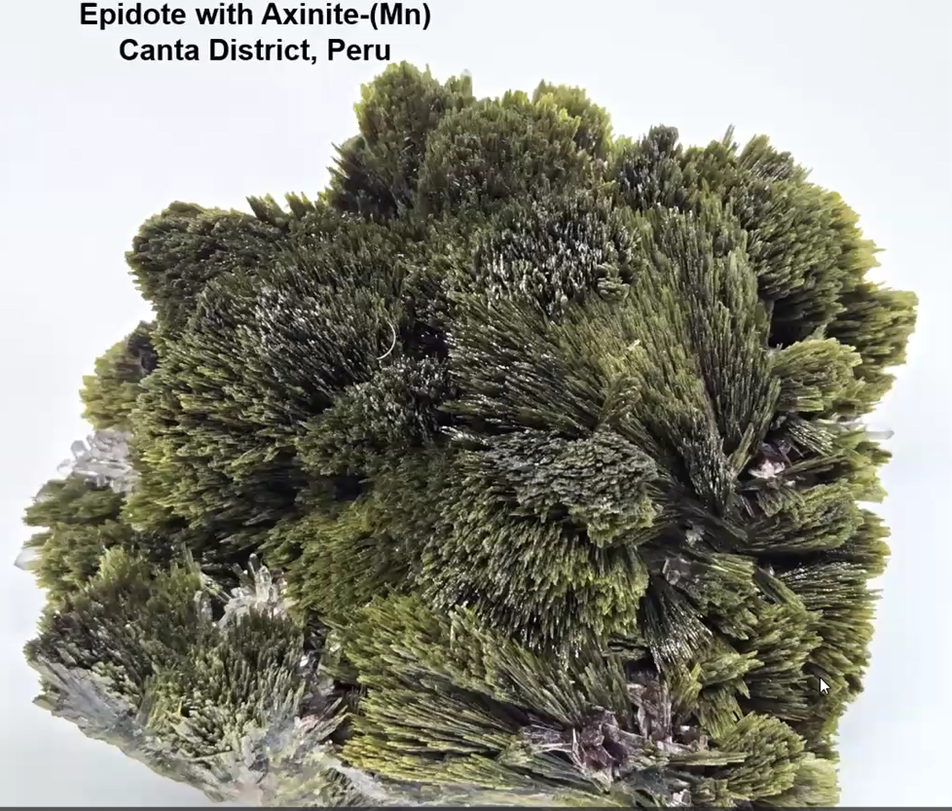
He then showed a second epidote specimen from the same dealer and “it was too good to pass up.” We had not seen anything like this from this location. “
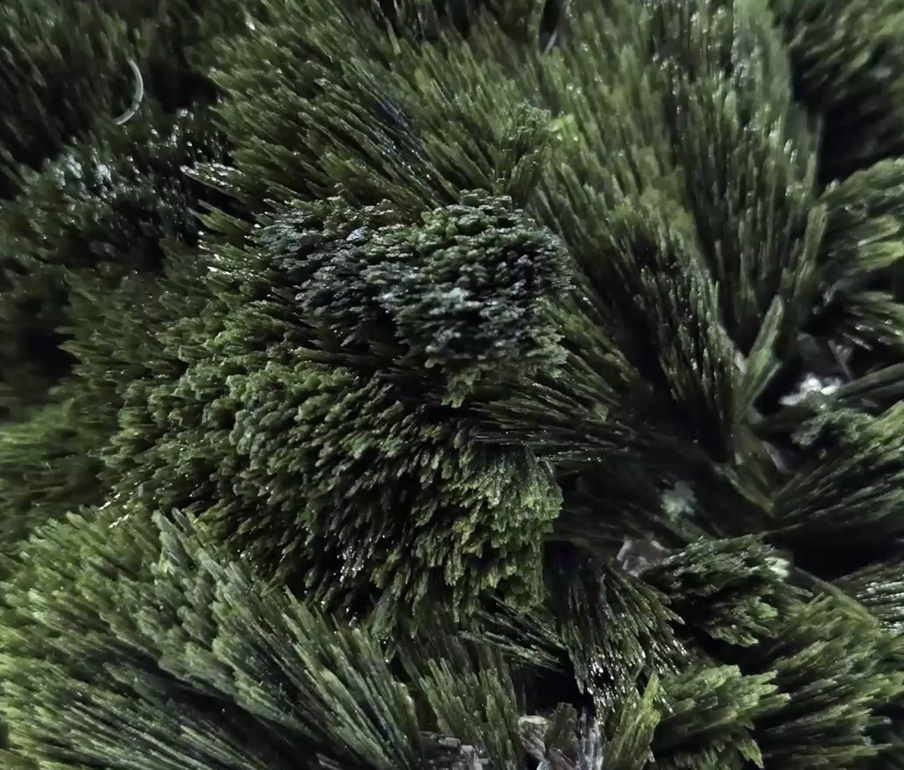
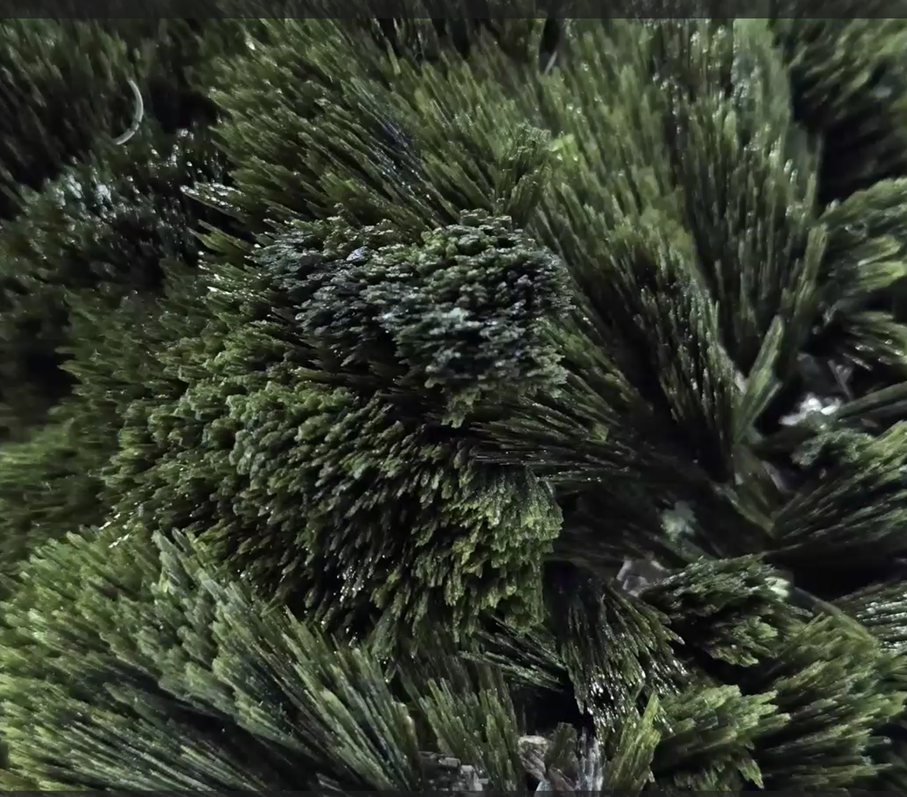
The close-up photo below shows its “wonderful radiating rays of well-formed epidote crystals.”
This year, Mike and his team found, from the same Canta Province of Lima, Peru, another epidote but with a grossular garnet shown below.
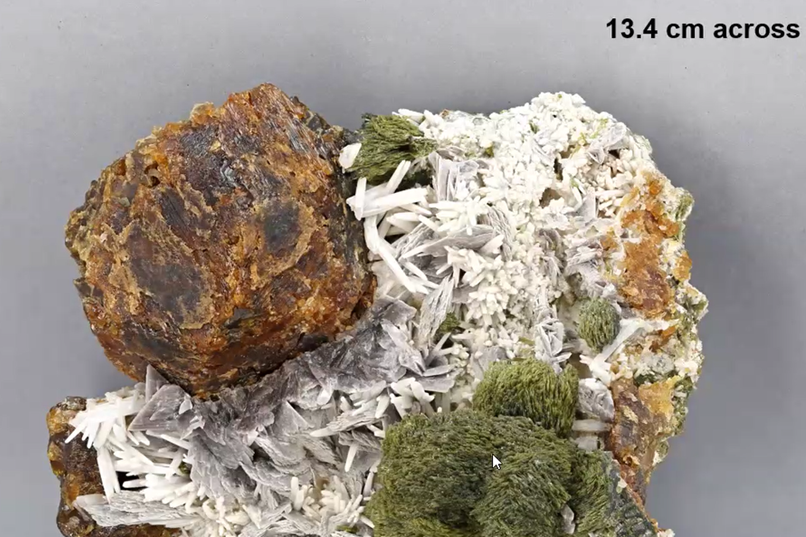
The grossular garnet is 5 cm across “so it is huge.” Mike said he is looking forward to seeing what comes out of this location in the future because it has been producing some fantastic mineral specimens.
The Agate Group
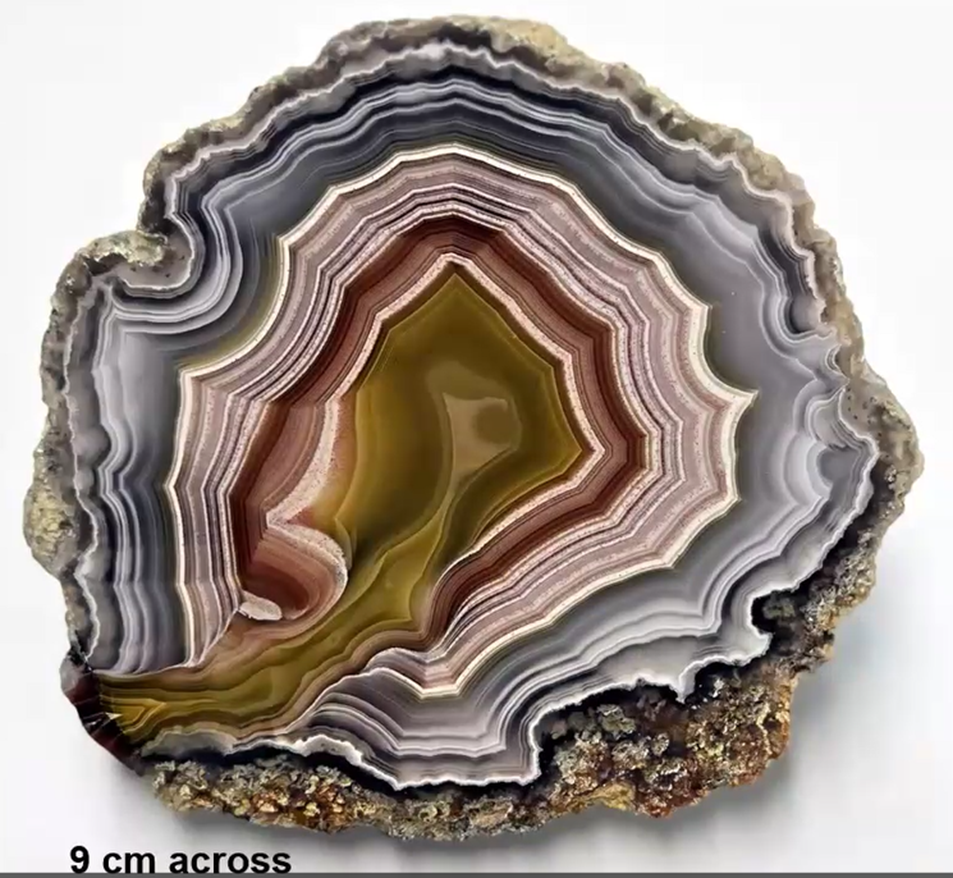
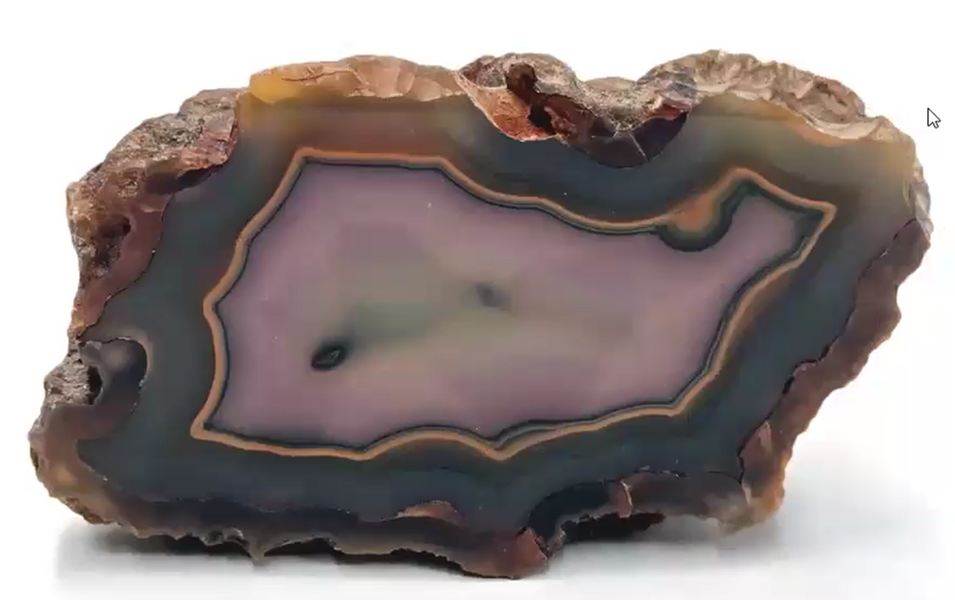
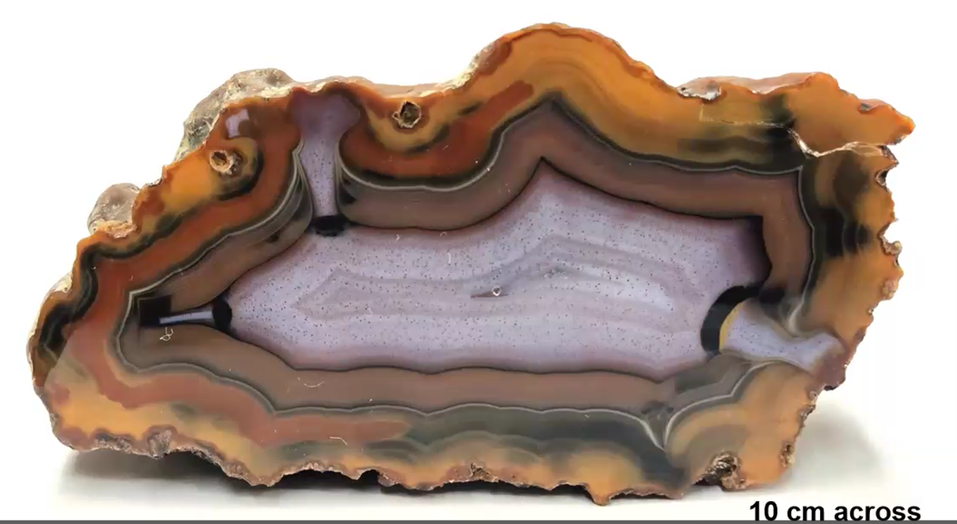
The Smithsonian has a considerable collection of agates that is particularly appreciated by Dr. Gabriela Farfan. The acquisition team found several specimens whose style they recognized would help fill gaps in the national collection, so they picked up the following.
A Very Unusual Gold Specimen
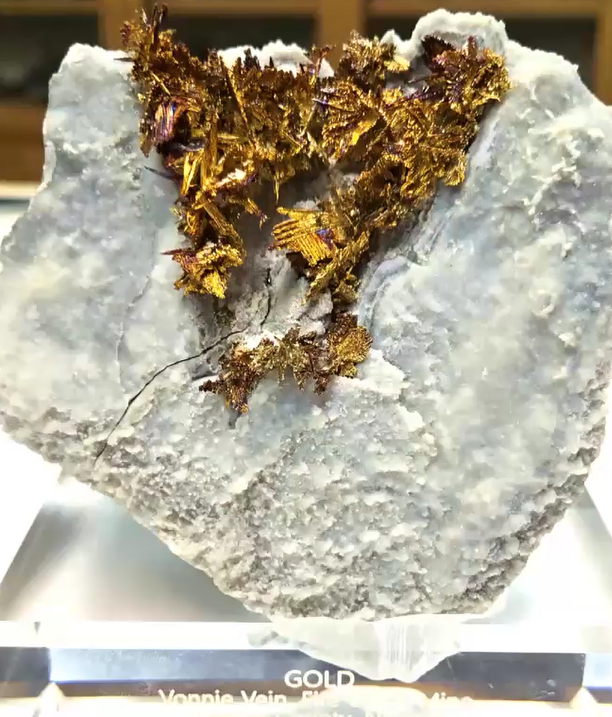
Mike’s presentation included a mineral specimen that came with some mysterious baggage. He recounted that a few years ago, the Smithsonian acquired a gold specimen on matrix from the Vonnie Vein, Fire Creek Mine in Lander County, Nevada. The staff secured it, as usual, in the Blue Room vault, waiting for the opportunity for it to go on display.
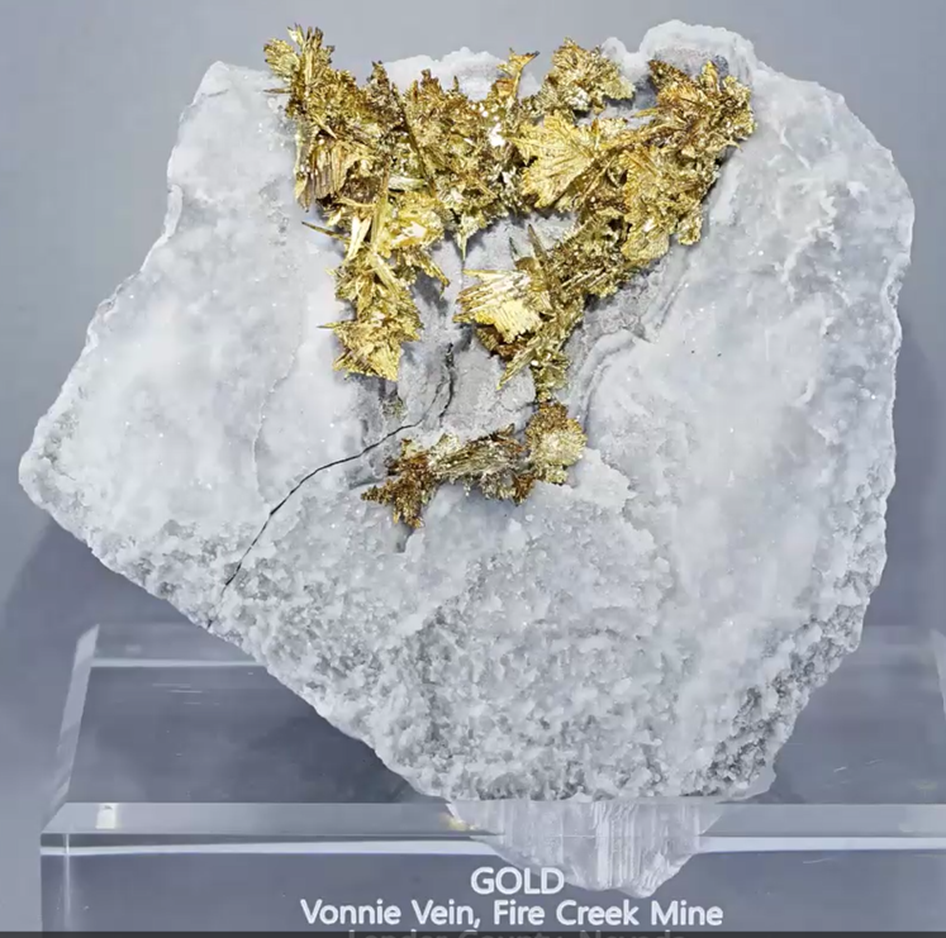
Over the next two years the gold morphed from the original bright image below to the dull finish the staff had never before witnessed. Initially they could identify no event or exposure which accounted for the before-after transformation.
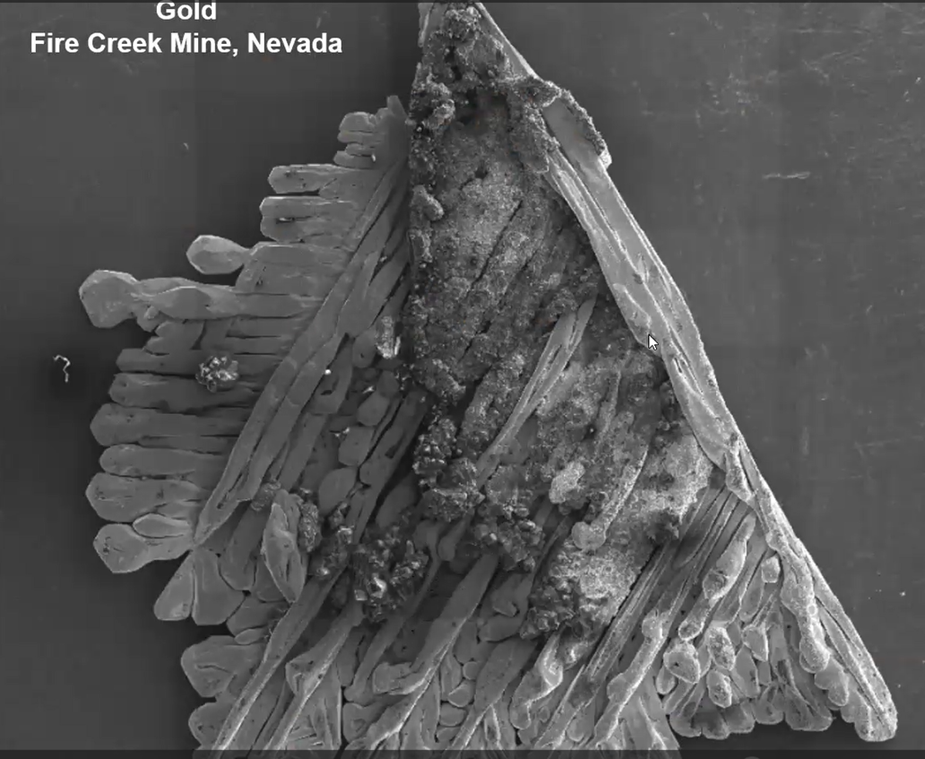
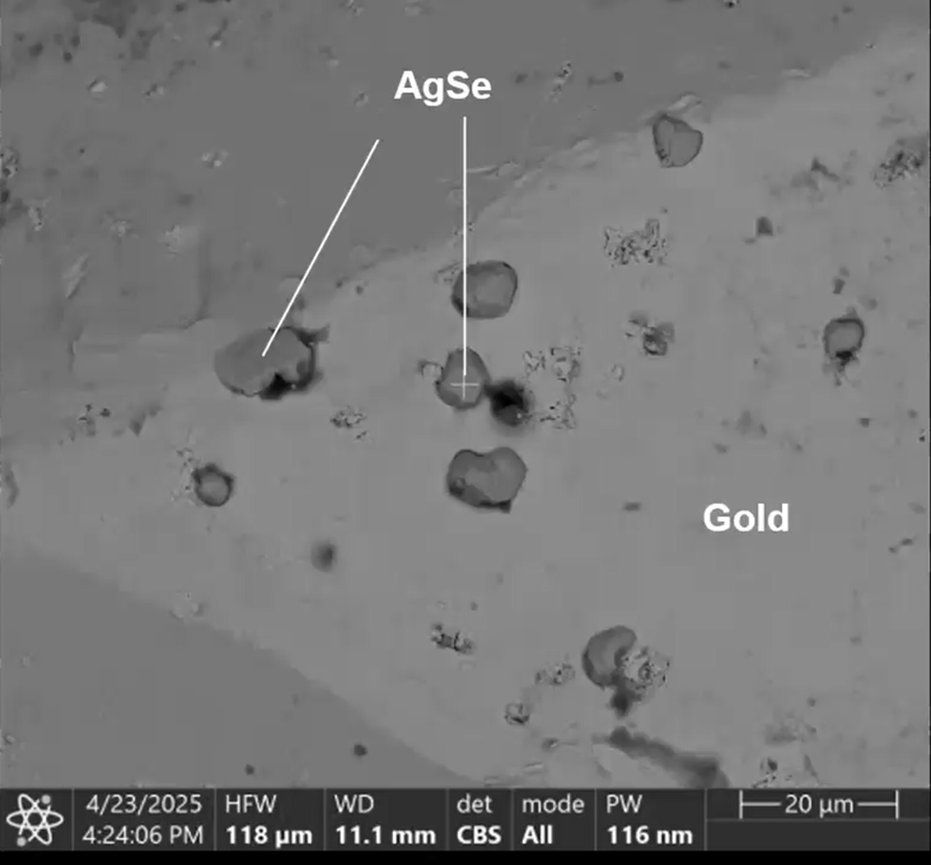
Given that the Department of Mineral Sciences regularly engages in high-tech research, including the use of a SEM (scanning electron microscope), they sought answers. They examined a tiny piece of the gold specimen. The enlarged images, shown, below suggest the tarnishing was due to some type of tiny, weird selenium sulfur balls found on the surface of the gold.
Mike’s presentation provided extensive information on the dozens of additional minerals and items the team added to the national collection in recent years. He expressed his appreciation for all the individual donors and groups of donors who have made and continue to make the acquisitions for the nation’s mineral and gem collection possible. However, even with all this extraordinary generosity, it is clear the acquisition team’s budget has to respect its fiscal limits, as noted below.
Additional Topics Discussed in Mike’s Presentation
· Rubies from Madagascar, Afghanistan, and Myanmar
· Rare and unusual specimens from Malawi, Vietnam, Morocco, Montana, China, and Europe
· Diamonds from Africa
· Carved specimens (mainly quartz)
· Gemstones from Nigeria, Brazil
· Mineral morphology discussions
· Individuals and groups of donors who support the collections
· Relationships with dealers
· The exhibit selection process, storage, trading, and deaccessioning
· Roles played by colleagues Paul Powatt, Gabriela Farfan, Greg Pawley, and Tim Rose.
The One That Got Away
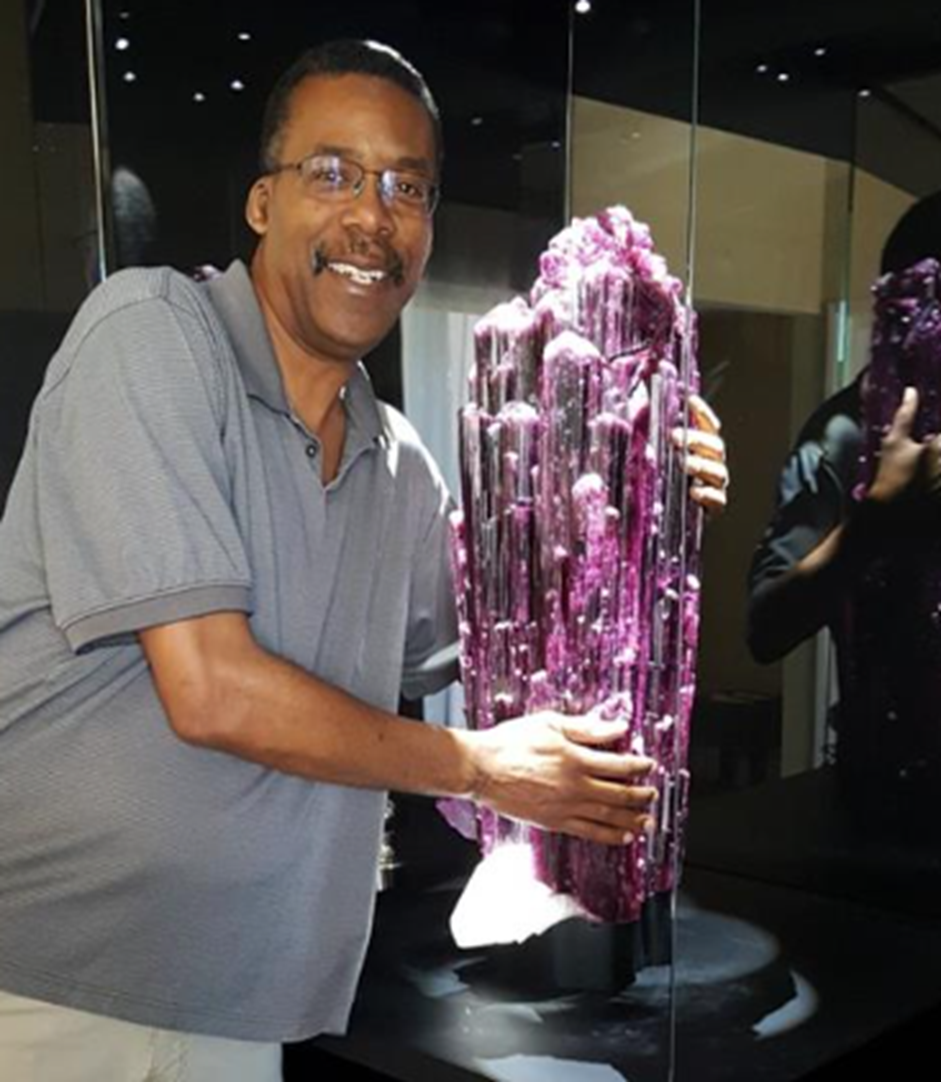
A case in point is the giant tourmaline shown below, which Mike saw and fell in love with several years ago at the Tucson Gem & Mineral show. He said there was no way the Smithsonian could afford its asking price. Today the 180-pound, 33.5-inch long pink tourmaline is on display at the American Natural History Museum in New York City.
Follow-up Questions and Discussions
Mike followed up his presentation by inviting questions from his audience. Their queries ranged widely from:
· how minerals are chosen for display (color, size, rarity),
· how mineral dealers interact with the SI’s acquisition team with regard to potential purchases (some recognize the budget has limitations and some support the national interest),
· which conditions during mineral formation contributed to how the crystals developed,
· how donors have contributed to the successful acquisitions of minerals, and
· whether the Smithsonian can ever “horse-trade” with other museums (depends).
MSDC President Dan Teich thanked Mike for his stunning and extremely interesting presentation on some of the Smithsonian’s recent mineral acquisitions. Several members voiced their thanks for the great stories Mike shared about the minerals and their acquisitions. The MSDC audience added their grateful applause. Dan summarized the club’s sentiments saying: “Thank you Mike, I appreciate you so much.”