
Junior Geologist Lab Displays: Second in a Series
by John Weidner, MSDC Treasurer
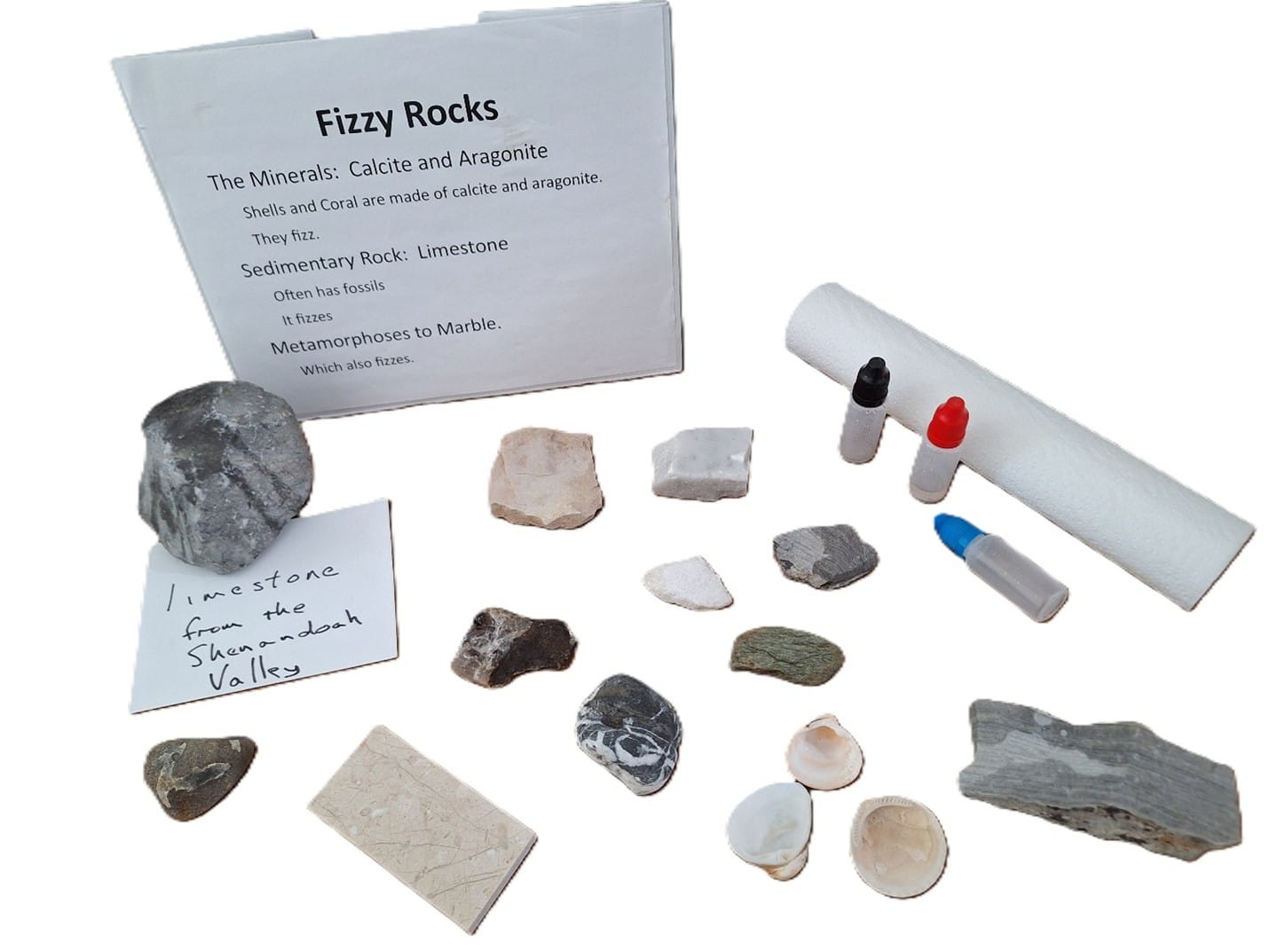
Nine months of the year,* on the fourth Thursday of the month, we have a kids rock club meeting at the Kings Park Library in Fairfax Virginia, a club the library calls Jr. Geologists Lab. We ask kids to bring in a rock. We would rather talk about their rock than about ours. But most kids don’t, so we bring stuff for them to look at, and better than just looking, things for them to do.
Last month, I described two of our exhibits: the Fossil Match Sorting Challenge and the Shark Coprolite Question. This month, it’s the kids’ favorite exhibit: Fizzy Rocks. I also describe a rookie mistake I made.
The Kids Favorite: Fizzy Rocks
Carbonate minerals fizz when you put a couple drops of acid on them. Limestone, a sedimentary rock, and marble, a metamorphic rock, are composed of calcium carbonate, so they fizz. Field geologists carry a small bottle of weak acid to test to see if a rock is limestone or marble. This is fun, so we let the kids try it.
We set out some little bottles of dilute hydrochloric acid. What we geologists use is a little stronger than vinegar, but not much. We set out things for them to test.
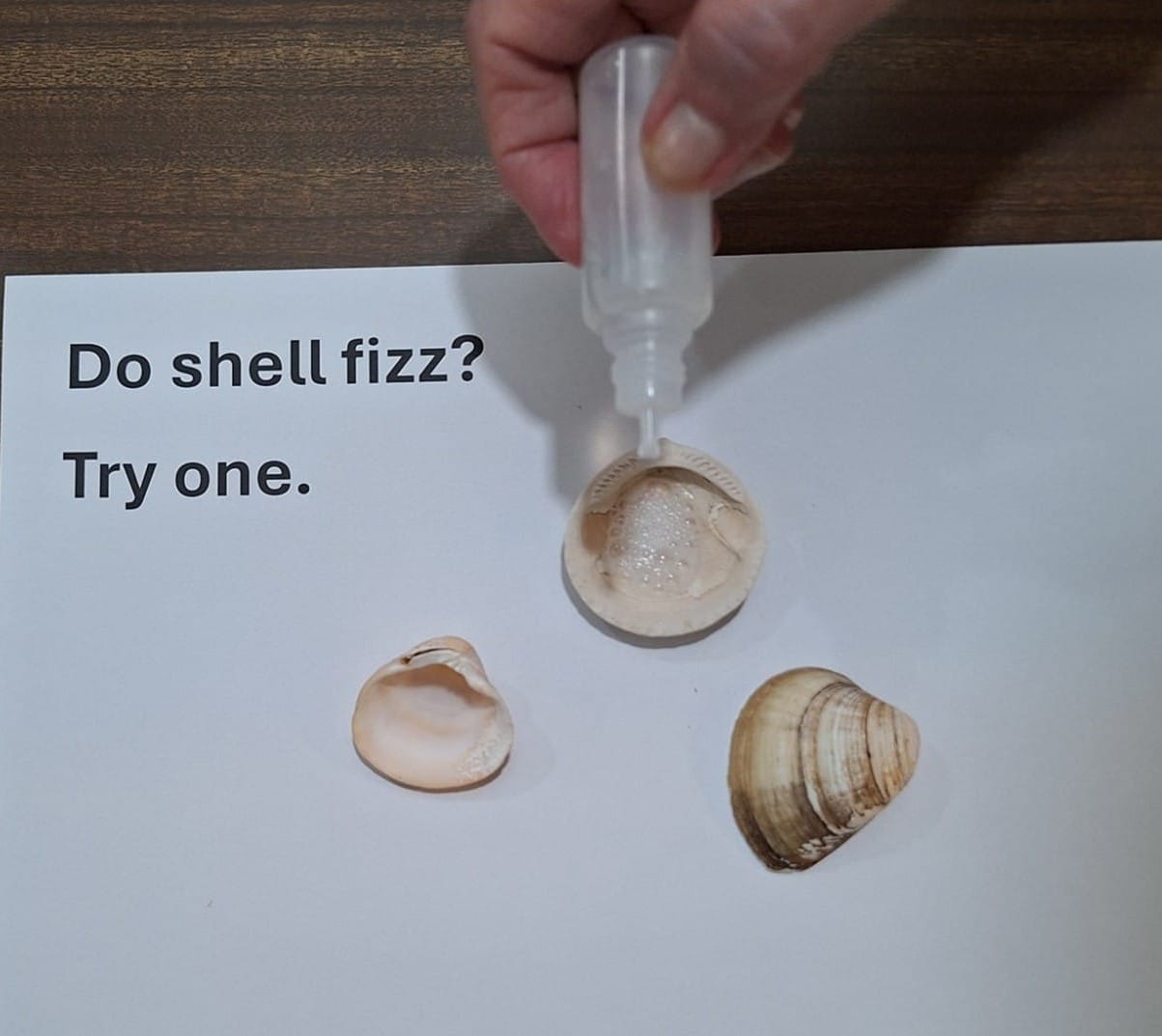
Some Shells
Shells of mollusks and plankton are the original source of most calcite.
Some Limestone
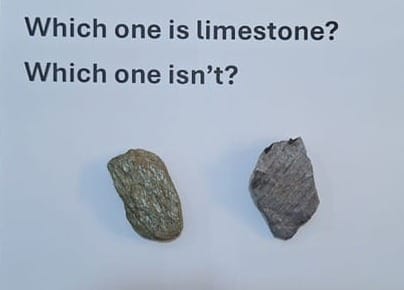
If a rough greyish rock bubbles when you drip acid on it, it is probably limestone. Or maybe calcareous shale, but let’s keep it simple.
Some Marble
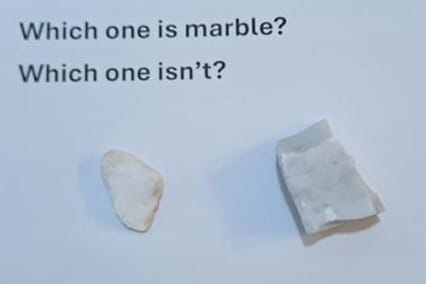
If a smooth, crystalline, rock bubbles, it’s probably marble. For the chemically minded, the reaction is
calcite + hydrochloric acid yields calcium chloride + water + carbon dioxide
CaCO3 + 2HCl —> CaCl2 + H2O + CO2
Carbon dioxide is the gas that creates the bubbles in Coke, the same bubbles we see when we drop acid on a rock or shell. The kids love doing this. They could do it all day.
Full Disclosure
And they do. A geologist is content to drip a couple of drops on the rock and note whether it fizzes or not. Kids realize that if a few drops fizz, then a LOT of drops of acid will create LOTS OF FIZZ!
If you want to do this with kids, bring lots of acid and lots of paper towels to wipe the rocks off with, ‘cause the kids are gonna use it all.
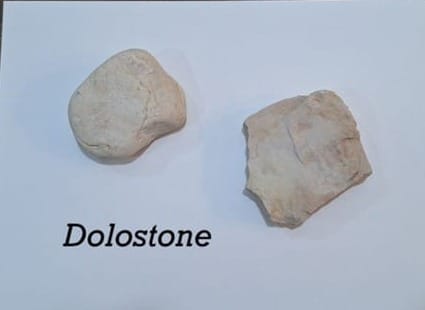
p.s. And just to show the kids that “It’s Not That Simple” (one of my favorite phrases about geology), we have some dolomite from the Niagara Escarpment. Dolomite is a magnesium-rich limestone. It does not fizz when you drop acid on it, but if you scrape the rock, to get some powdered dolomite, the powdered dolomite will fizz.
And the Rookie Mistake
We always have lots of touch rocks and fossils out for them to look at and handle. At our last Junior Geologist's meeting, MSDC member Sue Marcus brought about 40 specimens, including some pumice. Pumice, of course, is a volcanic rock that cooled so quickly and trapped so many gas bubbles that it floats.
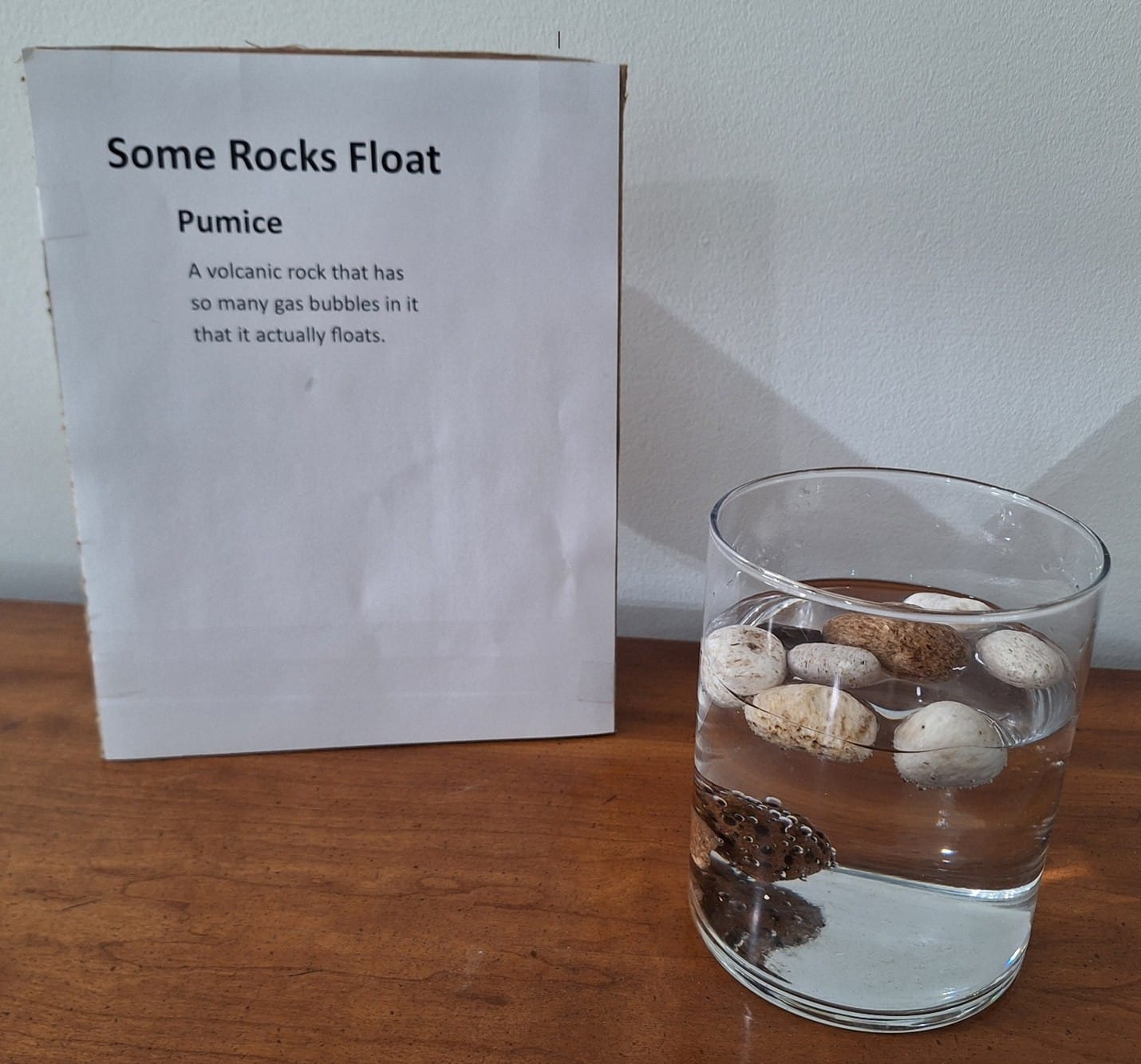
I was talking to some kids, showed them the pumice, and said “Wait a minute.” I ran out, got a small container of water, brought it back, and told them to put the pumice in it, to show them that pumice floats.
Rookie Mistake!
~ We will pause for a minute to see if you realize why this was a mistake. ~
No, it wasn’t the probability of the water spilling. I can clean up a spill.
We adults look at the floating pumice and think, “That’s neat. A rock that floats.” The kids, being natural scientists, test every other rock on the table to see if any of them float. Including the halite. (Halite is the geological name for natural rock salt.) For the record, halite does not float. And after they tested it, I grabbed it quickly and dried it. I hope it wasn’t ruined. Sorry Sue.
And when I got home, I put the “Does it Float” exhibit way back in the back of my closet. I think we’ll use other exhibits from now on.
*We did not meet in October. The library’s book sale used the meeting rooms. There will be no meeting in November; the fourth Thursday is Thanksgiving. And in December; the fourth Thursday is Christmas.