
September Program Report: The Mineral Resources of Virginia, by Thomas N. Hale
Synopsis by Andy Thompson, MSDC Secretary
Thomas Hale took a brief break from his doctoral graduate studies to make his third data-rich presentation to MSDC. This time he shared the history of Virginia mining and photos of minerals and where they can be found in each of the state’s five physiographic provinces.
“A lot of tonight is going to be a quick review of Virginia mining history,” followed by a description of the state’s current mining sites and resources. He then focused on identifying the key resources of each of the state’s provinces with many new images of the minerals found across Virginia. For almost all of the amazing images in Tom's presentation, he identified the collecting site and often provided insights into their geologic formation. The following slide highlights the major themes of Tom's presentation.
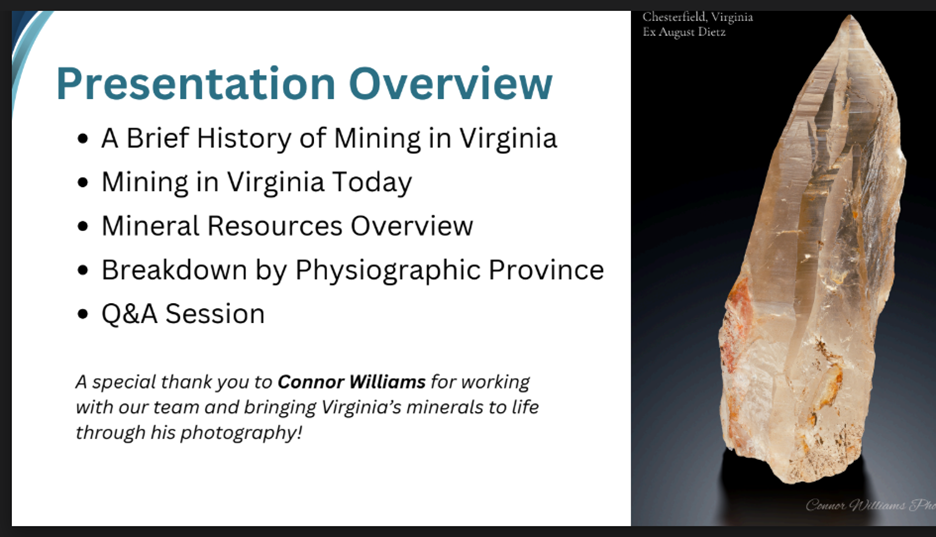
Readers: The purpose of this report is to encourage you to go to the MSDC YouTube video of Tom’s presentation so you can enjoy it in its entirety: Exploring Virginia's Mineral Resources - Thomas (Tom) Hale
A Brief History of Mining in Virginia
Tom began by describing the rich history of mining in Virginia and its evolution from prehistoric times to present. Topics covered included early Native American toolmaking to modern-day sand and gravel mining. He provided the following dates to help his audience track his historical overview of mining in Virginia.
1619: bog iron being mined
1758: coal mining was initiated
1776: mining lead and zinc for production of bullets
1835: creation of the Virginia Geological Survey
1845: barite mining
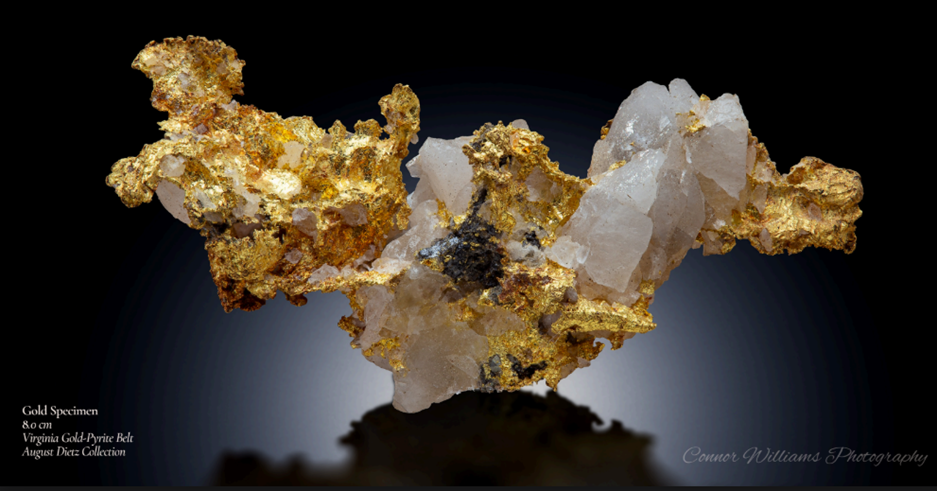
1848: earlier interest in Virginia gold mines was overshadowed by the California gold rush.
1860-1865: salt became crucial for food preservation during Civil War
1866-7: Crimora mine provided manganese for production of steel & aluminum until 1958
1900s through to today: the dominance of sand and gravel mining for aggregate
1940 to 1970: titanium and aluminum mining.
Throughout his presentation, Tom shared stunning photographs of Virginia minerals and encouraged attendees to explore the state's diverse geology for collecting opportunities.
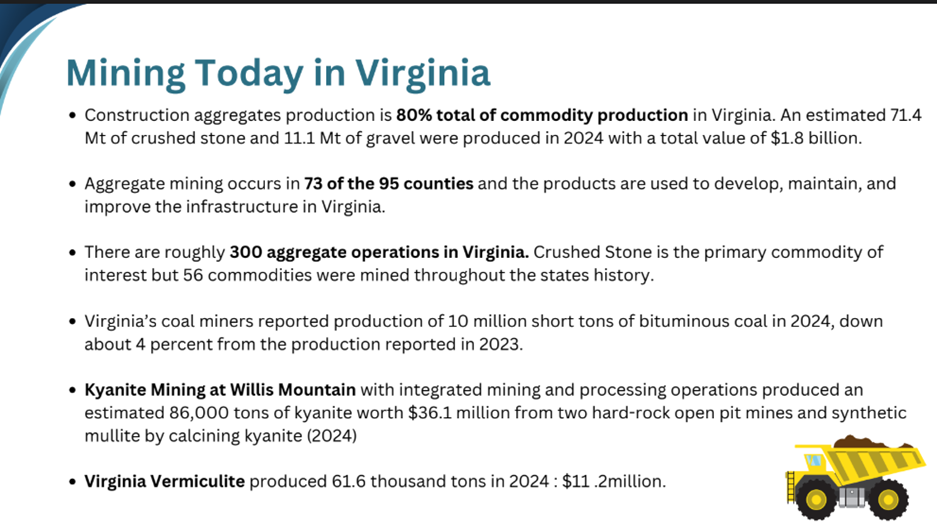
Mining Today in Virginia
Tom noted that our knowledge of the history of mining and mineralogy has been seriously limited by the lack of color photos as illustrated by the interesting, but colorless, sketches below.
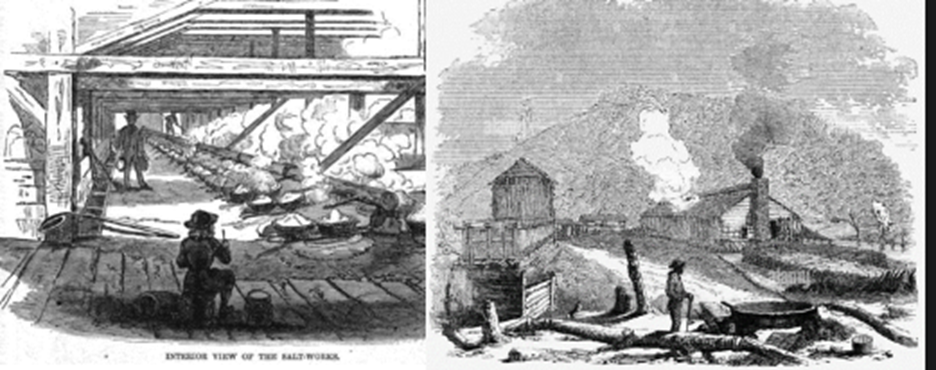
Tom stressed for his listeners the importance of their taking and sharing color photos of their minerals and documenting any prominent aspect of their field-collecting endeavors. He offered to share his entire deck of 42 slides that illustrated his evening’s presentation. (Crediting them to Thomas N. Hale is expected should anyone use them for their personal or professional use).
Mineral Resources Overview

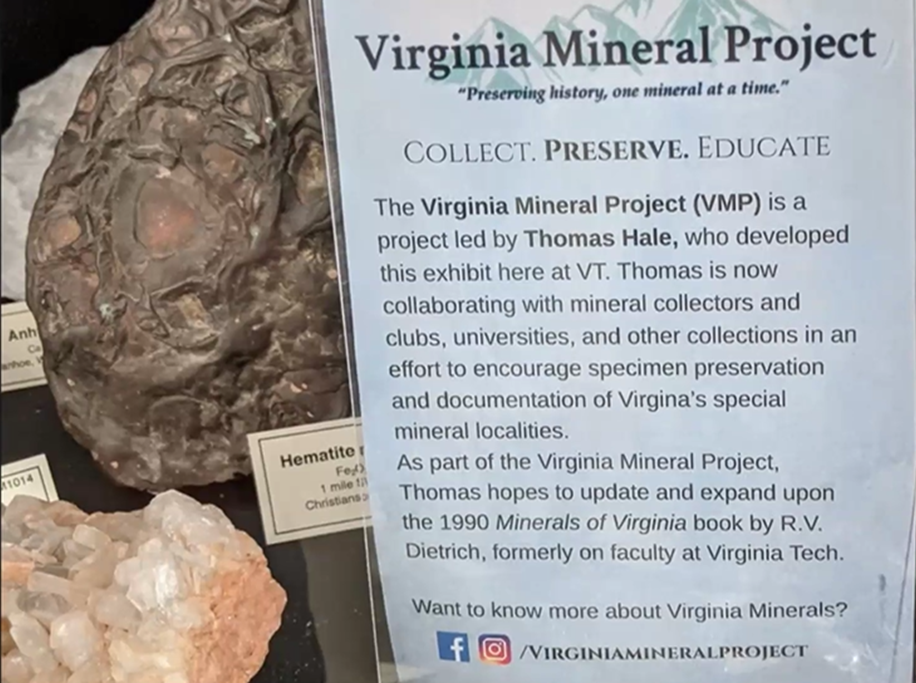
MSDC’s Laura Dwyer, when introducing Tom, reported that as an undergraduate at Virginia Tech, he had contributed diverse mineral specimens to an exhibit on campus. As shown below, a poster described the Virginian Mineral Project whose purpose then and now, has been “to encourage specimen preservation and documentation of Virginia’s special mineral localities.” Tom’s September presentation to MSDC is a continuation of that ongoing effort.
He noted the above six unique regions ranging from the state’s pyrite-gold belt to the state’s copper belt. The website Mindat.org documents 459 diverse minerals in Virginia, and the number has increased in recent years.
Geological and Mineralogical Features Virginia's Physiographic Provinces

Tom discussed the geological and mineralogical features of different regions in Virginia, focusing on the Appalachian plateau and the Valley and Ridge physiographic province. He highlighted the presence of fossiliferous deposits in the plateau, including fern fossils and calcite crystals. He also pointed out the diversity of minerals in the Valley and Ridge, such as iron sulfides, quartz crystals, and calcite. Tom touched on the historical importance of iron mines in the province and the challenges faced by collectors due to changes in agricultural practices.
As a convenience for readers, here are enlarged images of the three illustrations embedded in the above slide. Tom spoke about the geology and minerals found within Virginia’s five diverse provinces.
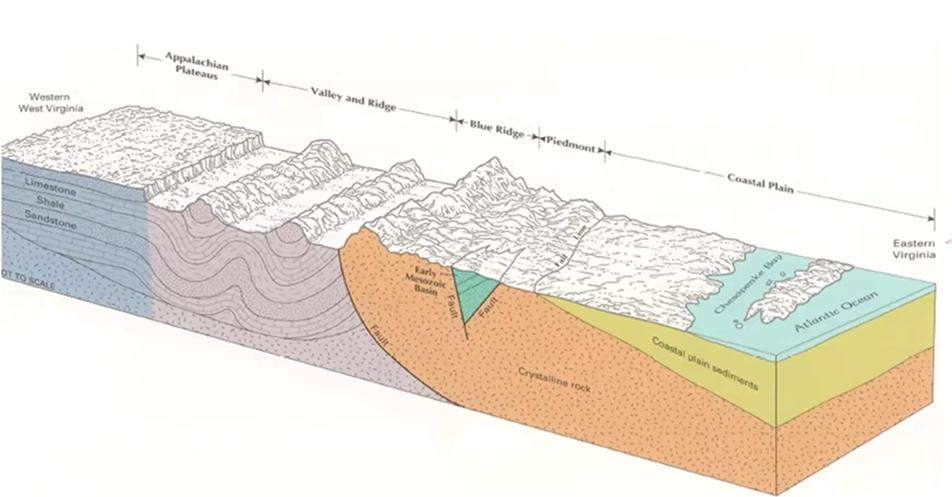
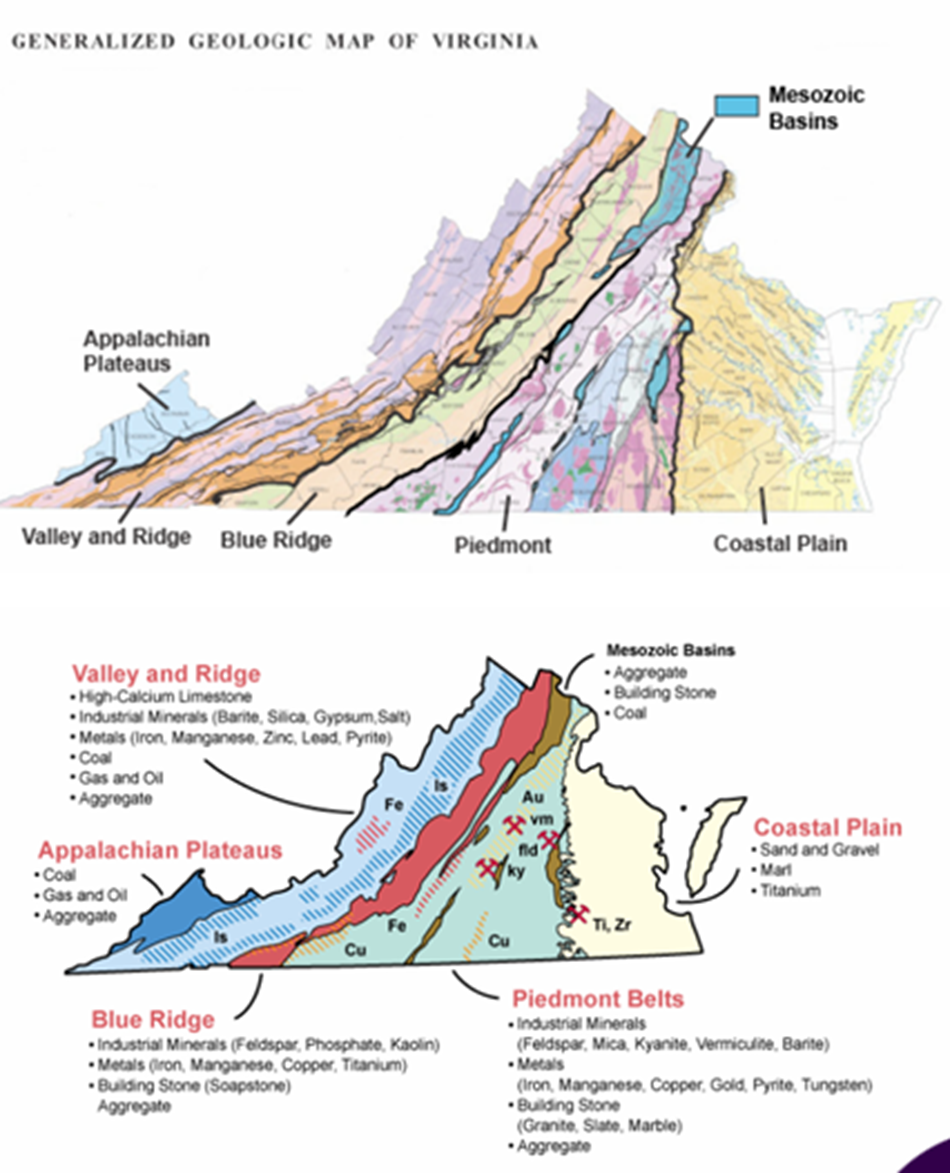
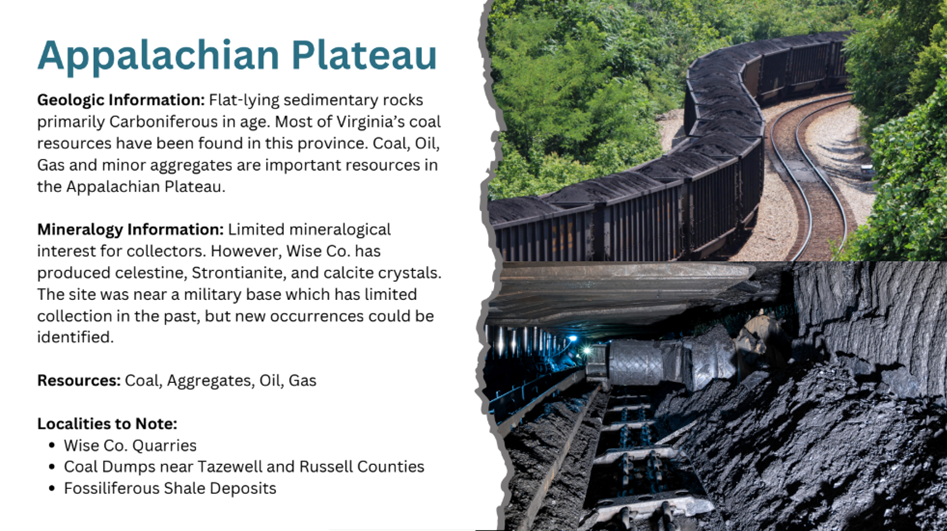
Appalachian Plateaus (Southwestern Virginia shown in dark blue on the above map)
The Appalachian Plateau is famous for coal, gas, oil, and aggregate, but not much in the way of mineral specimens. But nonetheless, Tom provided examples of three minerals. The top row shows calcite, strontianite, and celestine. The bottom row shows three plant fossils, root-related stigmaria and appendage that come out of the roots to further collect water.
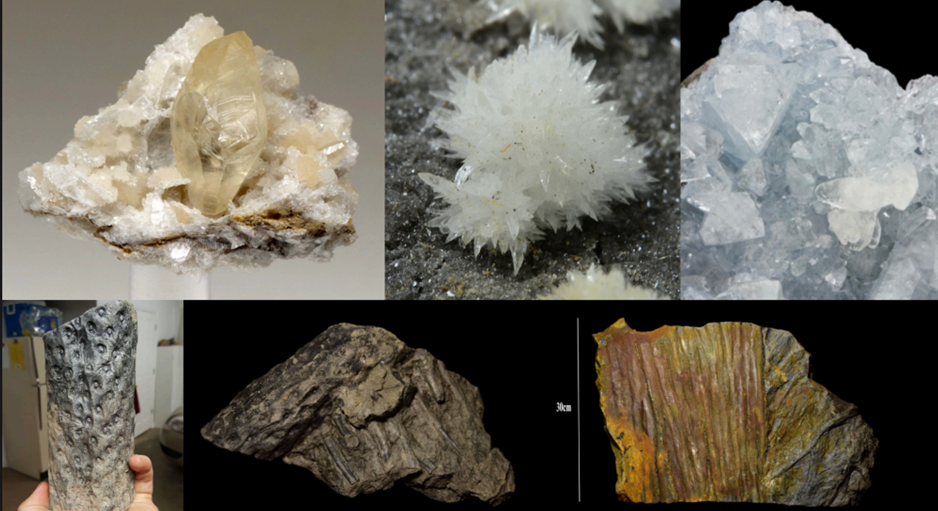
Readers: Are you curious and want more specifics? Check out MSDC's video of Tom's presentation at about the 25 minute mark to learn more.
Valley and Ridge Province
The Valley and Ridge region has more extensive mineral deposits that date from a 200 million year period from 520 to 300 million years ago, as noted in the following slide.
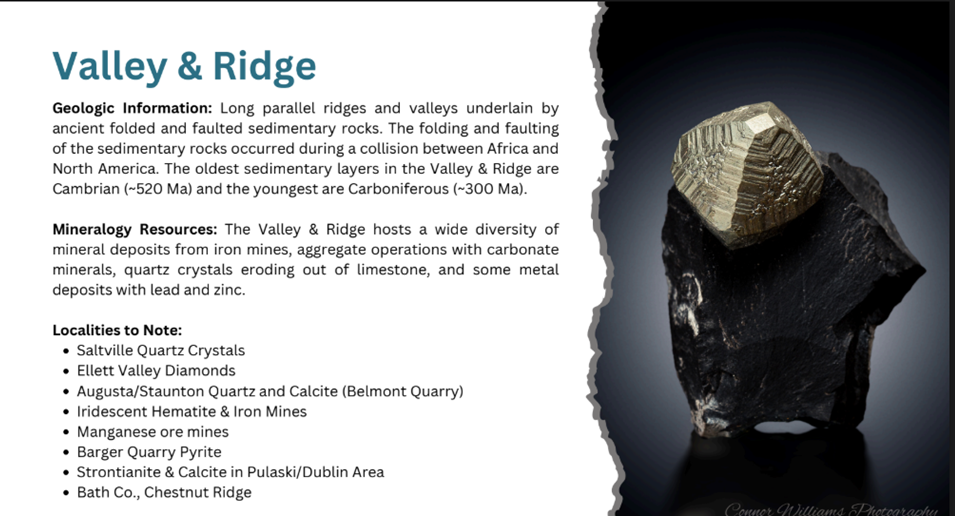
This province contains many sulfide deposits and so is more interesting for mineral collectors. But Tom warned that due to modern agricultural processes, which use less tilling, today’s collectors have a more difficult time finding specimens than did previous generations of collectors.
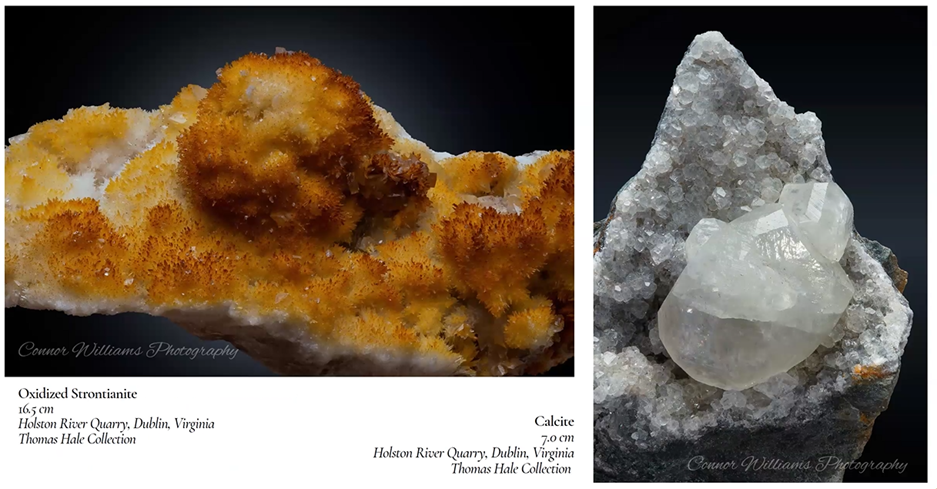
Below are two specimens from Tom’s collection. Throughout his presentation he made many minerals particularly interesting by explaining the process by which they were formed as well as by providing locality information. The golden brown oxidized strontianite (SrCO3) on the left and the calcite (CaCO3) on the right are both from the Holston River Quarry.
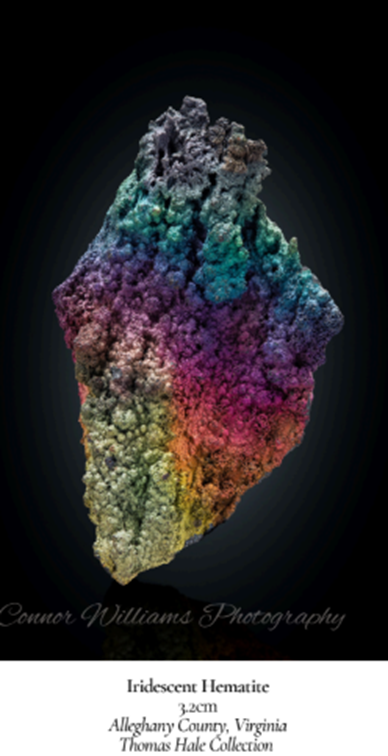
Along with his many beautiful slides, Tom also shared what he liked about several specific collecting sites and their current physical context. For example, the iridescent hematite shown below, before it came into Tom’s collection, was discovered near a fire-break pathway that James Mason University geology professor Dr. Lance Kearns explored. Some collectors reported this type of colorful hematite specimen came from a small cave. Tom, however, suggested the site was more like a narrow crack in a rock formation which the State of Virginia, for unknown reasons, subsequently sealed resulting in the area now being closed to collectors.
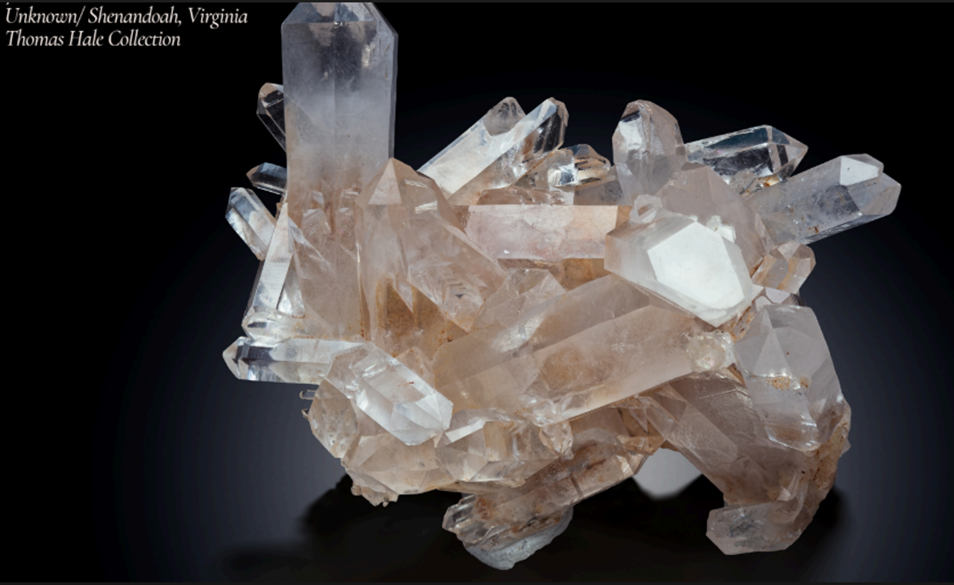
Tom also said that there are also new collecting sites that have not been documented. The quartz below, for example, had been given to him by a person who said she found it in a stream bed in an area currently unfamiliar to collectors and which Tom hopes to find and put on his list for future exploration.
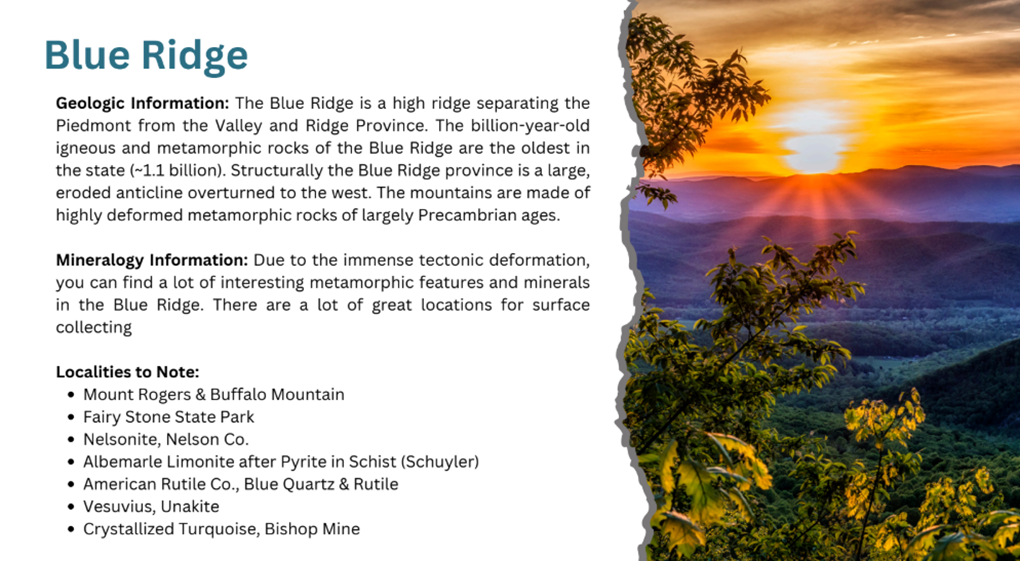
The Blue Ridge
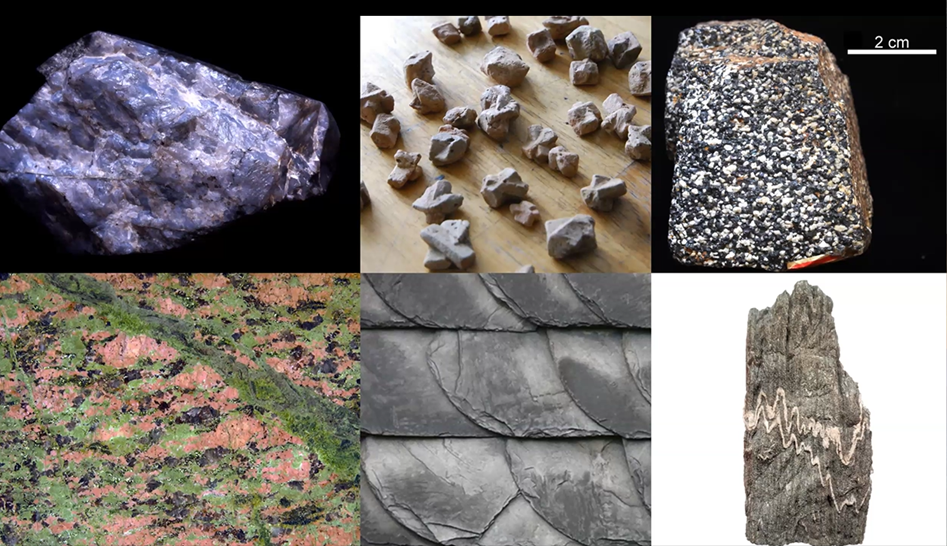
Tom described each of the six specimens below and how they were formed. On the top row are a blue quartz, brown staurolite (x-shaped), and salt and pepper colored nelsonite. The bottom row has the colorful unakite granite on the left with its mix of minerals, black and gray slate, and lastly, the migmatite with its quartz veins that resemble a cardiogram. Go to Tom's video on MSDC’s YouTube channel to learn more about the formation of each of these specimens
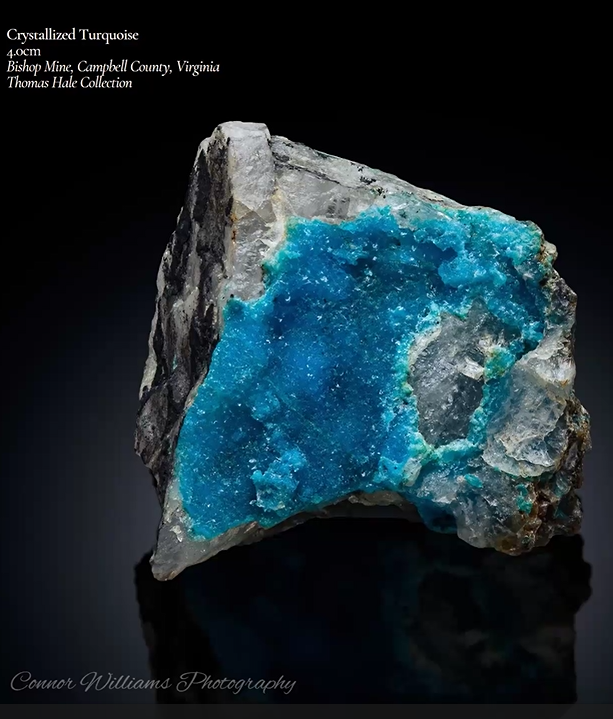
The turquoise specimen below originated in the Bishop Mine. Tom explained that in the early days of mining, this beautiful blue material, discovered in 1910, was mistakenly identified as very rich in copper. But subsequent smelting revealed that this was not the case. Later, the deposit became internationally recognized as a unique site for turquoise.
The Piedmont
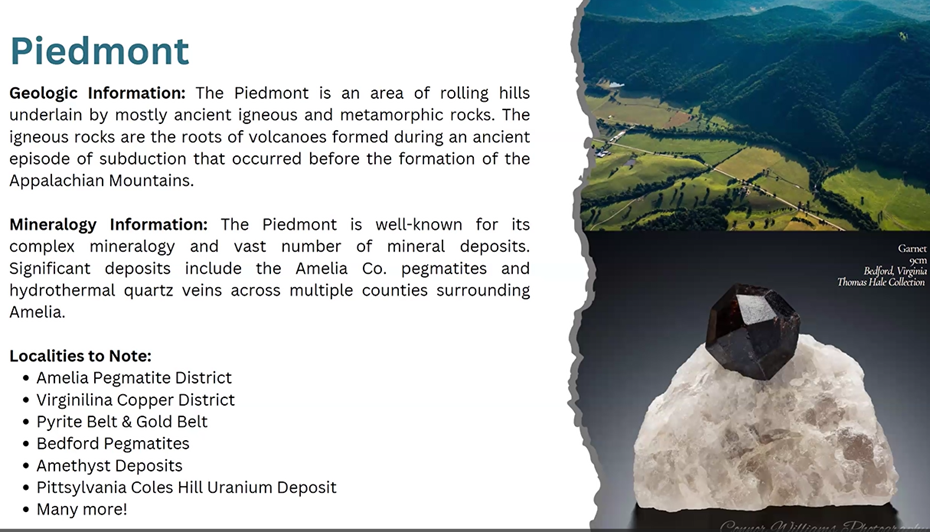
Tom began his discussion on the Piedmont by saying:
“This (region) is really the bread and butter for collectors. This is where a lot of the famous mines have been. This is where a lot of the deposits are and so where people think about collecting... and where there are a lot of locations from which many of today’s collections originated."
He said other quarries are good, but the Piedmont has produced a wide variety of diverse species. The reason for this is that the province consists of igneous rock at the mountain’s root and has rich volcanic areas. Over the course of billions of years, the overburden has weathered away, exposing a wealth of minerals. Remember, he noted, the Appalachians were once as tall as today’s Himalayas. All the material that weathered away became the sedimentary materials which constitute the younger coastal plain to the east. So, collectors today are extraordinarily lucky to have access to these Piedmont deposits.
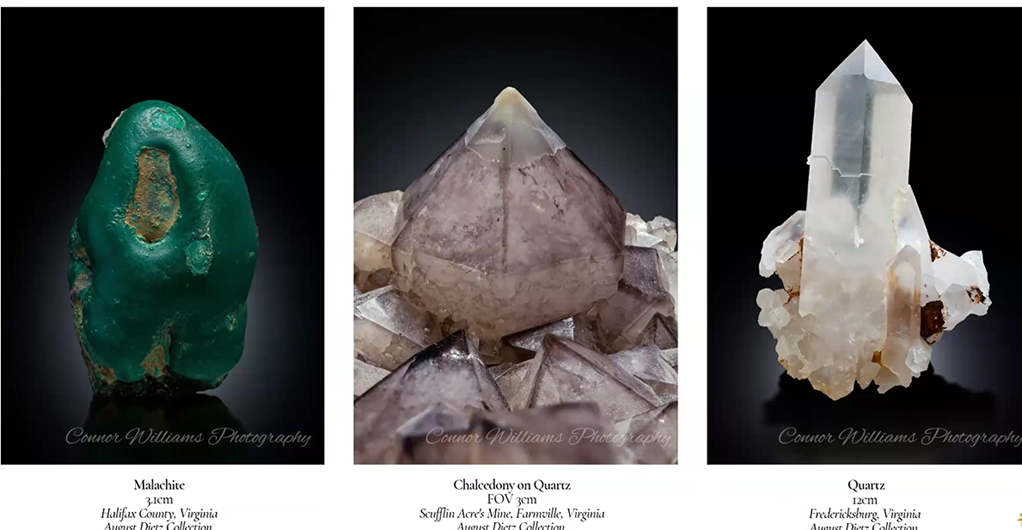
Tom then provided an abundance of photos of mineral specimens taken from this province, ranging from the 9 cm deep red almandine garnet he collected six years ago, pictured above, to the green malachite, chalcedony, and quartz specimens shown below.
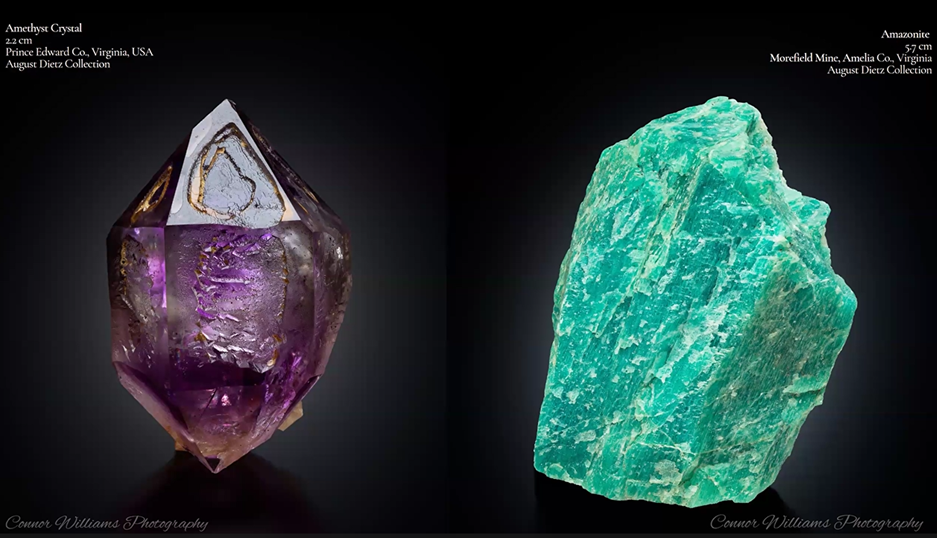
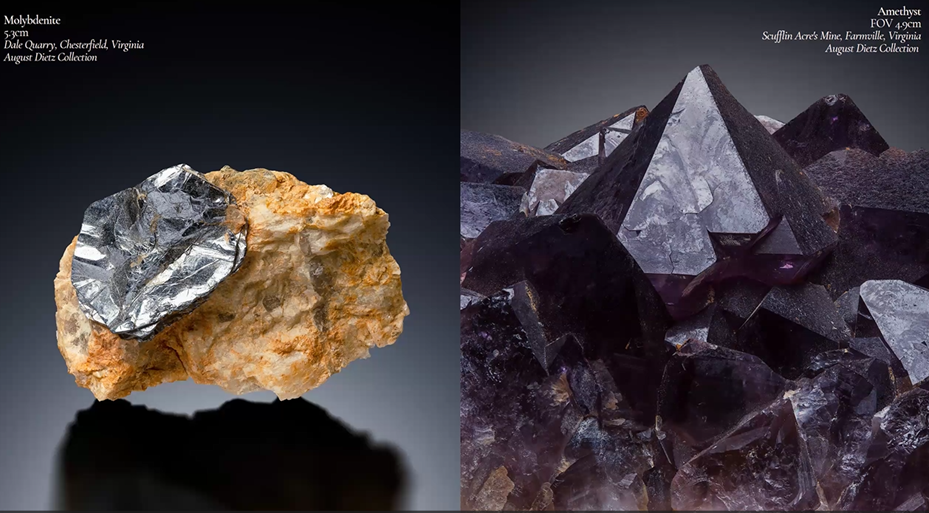
The amethyst and amazonite below, as with many of the specimens Tom displayed, came from Andy Dietz, a well-known local collector and mineral dealer.
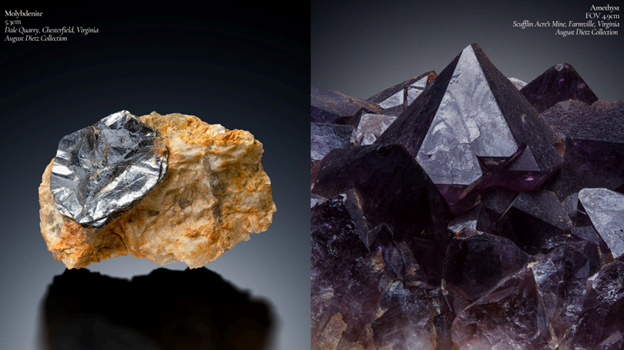
The molybdenite below and on the left, Tom said, is his favorite. Watch the video and see why. Also, learn what is interesting about the conditions under which the deep blue quartz on the right was formed.
Coastal Plain
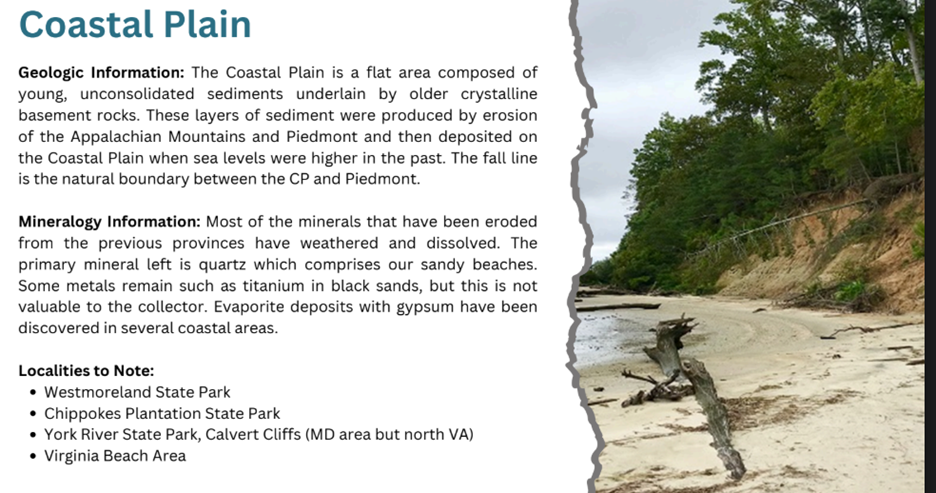
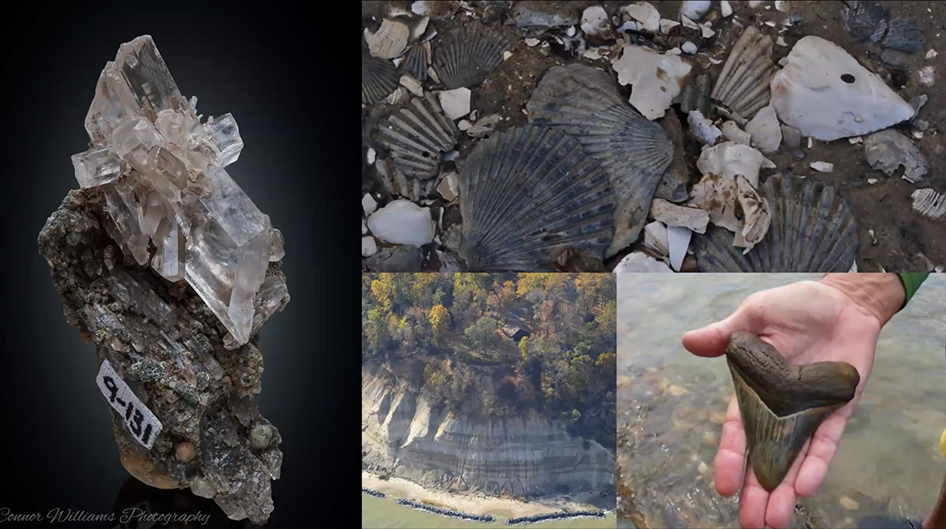
Collectible mineral specimens are few and far between in the Coastal Plain, the most eastern of Virginia’s five physiographic provinces. This is because the earlier crystals and those that washed there from the Piedmont, were themselves, over the millions of years, subjected to weathering and dissolution. Gypsum crystals, as shown below on the right, have been found in the area, including in Alexandria, VA along with diverse fossil shells as shown below.
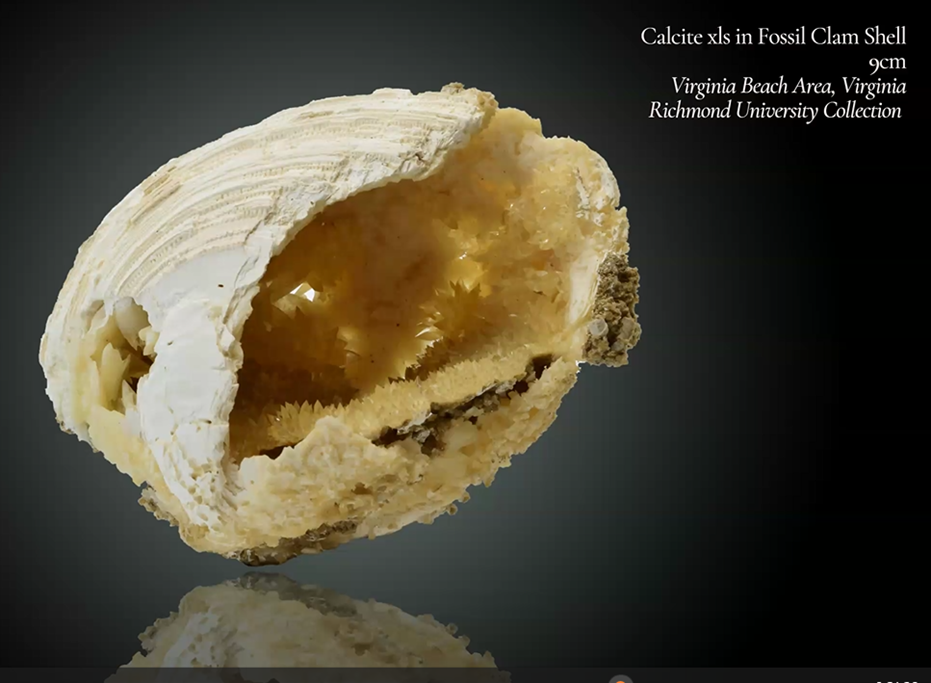
Among the fossils, including the clam shells that are commonly found along the East coast from Florida and extending north beyond the Virginia coast, one can occasionally find tiny calcite crystals which grew within the clam shells as shown below.
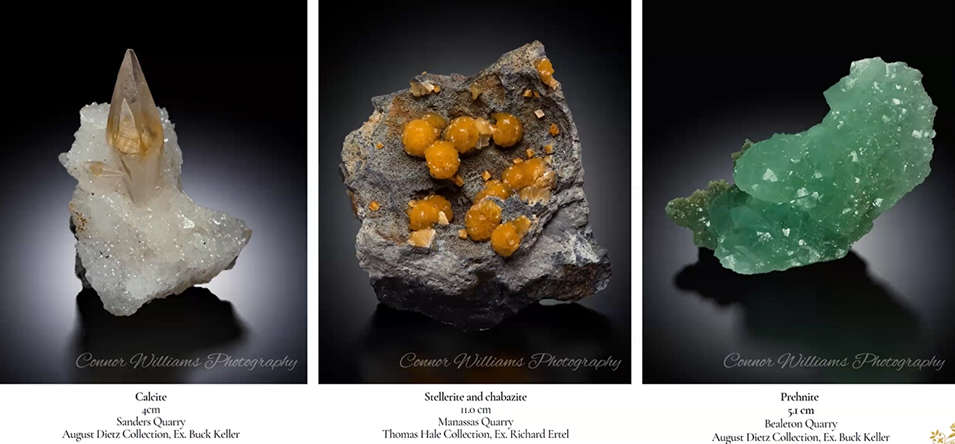
Tom concluded his presentation by showing a few of the minerals which he discussed in earlier presentations. Those specimens have been found in the Virginia areas a bit closer to DC. Below are minerals from Virginia trap rock sites and various quarries, such as the Sanders and Manassas sites as shown below.
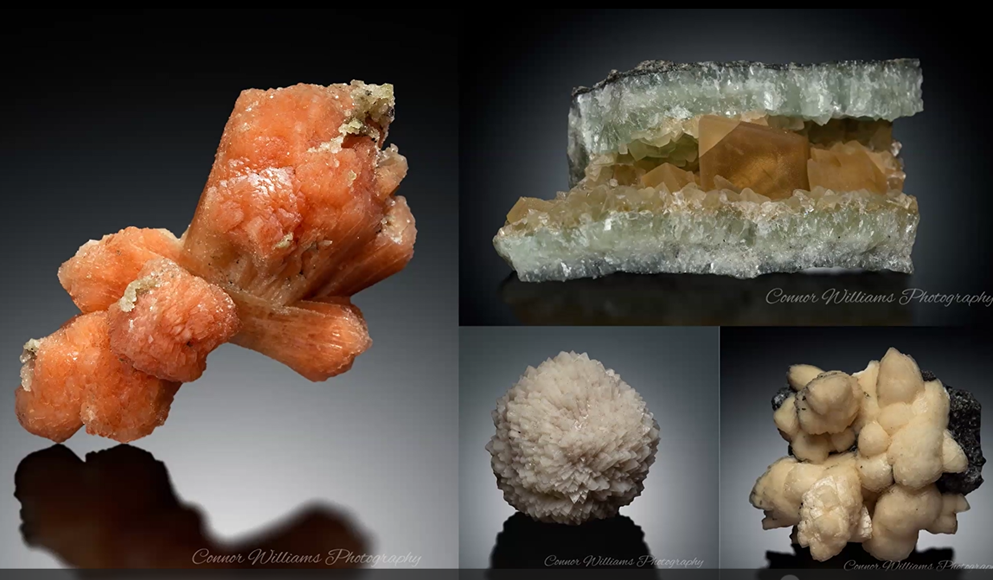
Curious about the identity of the above specimens? Go to the end of Tom’s video.
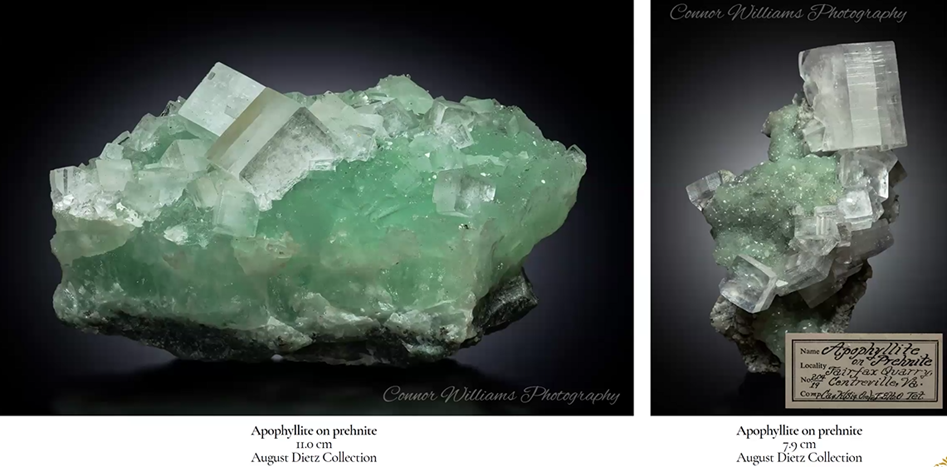
Below are examples of prehnite, a mineral commonly collected from Virginia quarries west of DC. Tom noted that he and fellow collectors, as part of the Virginia Mineral Project which Laura cited in her introduction of Tom, worked to document possible differences in the age of the prehnite specimens.
MSDC’S president, Dan Teich, thanked Tom for his amazing presentation, including those incredible photos of Virginia minerals. Participants responded with a hearty round of applause.
Question and Answer Session
Tom concluded his presentation by inviting questions and comments from his audience. Questions included, but were not limited to:
· Where to find the best display of minerals from Austinville, VA? (Wythe County VA),
· What causes the color in blue quartz? (titanium, not kyanite)
· Identity of a glass-like mineral, possibly obsidian? (nope, probably slag from iron smelting process)
· Where had Tom collected the migmatite? (Buffalo State Park)
Many members of the audience thanked Tom and applauded his excellent presentation.
Readers who want to have the pleasure of experiencing Tom’s presentation can watch the video by clicking on the link below.
Exploring Virginia's Mineral Resources - Thomas (Tom) Hale