
November 2025 Program Report: "Classic Mineral Localities of Chester County, PA,” by Ron Sloto, P.G.
Synopsis by Andy Thompson, MSDC Secretary
Ron Sloto, a geologist who served with the U.S. Geological Survey for 41 years, began by saying he wanted to share with us some information about the minerals and geology of a few of his favorite mines in Chester County, Pennsylvania. His knowledge of the mines’ history, economics, and mineralogy is encyclopedic as documented by two of his books pictured below, the first, on the left, being 508 pages in length.
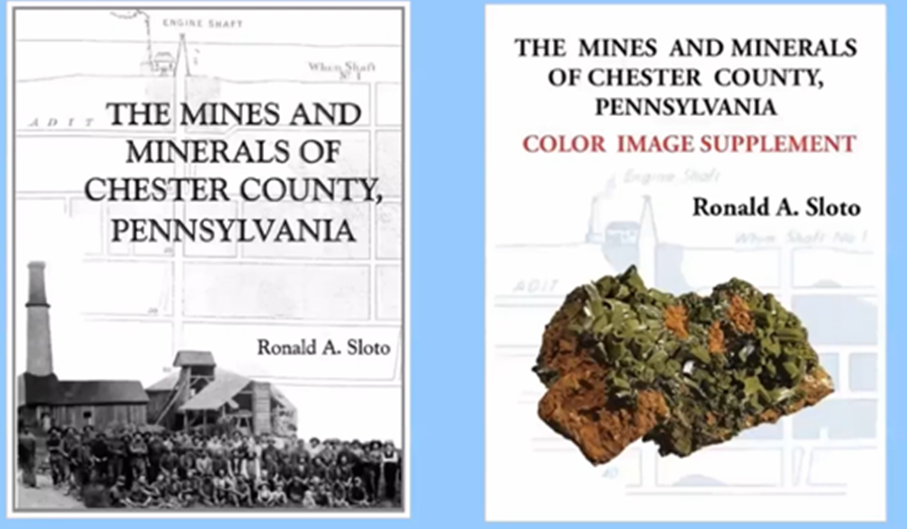
Both publications share Ron’s decades of research. The first, on the left, completed in 2009, documents over 400 mines in Chester County, Pennsylvania. The second was published to provide color illustrations of the region’s extensive variety of minerals discussed in the first book. Together, the extensive knowledge they share on Chester County’s mines and minerals underscores the significance of Ron’s introductory words when he told his MSDC audience he was sharing with them information on only “a few of my favorite mines and their minerals.”
This program report primarily highlights what Ron shared about the Wheatley Mine, the deepest and most productive of the Phoenixville lead mines in Chester County. But he also shared some of the history, geology and minerals of others, highlighting the French Creek Mine, Poorhouse Quarry, Brinton’s Quarry, and Corundum Hill mines, to name just a few.
Readers: Please note that although only a few slides related to Ron’s MSDC presentation are available for this Program Report, a search using Ron’s name on Amazon leads to the above two publications and to his other publications about the Chester mines and those of neighboring counties.
The Wheatley Mine
Ron began his tour with the Wheatley mine. This was the most widely known, deepest, and most productive of all the Chester County lead mining operations. Lead was the primary metal it produced, as with many of the other neighboring mines.
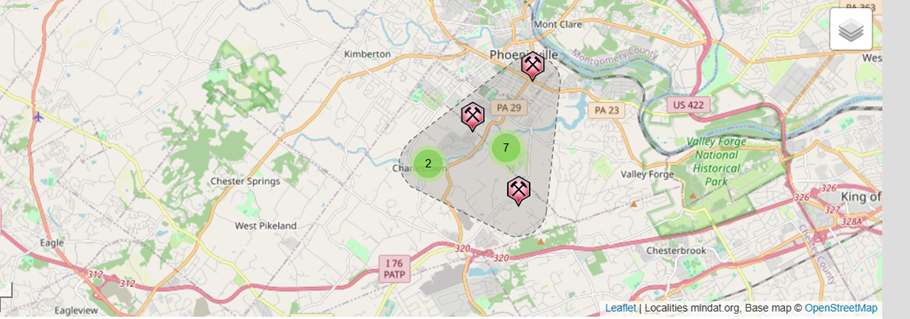
The map below, provided by Mindat.org, shows the location of the Wheatley Mine, pictured just south of the town of Phoenixville, PA about 20 miles northwest of Philadelphia. Note that there were about 400 mines located in Chester County. The simplicity of the illustration below helps specify its location toward the top of the map.
Although lead was the primary mineral extracted, the Wheatley Mine also produced lesser quantities of silver and zinc. Its success was due not only to its abundant lead deposits, but also because of the managerial competence of its first owner, Charles Moore Wheatley (1822-1882).
The Flexible and Competent Charles Wheatley
The financial panic of 1857 required Mr. Wheatly to sell his extensive personal mineral collection to help the mine survive. The collection included many specimens he had collected himself from the local mines and yielded $10,000 ($388,000 in today’s economy). Today that collection is displayed at Union College near Schenectady, NY. The Wheatley Mine went on to supply much-needed lead to the Army of the North during the Civil War from 1861 to 1865.
Toward the end of the Civil War in 1864, Charles Wheatley acquired all the mineral rights, machinery, and properties of the Wheatley Mine along with three other mines for the price of $100,000. Three months later, he sold them to the New York and Boston Silver-Lead company for $130,000, a profit of $30,000 ($607,000 in today’s dollars). During his years managing these diverse mines, Charles’ collection became world famous. Ron noted that today, many of the Phoenixville areas’ minerals are on display throughout the world’s natural history museums.
Based on the above, readers may have noticed that Ron is passionate not only about mines and minerals, but also about the history of the mines and their owners. So it is no wonder that an audience member asked what had prompted Ron to choose geology as his college major. Ron said he was initially torn between geology and history. Even based on the above description of Ron’s report on the Wheatley mine, his MSDC audience of November 5 and readers of this report today will recognize that he successfully combined both disciplines during his 40-year-long career with the USGS. As he described to his MSDC audience the histories of the mines, he added some of his own personal encounters with the mines’ more recent owners and their neighbors.
Charles Moore Wheatley, Ron noted, had a detailed personal history with several mines in the Chester County area in Eastern Pennsylvania. As a child, he came to the US from England. As a young man he began his mining career in 1846 and took his first mining position managing the Bristol Copper Mine in Connecticut. Three years later, the owner transferred him south and he began managing the Perkiomen Copper Mine in Pennsylvania’s Audubon area in Montgomery County. By 1852, he had moved on to manage his own lead mine, nearby, just across the Schuylkill River in the Phoenixville area. That mine became known as the famous Wheatley mine, named after himself.
Charles Wheatley recognized that both the Perkiomen and Wheatley mines had rich mineral veins containing lead, zinc, and copper. As part of the Precambrian granitic gneiss of the Appalachian Piedmont, both contained highly metamorphosed remnants of ancient granitic igneous rocks. Both mines also had a considerable variety of mineral specimens that were of great interest to collectors. As Charles Wheatley‘s miners worked both mines for lead, he noted that their principal ore minerals included galena, pyromorphite, anglesite, and cerussite, all lead-bearing minerals.
Mineral Highlights from the Wheatley Mine
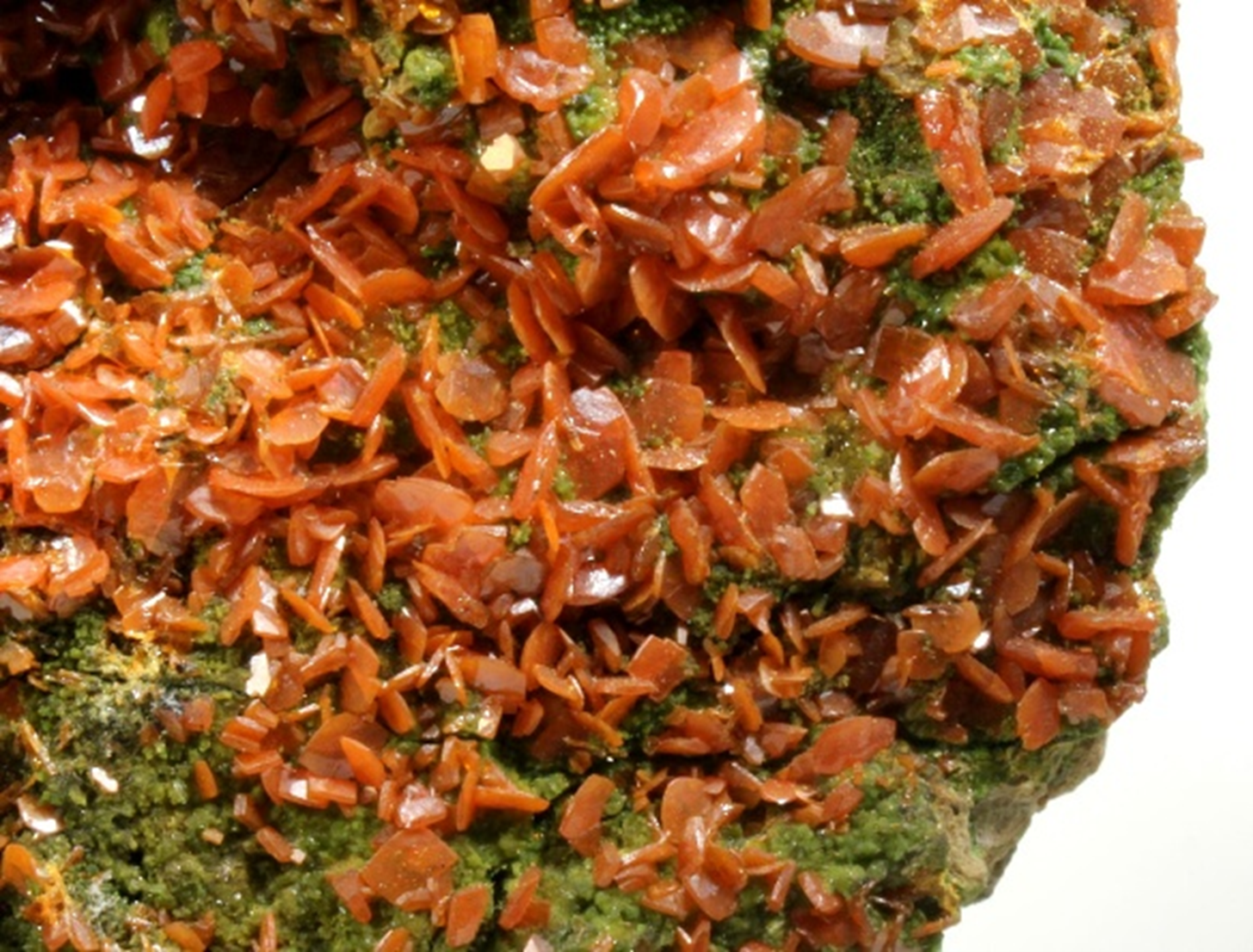
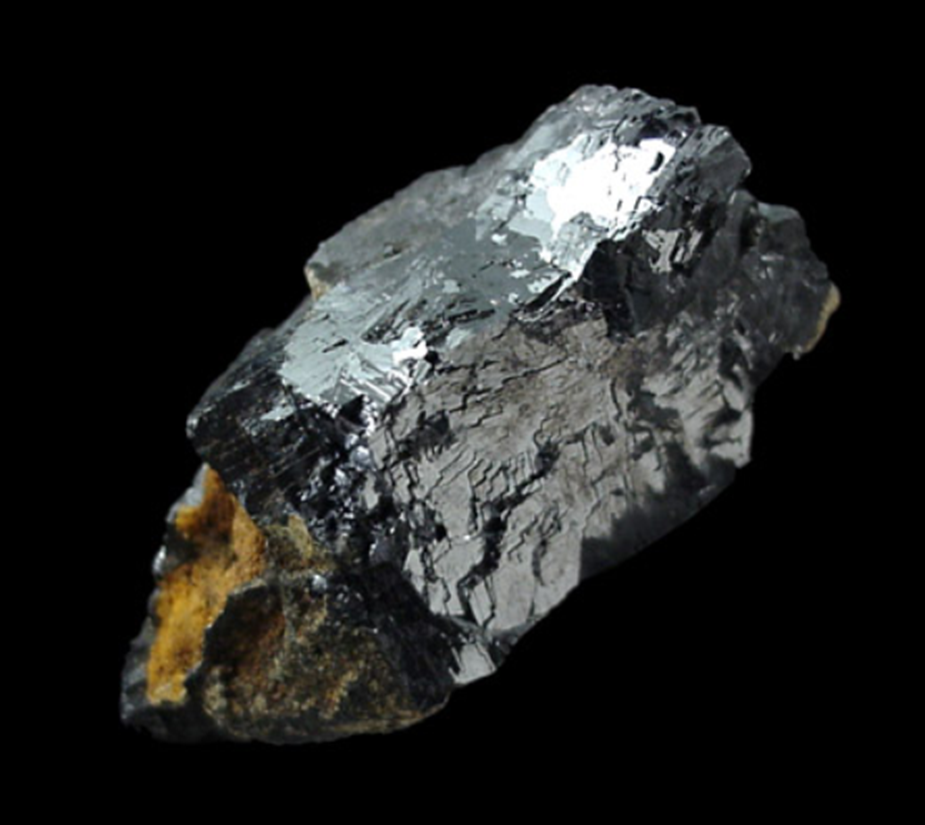
Ron generously shared with his audience photographs of the above four minerals and numerous other minerals discovered in the many mines he has researched. He said that today the Phoenixville minerals are proudly displayed in major mineral museums throughout the world. To see and learn about all the minerals Ron shared, excellent sources are his two above-mentioned books.
Below are examples of specimens of those four minerals all of which originated from the Wheatley mine and today are dispersed across academic collections and for sale by private dealers as shown below.
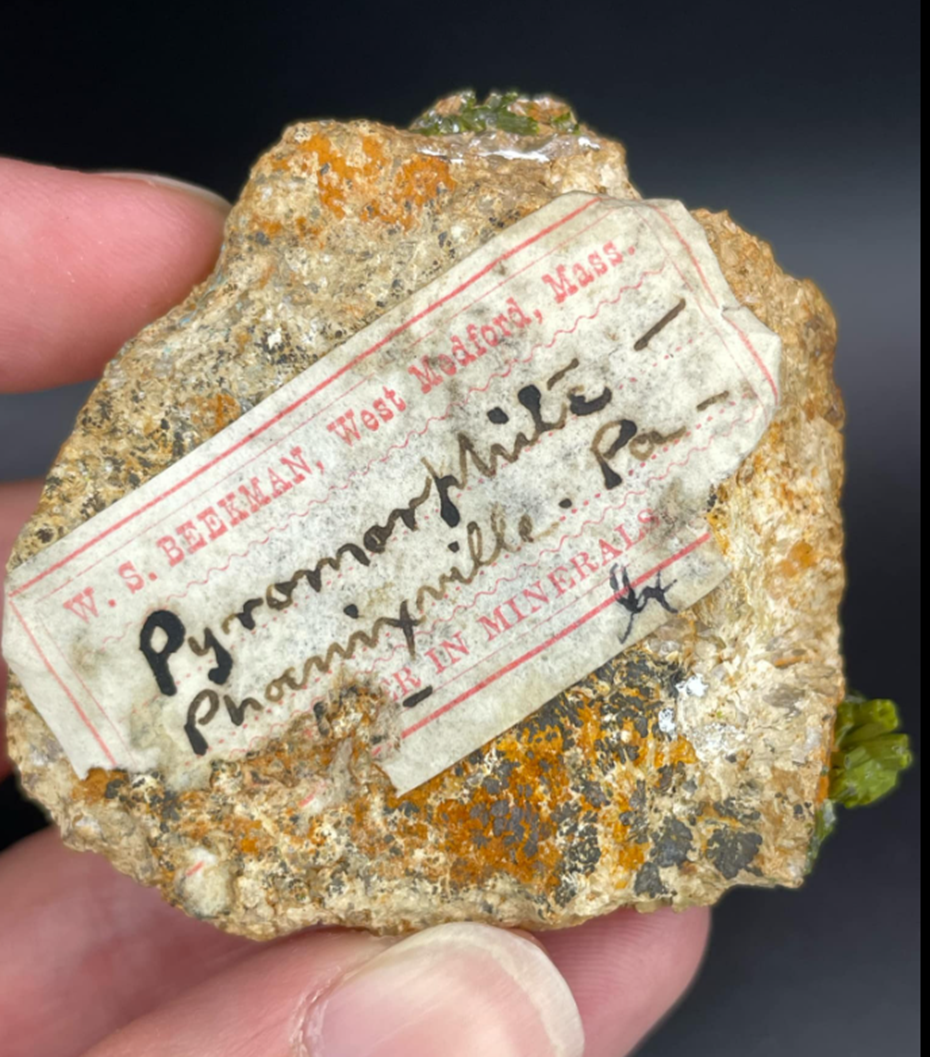
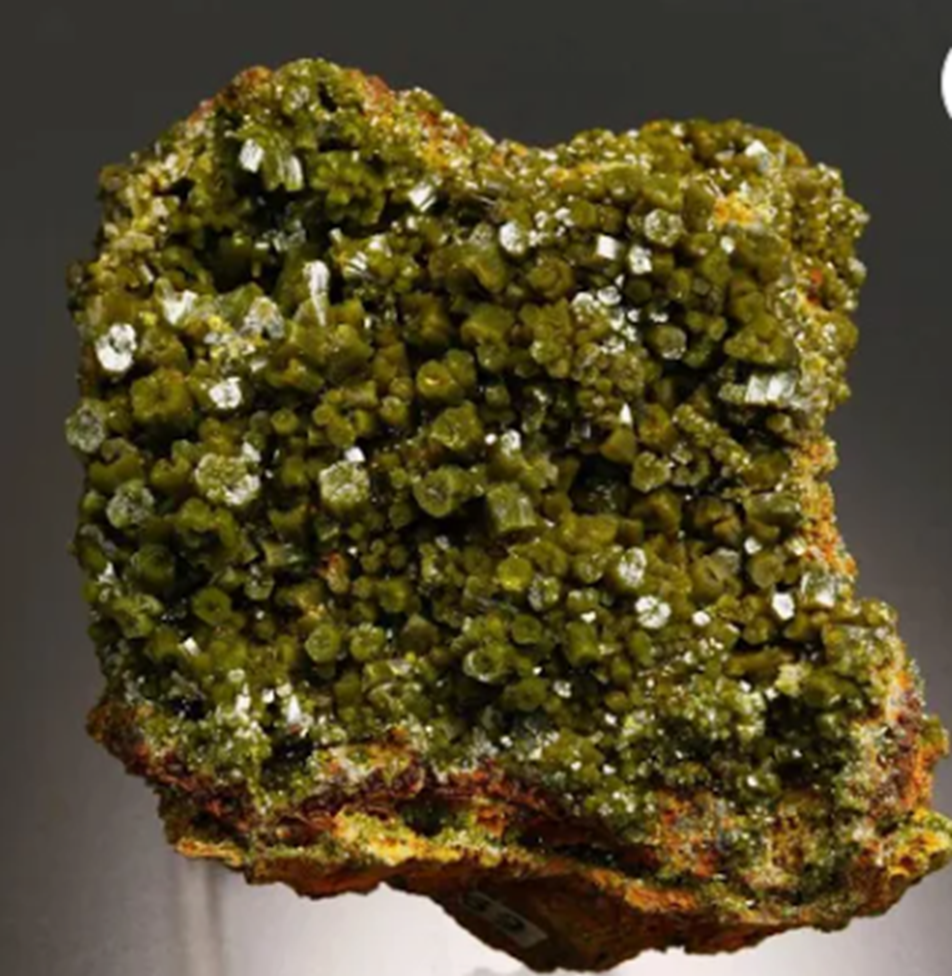
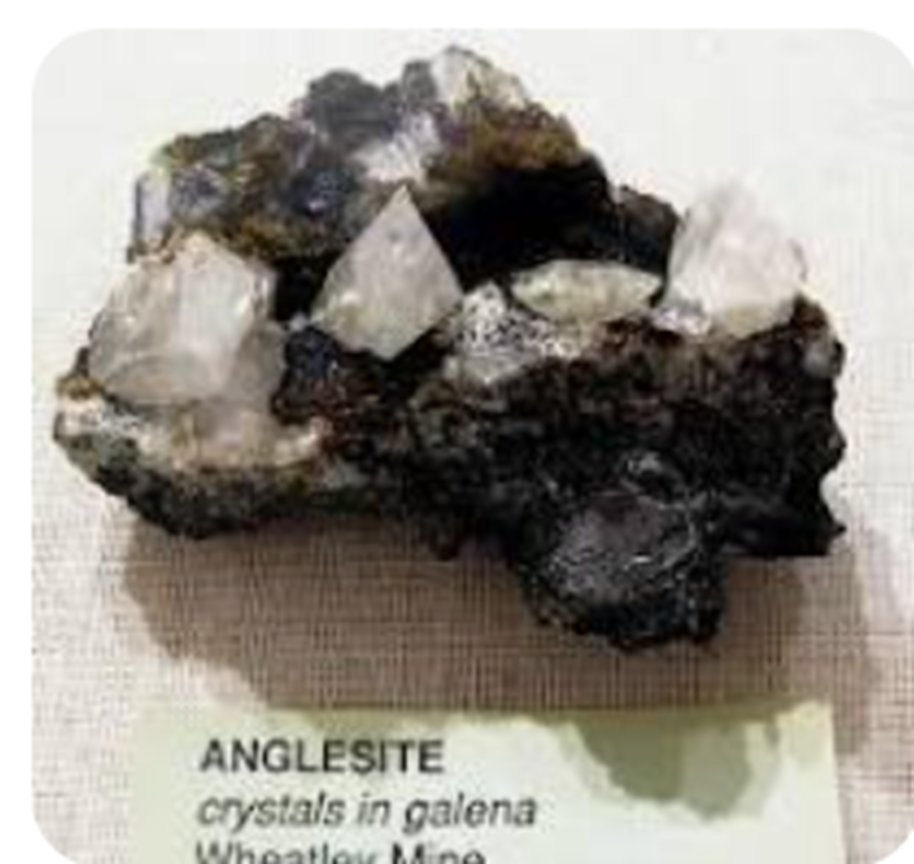
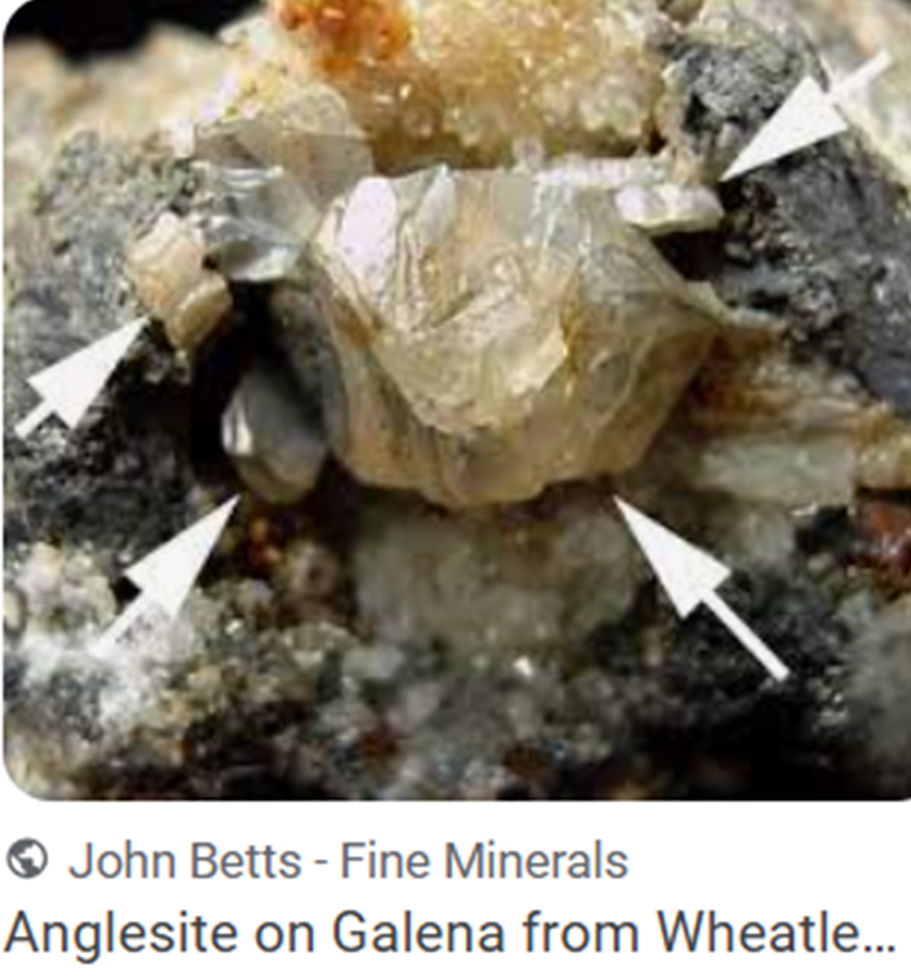
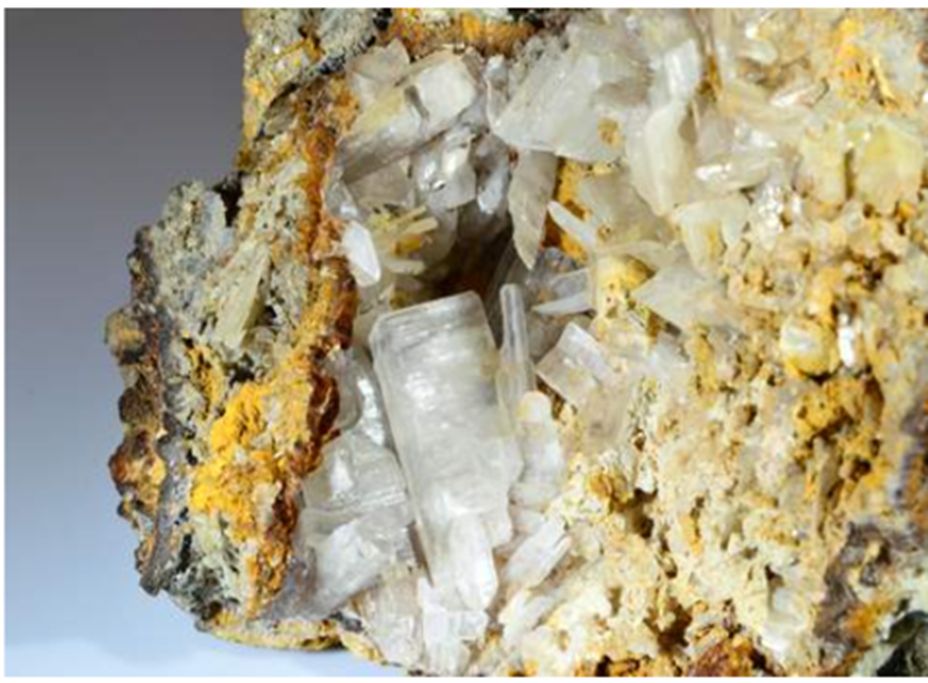
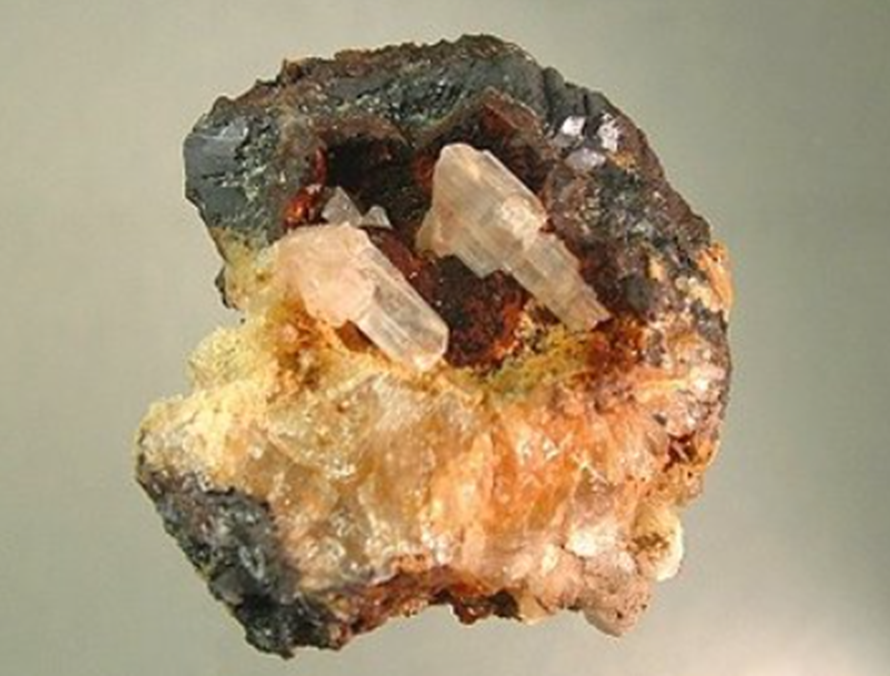
Ron explained that the success of the Wheatley mine was because it was deeper than any the other mines in Chester County. He pointed out that as a miner descends down in the mine shaft, he or she will typically pass through minerals formed by different geological processes, resulting in:
· the gossan top layer (limonite)
· leached zone
· oxide zone
· enrichment zone (sufides)
· primary mineralization (sphalerite)
He also showed another chart of a mine’s depth with seven descending levels extending from the surface to a depth of 91 meters. The chart illustrated the minerals that are commonly associated with each of those levels. For the Chester County mines in question, one is likely to encounter gossan at the surface, consisting of heavily oxidized minerals, including sulfides and iron oxides such as limonite.
For the Wheatly and presumably some other mines, miners typically can find the lead-based galena, pyromorphite, and cerussite at a depth of around nine meters and below, examples of which are pictured above. At a depth of 37 meters Ron’s chart showed more of the above three minerals, along with wulfenite.
The Wheatley mine was unique in achieving a productive depth of about 91 meters. As a result. Ron noted that if you saw a miner holding hemimorphite, you know he had taken that from the 75 meter level (246 feet) or lower. Mineral collectors who reached the 91 meter level or lower could find chalcopyrite, galena and sphalerite.
Ron also discussed the mineralogy and current condition of additional Chester County mines, often with historic photos including the following:
· Chester County Mine – very prolific
· Brookdale mine southwest near the Wheatley Mine
· Poorhouse Quarry
· Cornog (Keystone) Quarry
· French Creek Mine
· Brinton’s Quarry
· Corundum Hill Mines
If you want to explore the mineralogy, geology, and history of these and the several hundred additional interesting mines of the southeast Pennsylvania area, look into the two publications mentioned above (or click on the links in the titles below), authored by Ronald A. Sloto: The Mines and Minerals of Chester County, Pennsylvania and its Color Image Supplement, with explanations, available from Amazon.com.
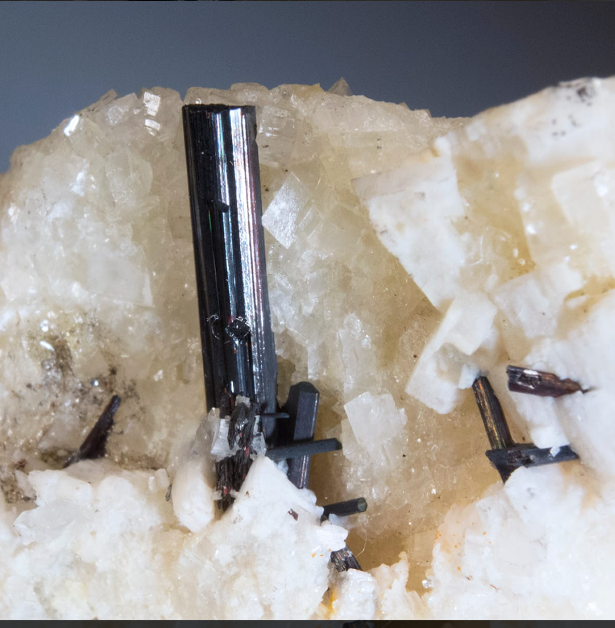
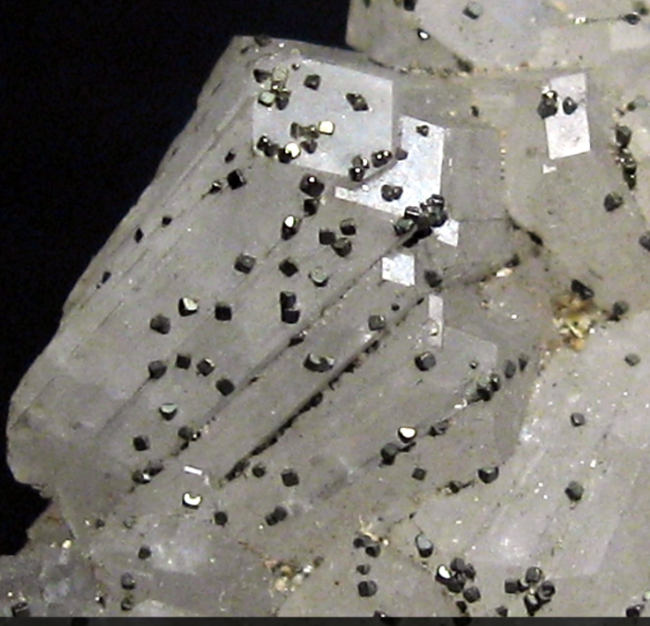
Here below are two additional photos of the minerals found at the above mines.
Conclusion
MSDC President Dan Teich and Vice President Kenny Reynolds thanked Ron for his excellent presentation and opened the floor for questions, examples of which included and ranged from:
· the structure of specific mines, then and now,
· how the flooding and pumping of excess water was handled,
· the profitability of the mines which contained some silver,
· the extensive number of mines which are the type locations of their respective minerals
· the implications of some mine areas now being under golf courses, and
· the chemistry of some non-toxic mine waters, despite their lead mineral context.
Ron’s audience thanked him and signaled their gratitude with extensive Zoom-esque applause.