
Prez Says...
by Dan Teich, MSDC President
I was absolutely delighted to return to the place of our club's birth: the Smithsonian's Natural History Museum.
With appreciation to Craig Moore and Kathy Hrechka for their mineral hall expertise, we were able to have a special interactive "float" through the geology of the world. Most of us have been though the hall multiple times, but Craig and Kathy are dwellers, with special minerals that speak to them.
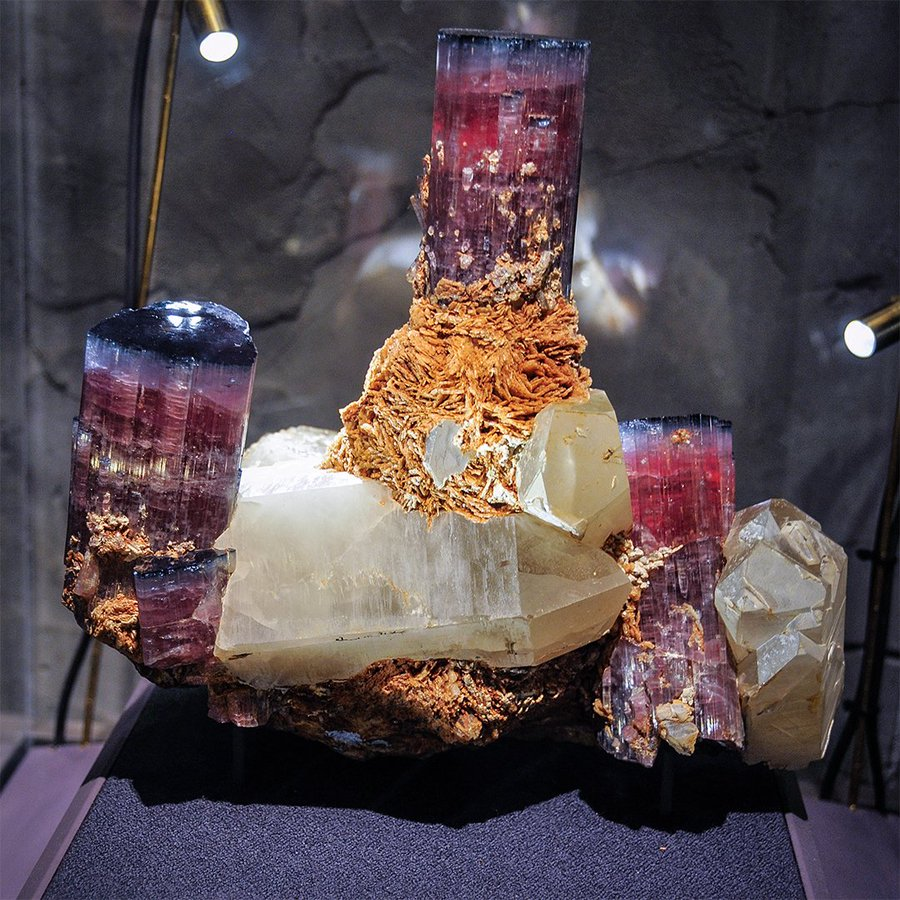
This is what I asked Craig: tell us about specimens that are special to you. And that was an absolute joy. And I have to say, Craig is enamored with the large California tourmalines at the end of the hall, including the "Candelabra" specimen at the top of this column. Good choice! There's nothing like touring with someone who has knowledge and passion.
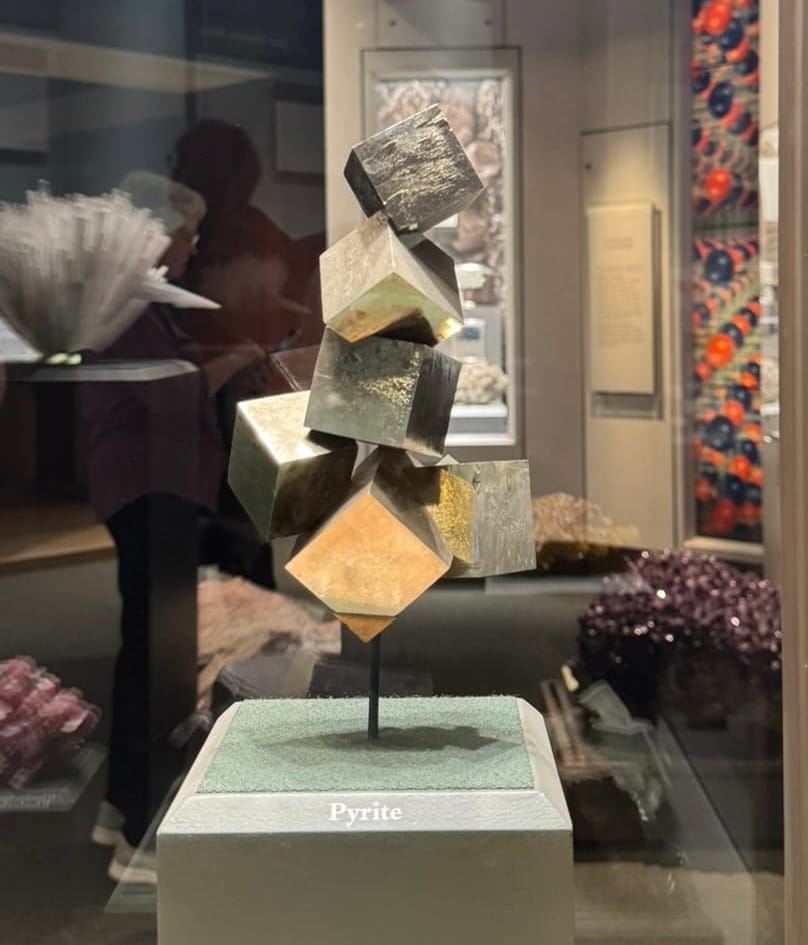
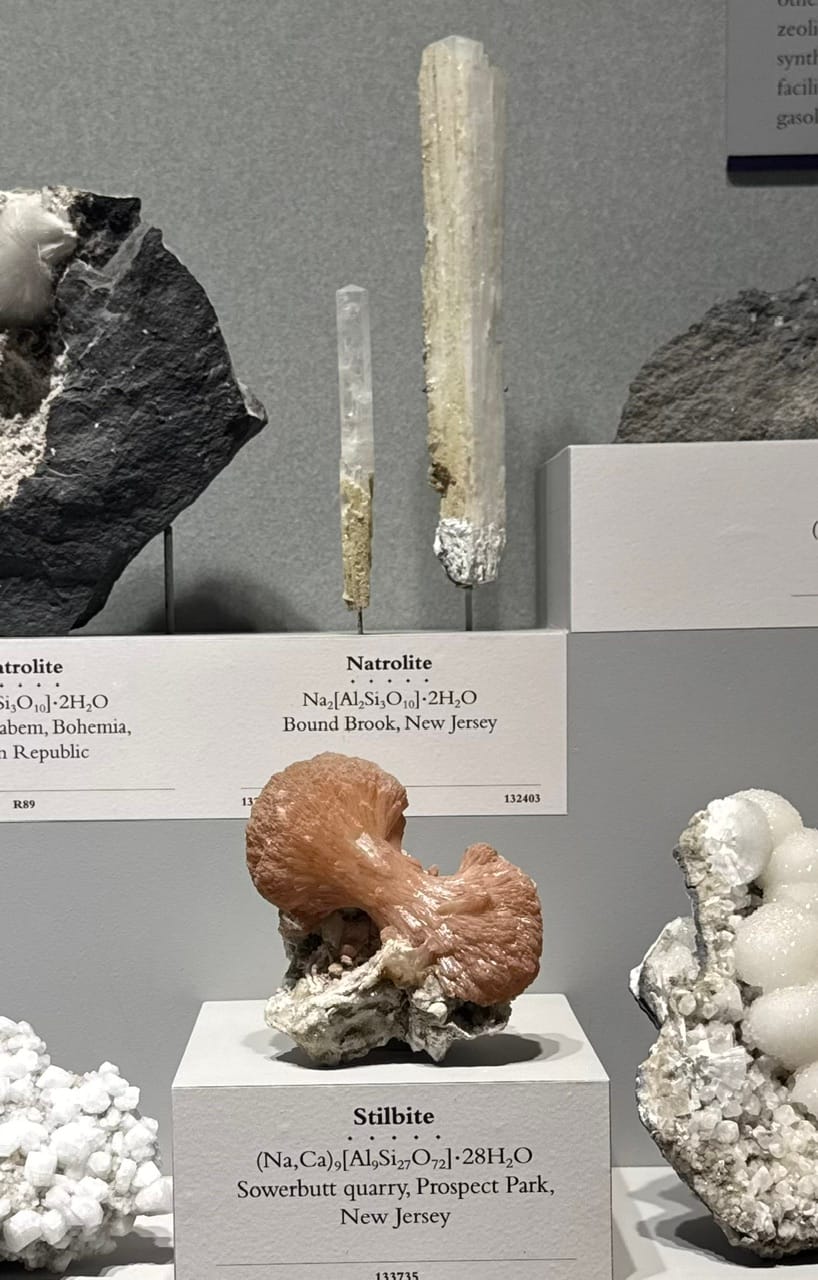
We all had a great time, hands down. And we'll do it again! Craig would very much like to have that pyrite from Spain (in the photo above) in his living room. The large natrolite from New Jersey pictured below was collected by one of my very good friend's father in 1971.
Our June meeting will be our final meeting before our annual summer break in July and August. No matter what your field activities are before we reconvene in September, or where they take you, I wish you all the best for a fun and rewarding summer holiday!
I hope to see you at our Zoom meeting on Wednesday, June 3.