
The Lapis Lazuli in King Tutankhamun’s Mask
by Ken Rock, MSDC Editor
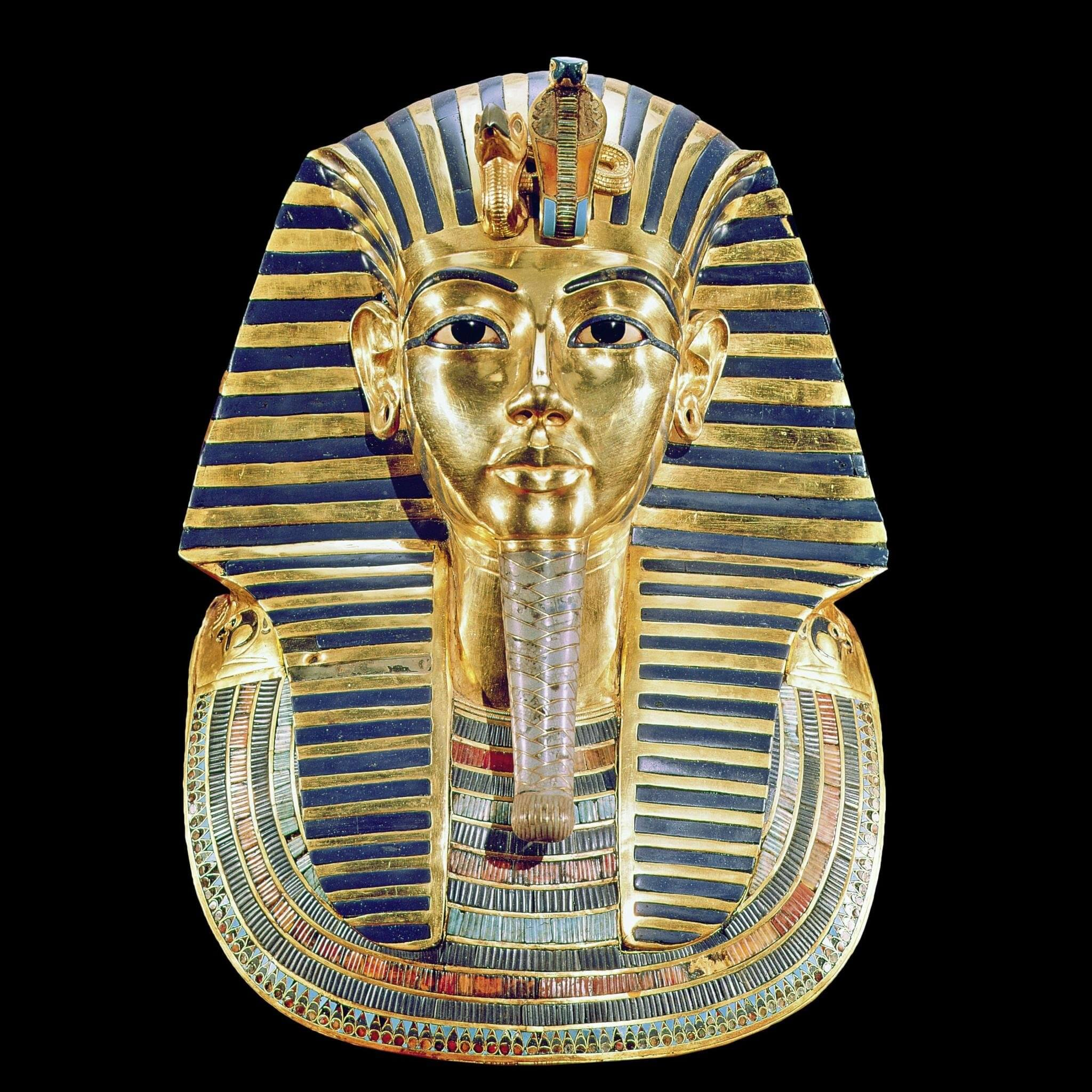
The gold funerary mask of Pharaoh Tutankhamun (a.k.a. King Tut), excavated by Howard Carter in 1922 in the Valley of the Kings, is a masterpiece of ancient craftsmanship. Although its radiant gold often steals the spotlight, another material woven throughout the design is equally fascinating to mineral enthusiasts: lapis lazuli. This rock, known to be mined as early as 3,000 years BCE, appears in multiple components of the mask.
Physical Description and Materials
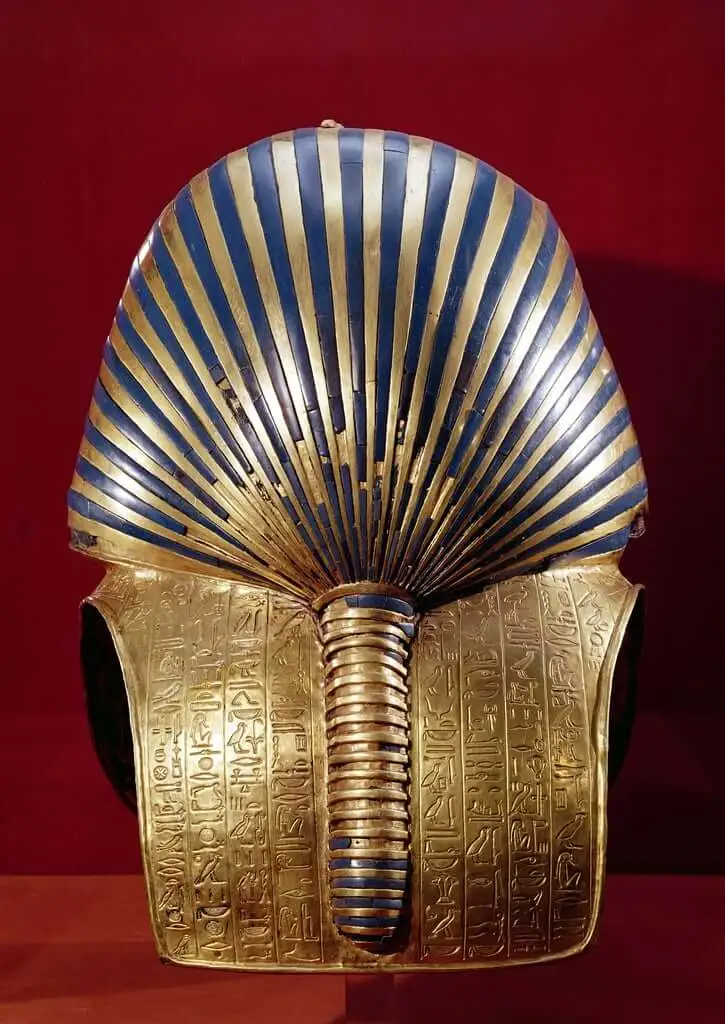
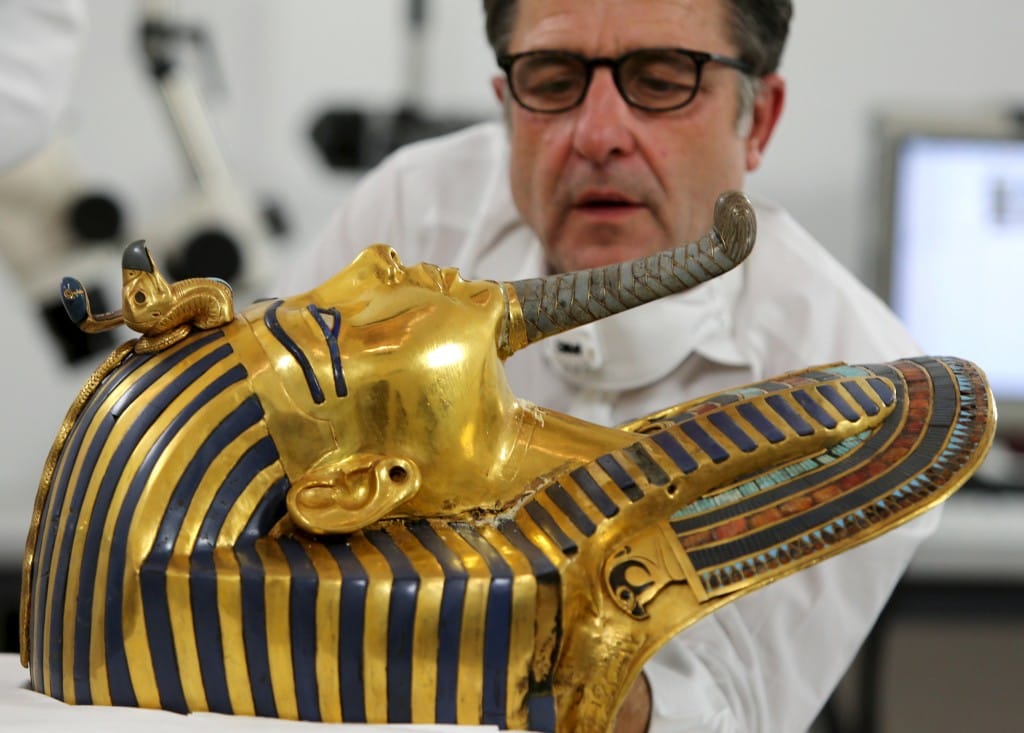
The mask is approximately 21 inches in height, 15 inches wide, and weighs 24 pounds. It was fabricated from hammered sheets of solid gold. Lapis lazuli is inlaid in the stripes of the headdress, in the eyelids and eyebrows, and in other decorative areas of the mask. Other inlays include carnelian (an opaque to translucent reddish-brown variety of chalcedony), quartz, obsidian, turquoise, and colored glass. The lapis lazuli is particularly conspicuous because of its deep blue color and metallic pyrite inclusions.
Geological Source
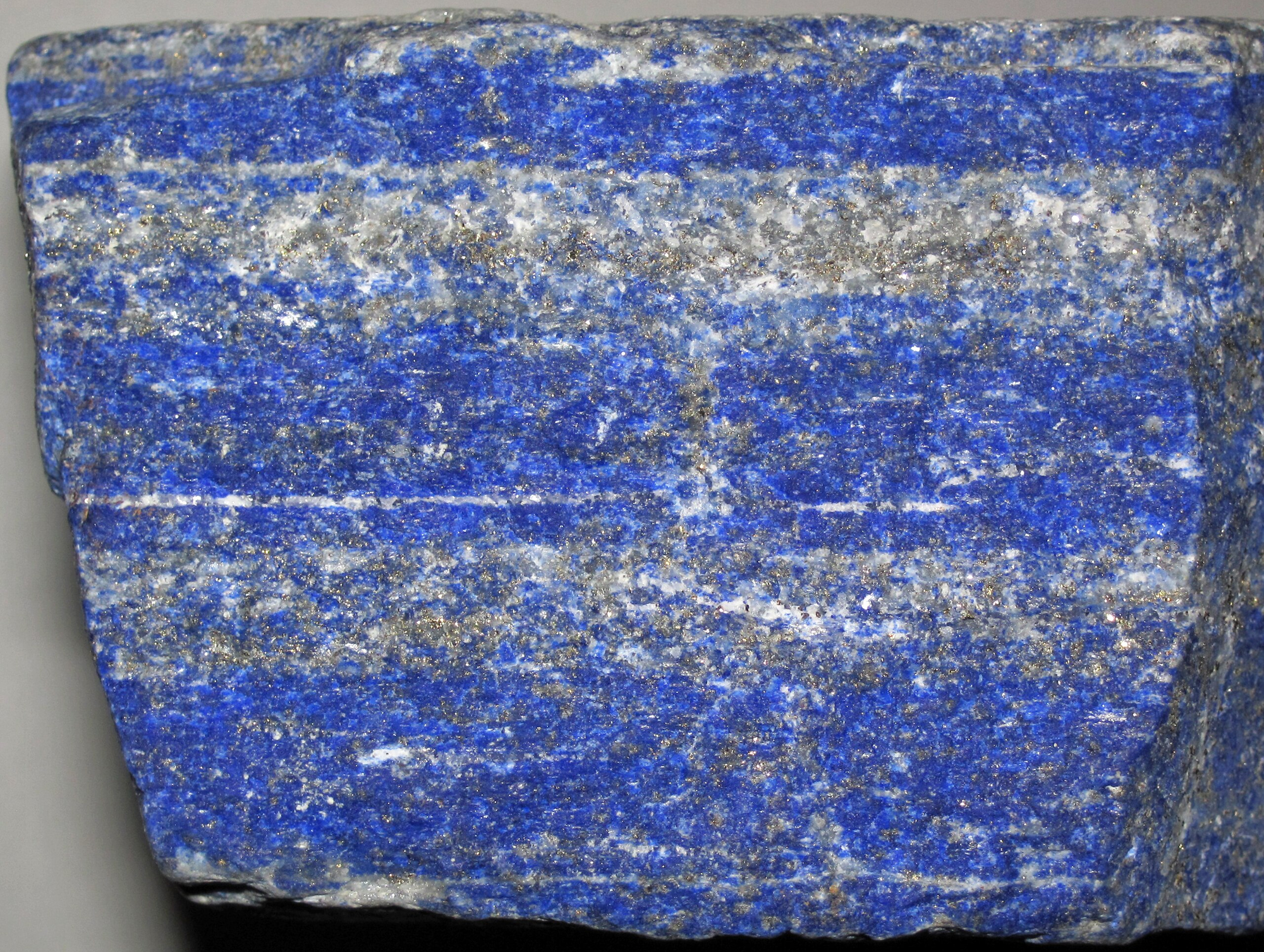
Unlike turquoise or malachite, which were mined within Egypt’s borders, lapis lazuli was an exotic import. Geological studies and archaeological evidence point overwhelmingly to the Sar-e-Sang mines in the Badakhshan region of present-day Afghanistan as the primary ancient source. These metamorphic deposits, which are still being worked today, produced lapis with a characteristic deep blue color speckled with disseminated golden pyrite and veined with calcite.
The fact that Egyptian artisans in the 14th century BCE had access to lapis from Afghanistan attests to a truly remarkable trade network spanning thousands of kilometers. Caravans carried rough stones westward through Mesopotamia and the Levant to the Nile Valley. By the time of Tutankhamun, lapis lazuli had been imported into Egypt for over a thousand years and was already a symbol of royal and divine power.
Mineralogical Characteristics
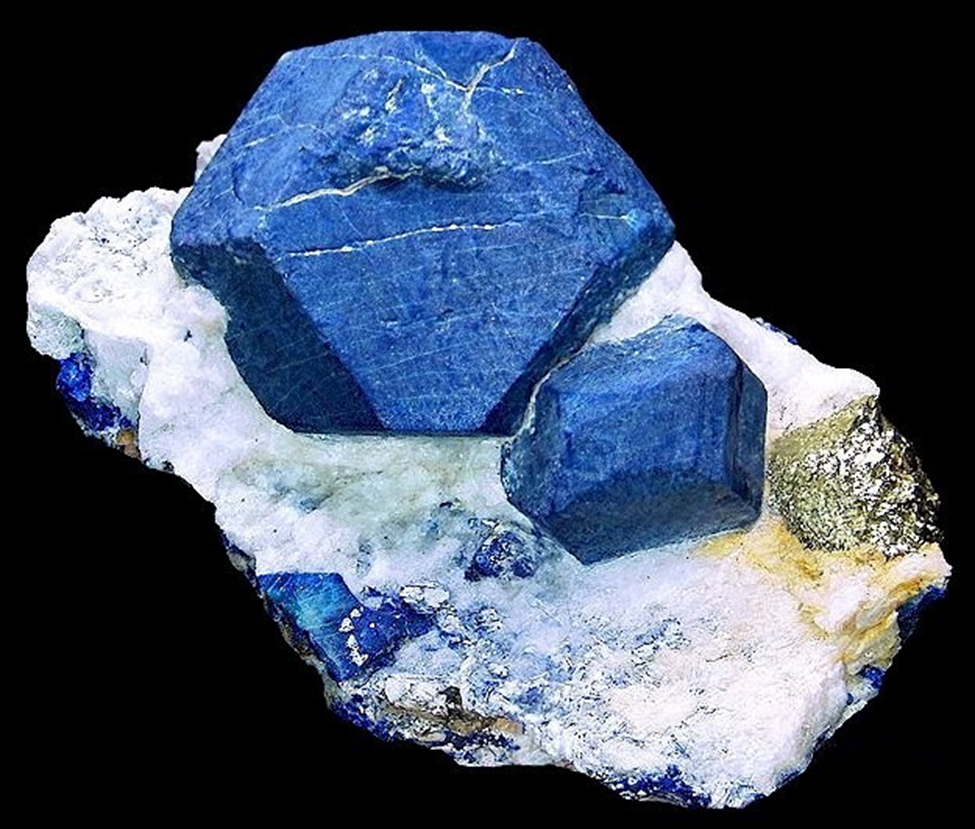
Lapis lazuli is a rock, not a single mineral species. Its primary constituent, lazurite, is the principal mineral responsible for the unique colors and patterns of this prized material. Accessory minerals include calcite, sodalite, hauyne (a rare gemstone from the sodalite group), and pyrite.
Construction Methods
The inlay technique used by Egyptian goldsmiths was extraordinary for its time. Lapidary work involved cutting, shaping, and polishing semi-precious stones to fit designated recesses. The eyebrows and cosmetic outlines on the mask were inlaid with lapis lazuli, secured with an adhesive (likely natural resin or beeswax), and surrounded by thin gold borders. The narrow gold cells formed to receive precisely cut stone fragments were polished flush with the surrounding metal. Microscopic examination of comparable artifacts shows a high degree of fit, indicating careful lapidary work and the use of abrasives such as quartz sand. Glass, carnelian, and turquoise were similarly prepared and set into the mask’s surface. The king’s eyes are reproduced with quartz and obsidian.
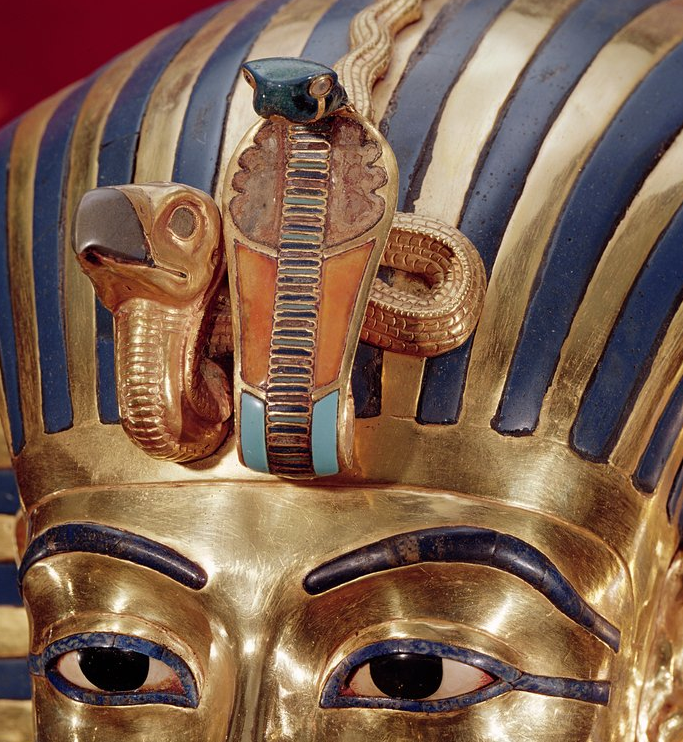
For decorative purposes, the Egyptian craftsmen appear to have preferentially selected pieces with minimal calcite veining and uniformly distributed pyrite. Polishing produced a high-gloss surface that remained stable for over three millennia under the sealed conditions of the tomb. Stones were shaped and inserted without synthetic adhesives or rotary cutting tools.
The stability of these inlays over 3,000 years attests both to the precision of the workmanship and to the durability of the materials under burial conditions, as well as excavation and display. Modern conservationists must contend with the sensitivity of the materials to acids and heat. Their efforts today focus on preventing pyrite oxidation and chemical alteration, which can damage both color and stability.
Symbolism and Meaning
Color carried enormous significance in ancient Egyptian art. Blue, in particular, represented the heavens, the Nile, fertility, and rebirth. Lapis lazuli’s rich, star-speckled blue naturally evoked the night sky. The stone was also associated with the goddess Isis and the protective power of the eye of Horus.
The lapis stripes on the headdress, eyebrows, and eyelids frame the king’s face with a celestial glow, signifying his transformation into a divine being. In life and death, the pharaoh was considered the intermediary between gods and humans; the lapis served as a visual affirmation of this cosmic role. Because of its distant source and rarity, lapis lazuli was expensive and reserved for high-status items, including burial goods for royalty.
Broader Influence
Lapis lazuli continued to be significant long after the New Kingdom. In medieval Europe it was ground to make natural ultramarine, a pigment valued for its chromatic stability. Tutankhamun’s mask is one of the earliest and most prominent large-scale uses of the material, and it remains an important reference point for archaeologists, art historians, and mineralogists.