The Merensky Reef: the Most Economically Significant Layer of Rock on Earth
by Ken Rock, MSDC Editor
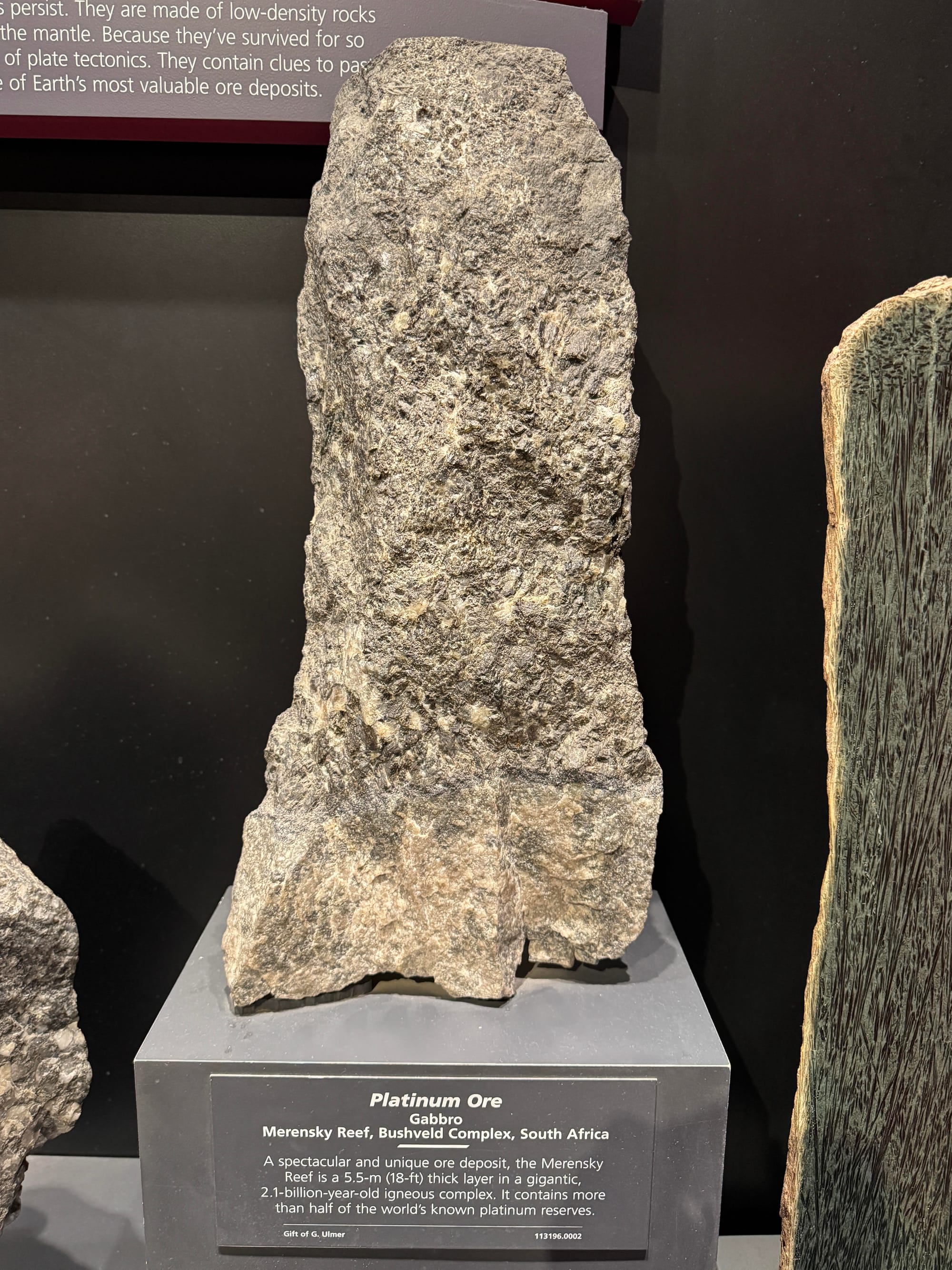
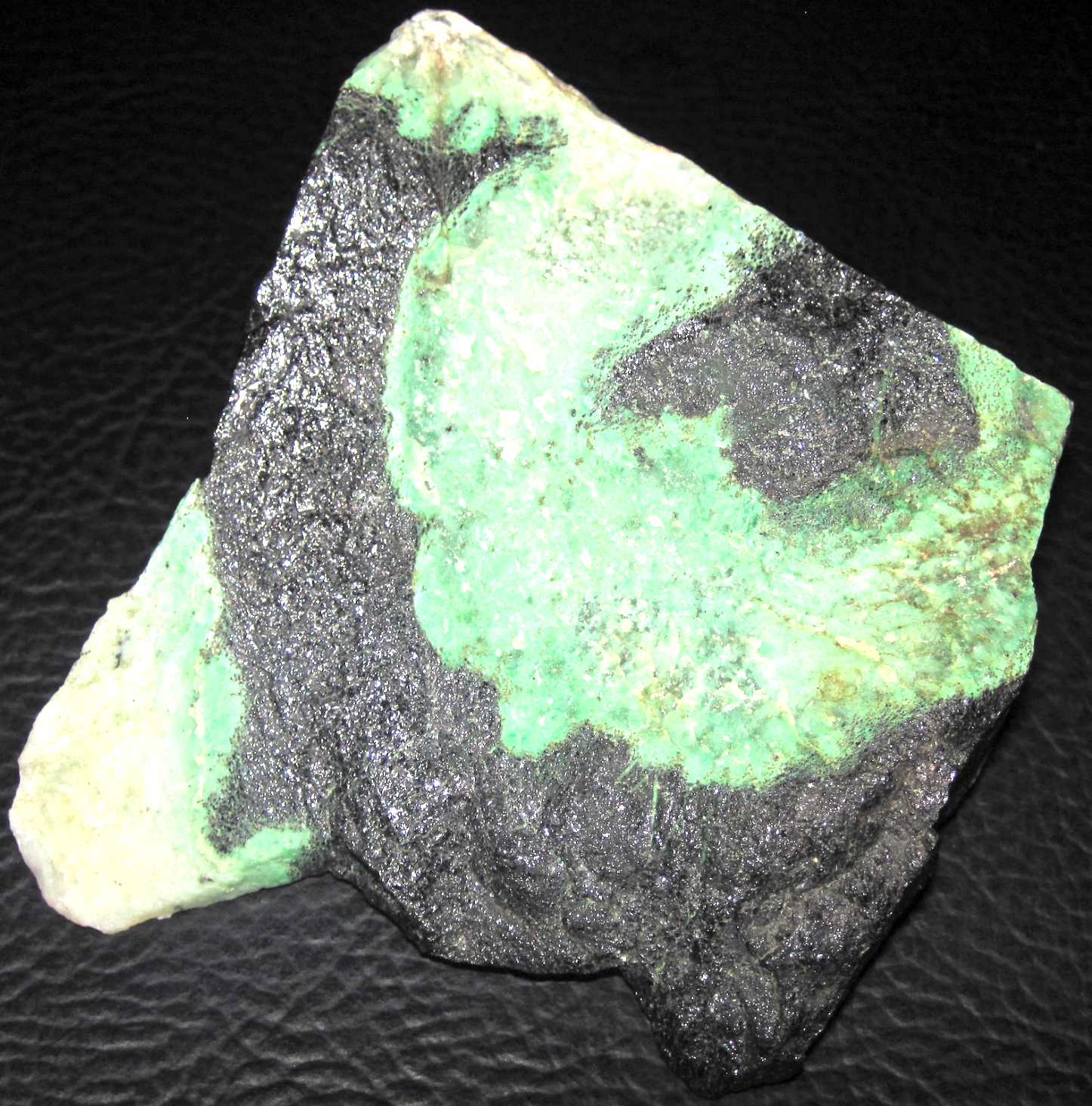
The label on this specimen of platinum ore on display at the Smithsonian's Natural History Museum got my attention because the information is quite mind-boggling. Imagine, half of the world's known platinum reserves contained within a single 18-foot thick layer of igneous rock!
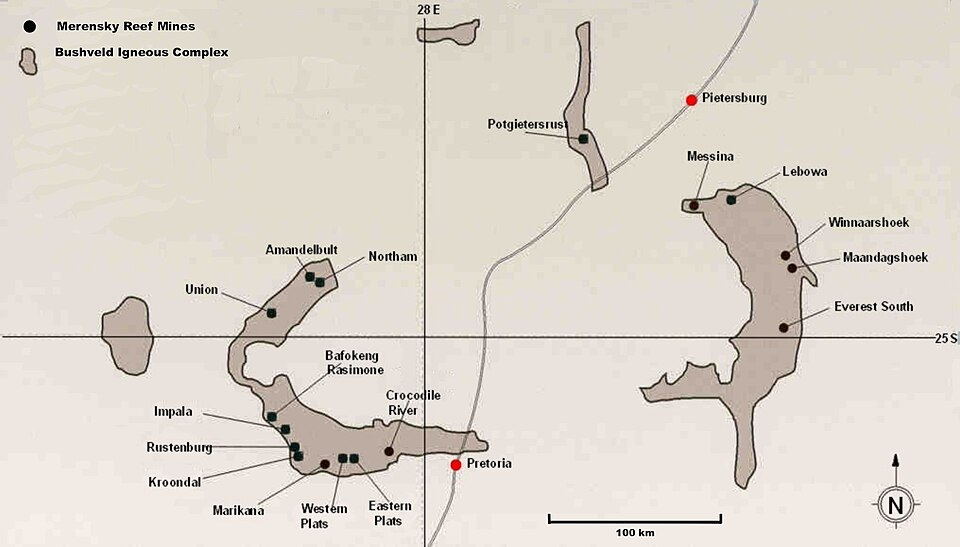
Located within the giant Bushveld Igneous Complex (BIC) of South Africa, the Merensky Reef is arguably the most economically significant layer of rock on Earth. This extraordinary geological feature is the primary source of the world’s platinum group elements (PGEs), accounting for approximately 75% of known global platinum reserves and roughly half of the annual supply.
Discovery and History
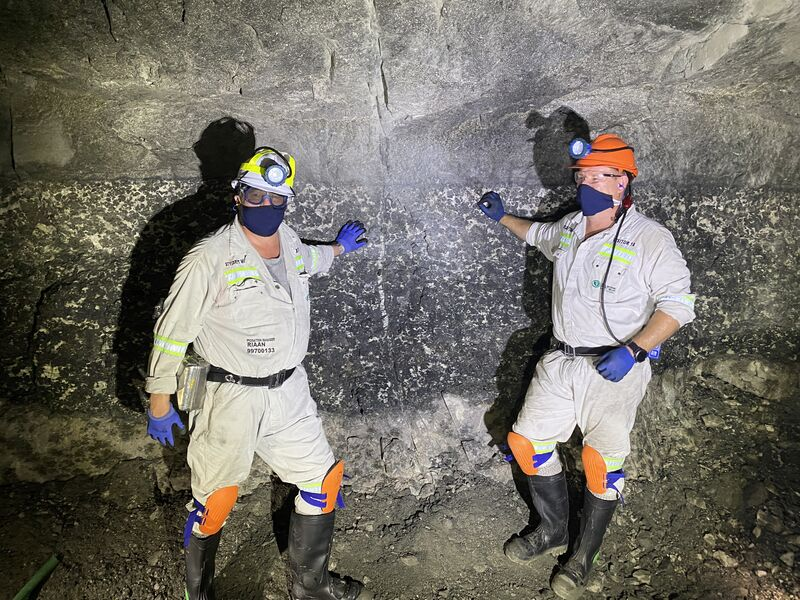
The Reef's discovery in September 1924 is credited to Dr. Hans Merensky, a legendary geologist who traced alluvial platinum samples back to their source in the Bushveld hills. Working with farmer-prospector Andries Lombaard, Merensky identified a distinct, mineralized layer that could be followed for hundreds of kilometers. While early mining was limited by low demand, a surge in industrial and automotive applications in the 1950s transformed the Merensky Reef into the backbone of the global platinum industry.
Geological Setting
The BIC contains large layered mafic to ultramafic intrusions that contain platinum, palladium, rhodium, and other platinum group elements (PGEs). These deposits formed through multiple stages of magmatic processes, including magma chamber formation, fractional crystallization, and magma mixing.
The world's biggest reserves of platinum are found in three mineral-bearing zones of the BIC: the Merensky Reef, the Upper Group 2 Reef (UG2) Reef, and Platreef. Although figures vary from year to year, some 60–70 percent of the world's PGMs and platinum come from here.
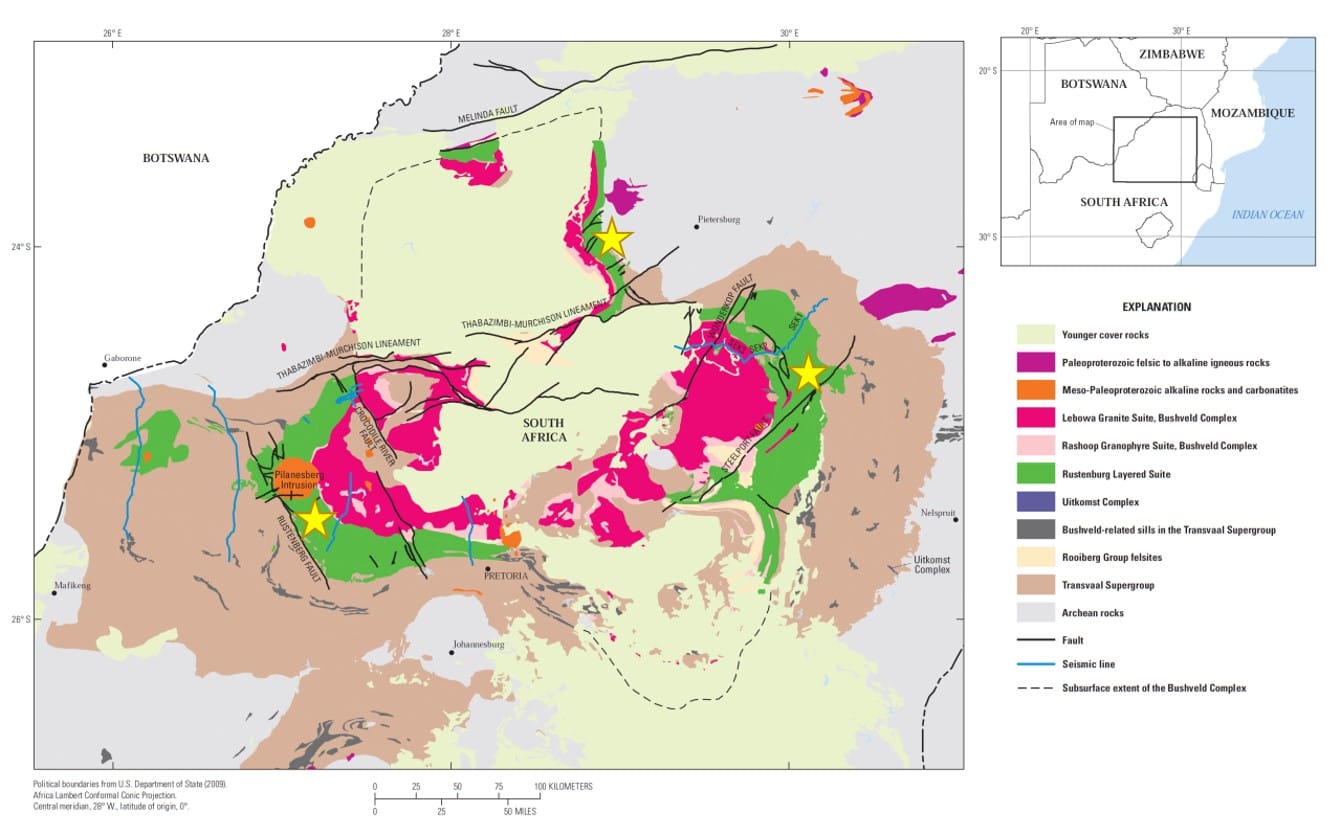
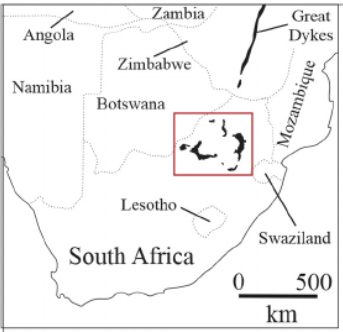
The Reef is the economically significant component of the Rustenburg Layered Suite (RLS), shown in green on the map above. The RLS forms the most extensive and voluminous layered mafic-ultramafic intrusive suite on Earth. It is a part of the BIC, the massive 2-billion-year-old igneous intrusion that covers over 25,000 square miles (66,000 km²).
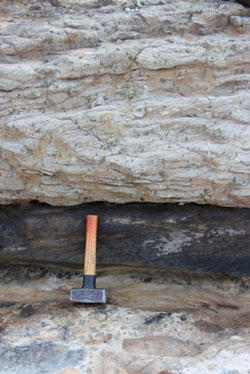
Geologically, the Merensky Reef is a thin "reef" or horizon — often less than a meter thick. The Reef is bounded by thin chromite seams or stringers. The rocks typically follow a specific stratigraphic sequence (from bottom to top):
- Footwall: Often composed of a medium- to coarse-grained anorthosite, a light-colored, feldspar-rich rock.
- Chromitite stringers: Thin, fine-grained dark bands of chromite that frequently mark the upper and lower boundaries of the most mineralized zone.
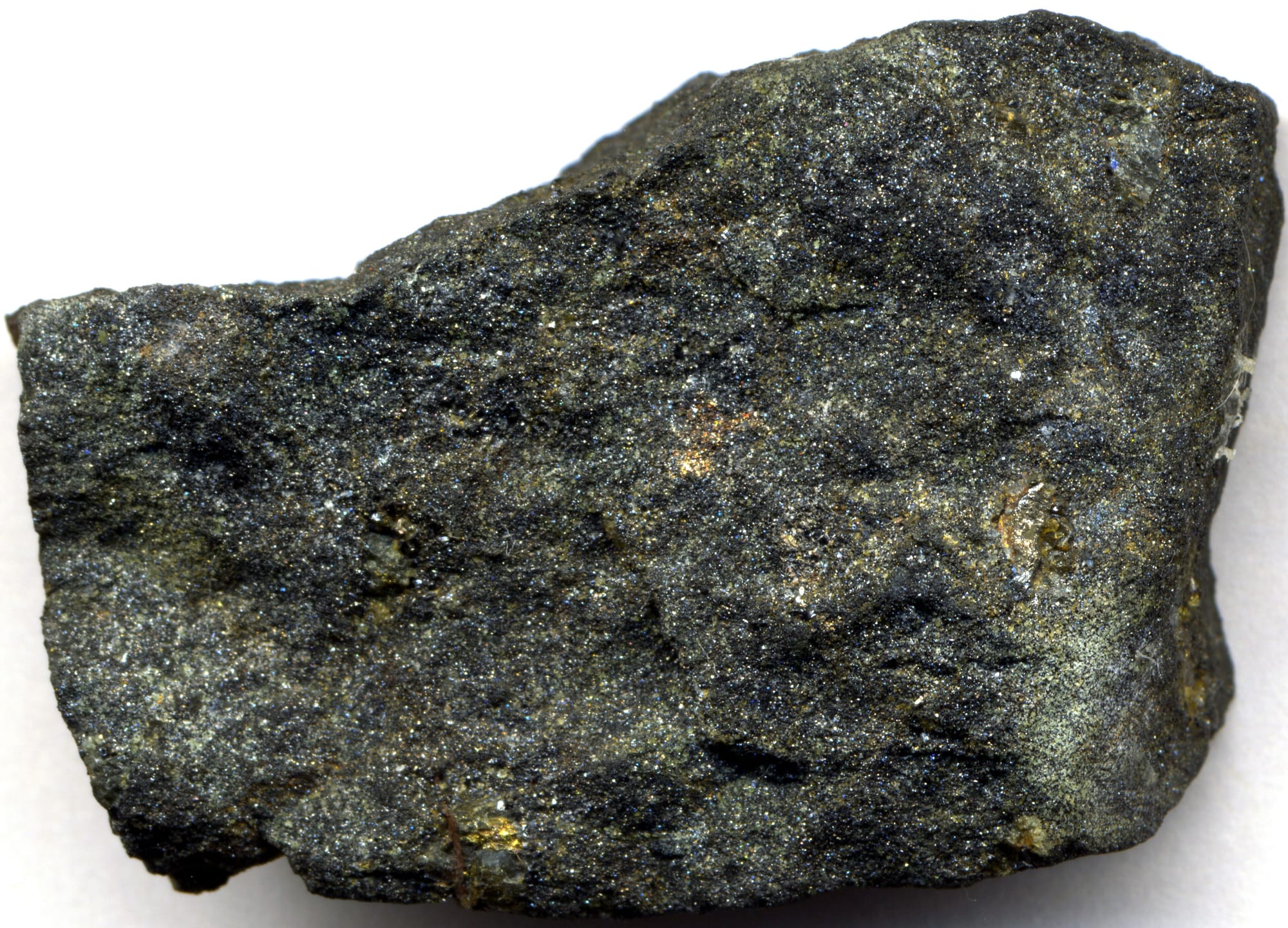
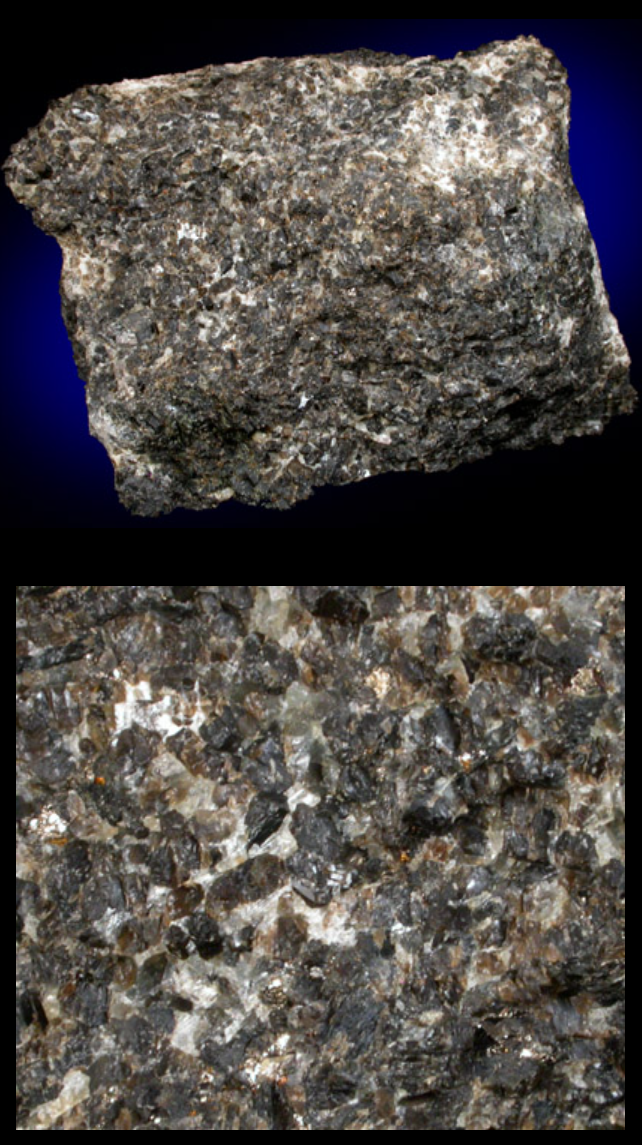
- Merensky pegmatoid: A course-grained dark rock with white and black spots, often melanorite or pyroxenite, where the highest concentrations of platinum and base metal sulfides are found.
- Another very thin, fine-grained black chromitite layer which is overlain by a medium- to course-grained brownish hanging wall pyroxenite.
Mineralogy
Although you won't often find large, collector-quality crystals of platinum, the mineralogy of the Reef is complex. The platinum isn't usually visible to the naked eye; instead, it occurs as discrete platinum-group minerals (PGMs) or as solid solutions within base metal sulfides. Key minerals in the Reef include:
- Sulfides: pyrrhotite, pentlandite (nickel-bearing), and chalcopyrite (copper-bearing).
- PGMs: cooperite (platinum sulfide), braggite, and sperrylite (platinum arsenide).
- Oxides: chromite, which gives the characteristic "stringers" their dark, granular appearance.
The "Crystal Rain" vs. "In-Situ" Debate
How does a layer only about 1 to 3 feet thick (30 to 90 cm) thick remain consistent over hundreds of miles? The formation of the Merensky Reef remains a topic of lively debate among geologists. Some believe the minerals settled like sediment on a magma chamber floor, while newer research suggests they crystallized in situ directly onto the rock. Researchers have advocated three main theories about the Reef's formation.
- The Gravitational Settling Model: For decades, most geologists believed that as the massive Bushveld magma chamber cooled, crystals of chromite and PGE-rich sulfides became heavy enough to "rain down" through the liquid magma, settling into a neat layer on the floor.
- The Liquid Immiscibility Theory: Think of oil and water. Some researchers argue that a new "pulse" of magma entered the chamber, causing droplets of sulfide liquid to separate from the main silicate magma. These droplets acted like "sponges," soaking up all the platinum from the surrounding liquid before sinking.
- The In-Situ Crystallization Model: Newer theories suggest the crystals grew directly on the floor of the chamber due to cooling and chemical changes at the rock-liquid interface, rather than falling from above.
Although further exploration of these theories in beyond the scope of the newsletter, the Merensky Reef with its PGMs and chrome, is a reminder of the remarkable scale of South Africa's geological wealth that also includes diamonds, gold, uranium, coal, iron ore, and manganese. Equally remarkable is that many of our most critical modern technologies — from catalytic converters to electronics to medical devices — rely on a single, thin band of ancient volcanic rock.