The Orgueil Meteorite and the Sun: A Window into the Early Solar System
by Ken Rock, MSDC Editor
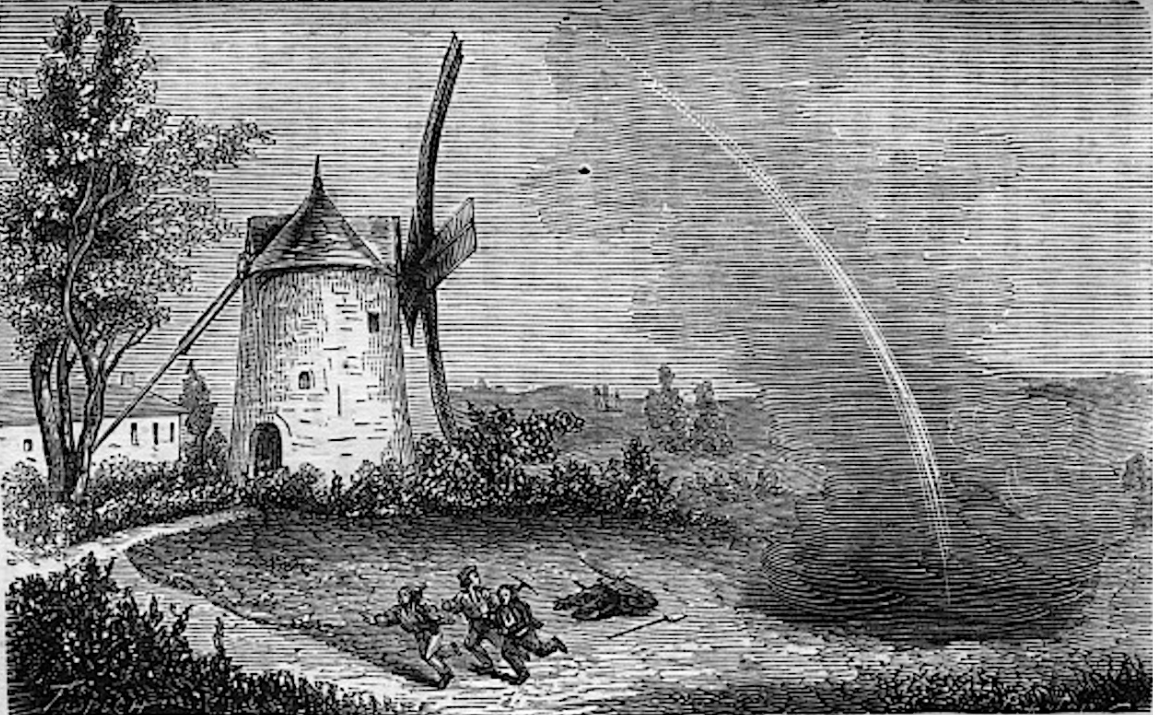
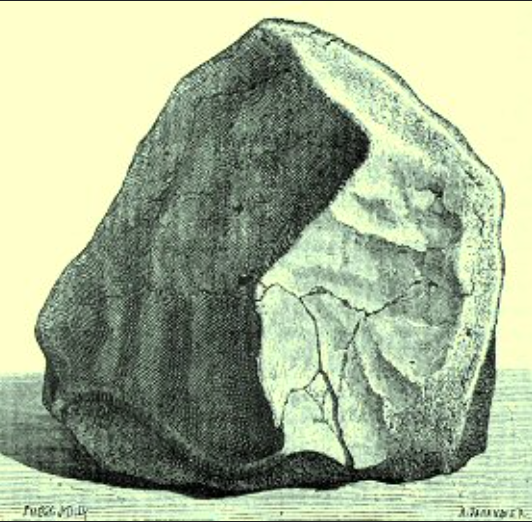
On May 14, 1864, residents of the small town of Orgueil in southwestern France witnessed a spectacular fireball streak across the evening sky, followed by a series of loud explosions. About 20 fragments of the Orgueil meteorite were recovered.
What fell to Earth that day would become one of the most scientifically significant meteorites ever recovered — a pristine sample of material virtually unchanged since the birth of our solar system 4.6 billion years ago. Orgueil is now one of the most studied meteorites and likely one of the most studied rocks of any kind.
Primitive Materials
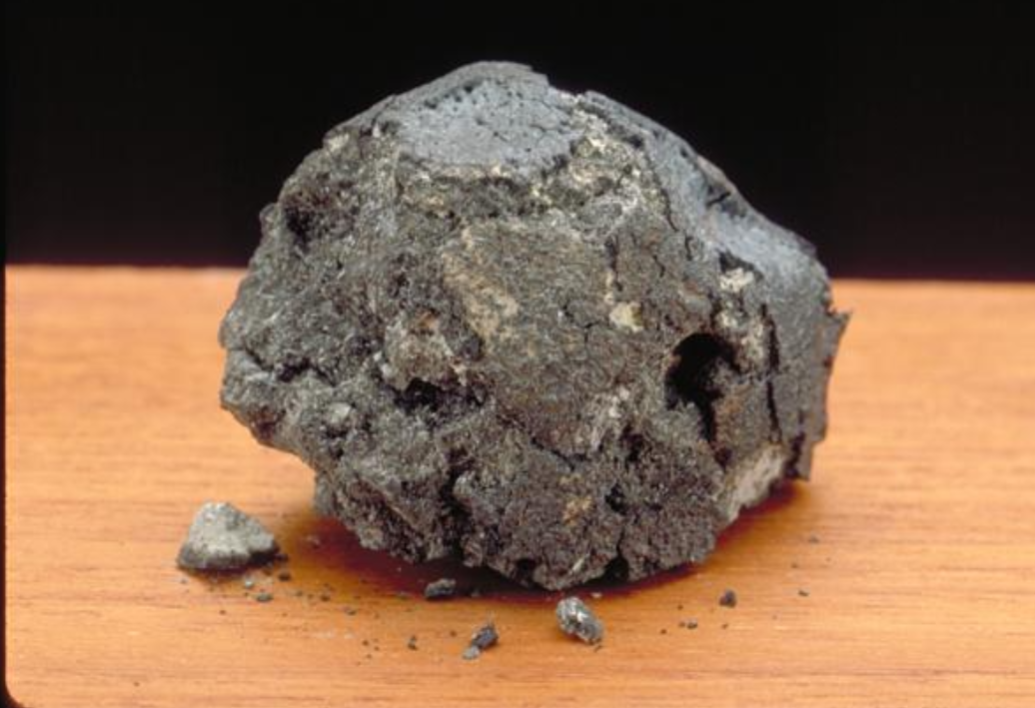
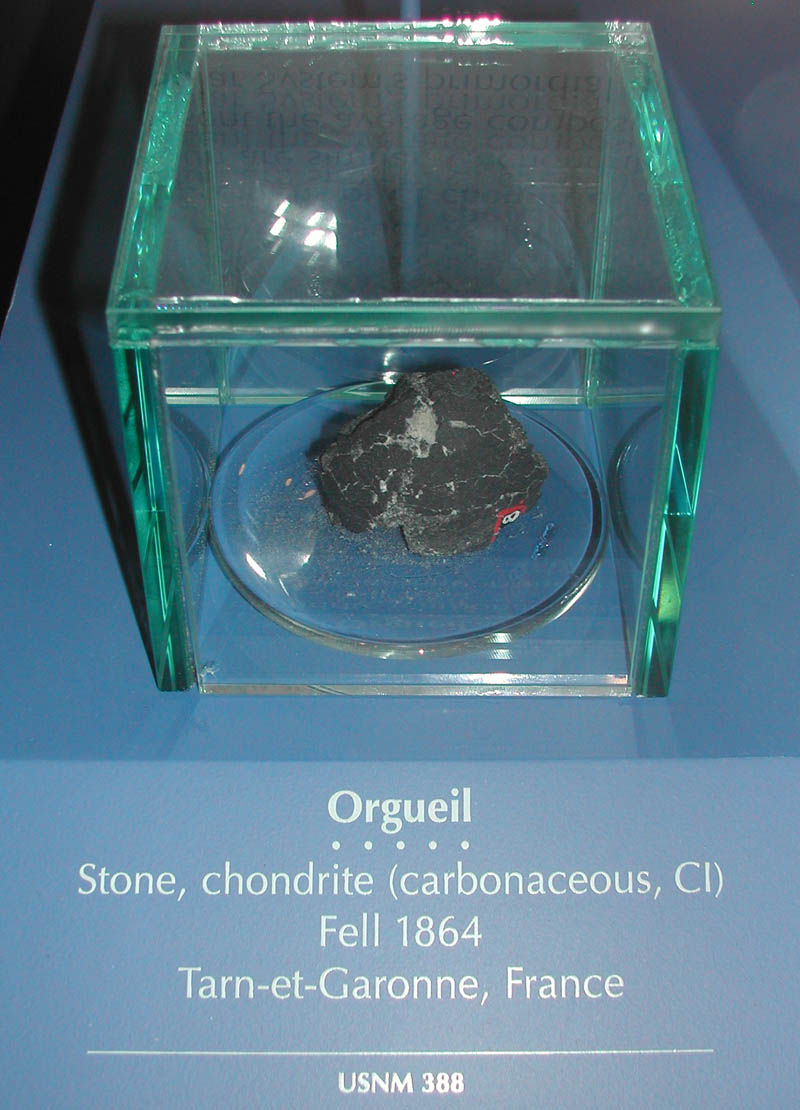
The Orgueil meteorite belongs to an extremely rare class of meteorites known as CI chondrites, with the "C" denoting a carbonaceous chondrite, with the "I" representing the first classification type within this group.
This class of meteorites is considered the most primitive materials available for study because they have experienced minimal alteration since their formation in the early solar nebula. Analyses of this meteorite and other known CI chondrites, have been used to infer the relative proportions of elements in the solar system. In general, the extreme fragility of CI chondrites causes them to be highly susceptible to terrestrial weathering, and they do not survive on Earth's surface for long after they fall.
Twin of the Sun in Stone
What makes CI chondrites like Orgueil truly remarkable is their extraordinary chemical resemblance to the Sun itself. This resemblance is so precise that it revolutionized our understanding of solar system formation and composition.
When scientists first analyzed Orgueil using spectroscopic techniques in the mid-20th century, they discovered that element after element matched the abundances found in the Sun's photosphere with incredible accuracy.
The photosphere is the visible surface of the Sun that we are most familiar with. Since the Sun is a ball of gas, this is not a solid surface but is actually a layer about 100 km thick (very, very, thin compared to the 700,000 km radius of the Sun).
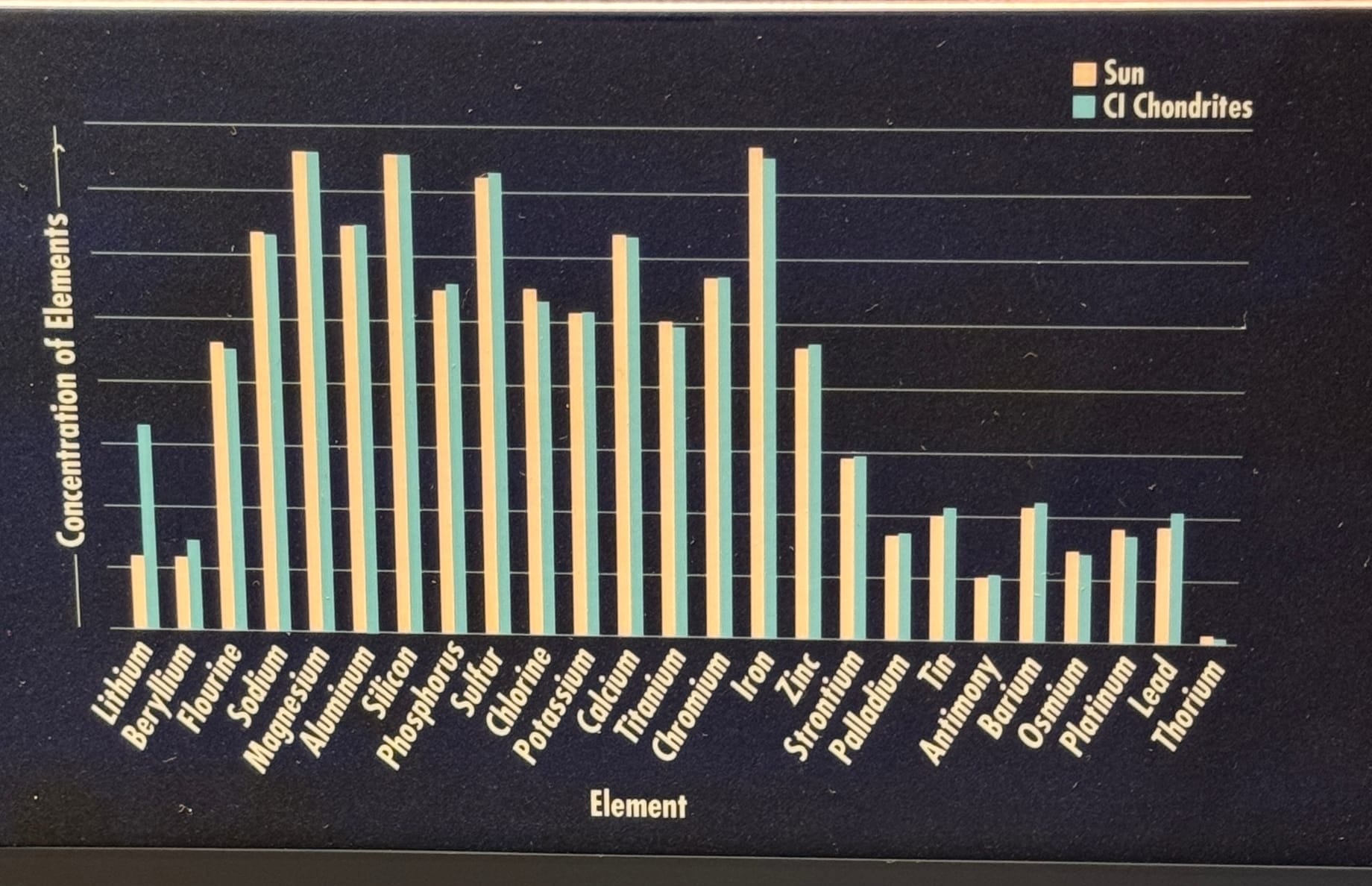
The match extends across the entire periodic table of non-volatile elements. Silicon, magnesium, iron, calcium, aluminum, and dozens of trace elements all appear in nearly identical proportions to those observed in solar spectra. For example, the ratio of magnesium to silicon in Orgueil is 1.05, while in the Sun it's 1.07—a difference of less than 2%. Even rare earth elements like neodymium and europium show remarkable agreement, with ratios matching to within a few percent.
This chemical fingerprinting becomes even more impressive when we consider refractory elements – those with high condensation temperatures that were among the first to solidify in the cooling solar nebula. Elements like calcium, aluminum, and the refractory metals show virtually perfect agreement between Orgueil and solar abundances. The correlation is so strong that CI chondrites have become the standard reference for determining the composition of the solar system as a whole.
The few differences that do exist are entirely expected and tell their own story. For example, the match does not hold for the volatile elements of hydrogen, carbon, nitrogen, oxygen, and noble gases which are not fully retained in meteorites, and lithium which is destroyed in the sun. The volatile elements are lost to space during the meteorite's formation or subsequent history. Conversely, some elements show slight enrichments due to low-temperature condensation processes that concentrated them in the solid phase.
The Orgueil meteorite contains approximately 20% water by weight, locked within clay minerals that formed through the interaction of ice and rock in the cold outer reaches of the early solar system. It also harbors significant amounts of organic compounds, including amino acids and other carbon-based molecules that are the building blocks of life. This organic content, comprising up to 5% of the meteorite's mass, has made Orgueil a subject of intense study in astrobiology research.
The Solar Nebula Connection
To understand the significance of CI chondrites, we must journey back to the solar system's infancy. About 4.6 billion years ago, our solar system existed as a vast, rotating disk of gas and dust called the solar nebula. As this disk began to cool and condense, the first solid particles formed through a process called condensation. These tiny grains of minerals and ice gradually accumulated into larger bodies called planetesimals.
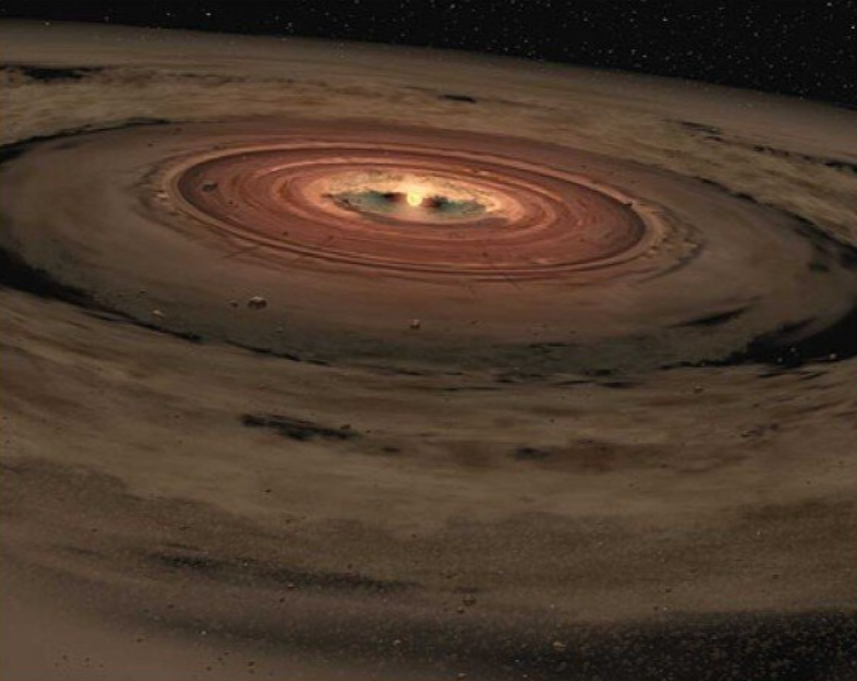
CI chondrites represent samples of these earliest planetesimals that formed in the cold, outer regions of the solar nebula where water could exist as ice. Unlike most meteorites, which have been heated, melted, or chemically altered by geological processes on their parent asteroids, CI chondrites remained largely pristine. They escaped the thermal metamorphism that affected most other meteorite types, preserving their original nebular composition like cosmic time capsules.
Scientific Legacy
The Orgueil meteorite has provided insights into the conditions and processes operating in the early solar system. With the possible exception of the sample of asteroid Bennu, returned via spacecraft to Earth in 2023 (discussed in the section that follows), its unaltered composition serves as our best proxy for understanding the bulk composition of the solar nebula and, by extension, the raw materials from which planets formed.
Studies of Orgueil have revealed details about the creation of chemical elements by nuclear fusion reactions within stars (stellar nucleosynthesis), the formation of organic compounds in space, and the distribution of water in the early solar system.
Orgueil Meets Bennu: A Cosmic Connection
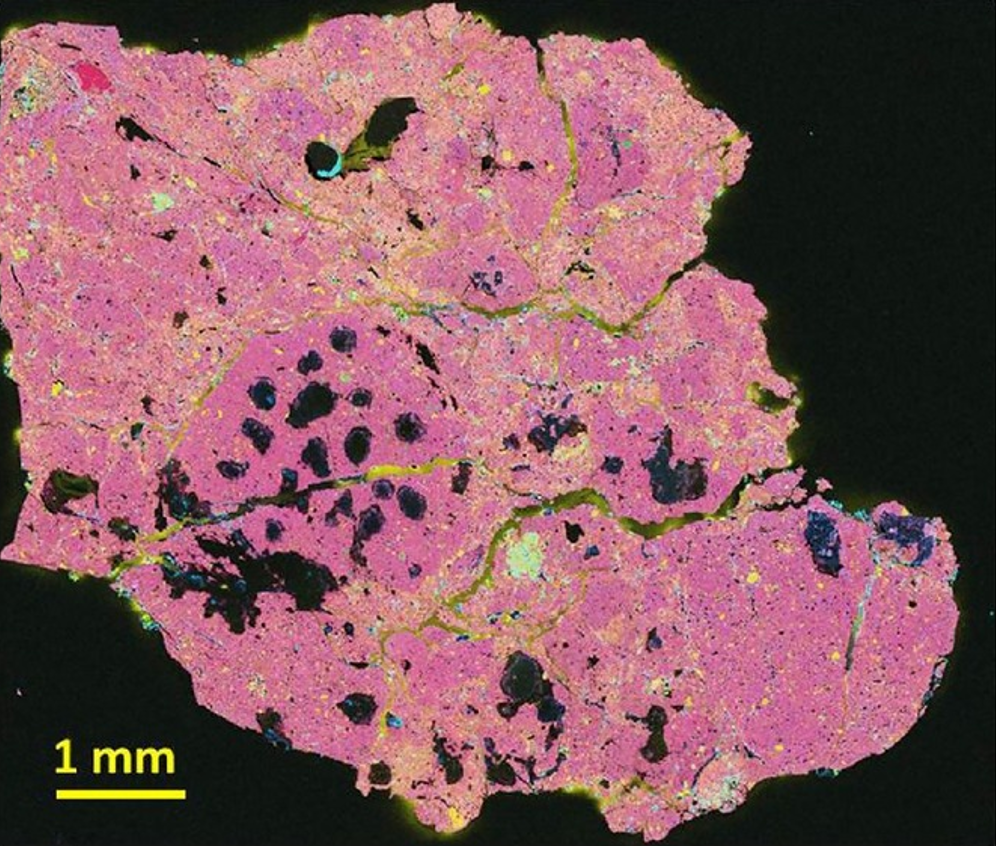
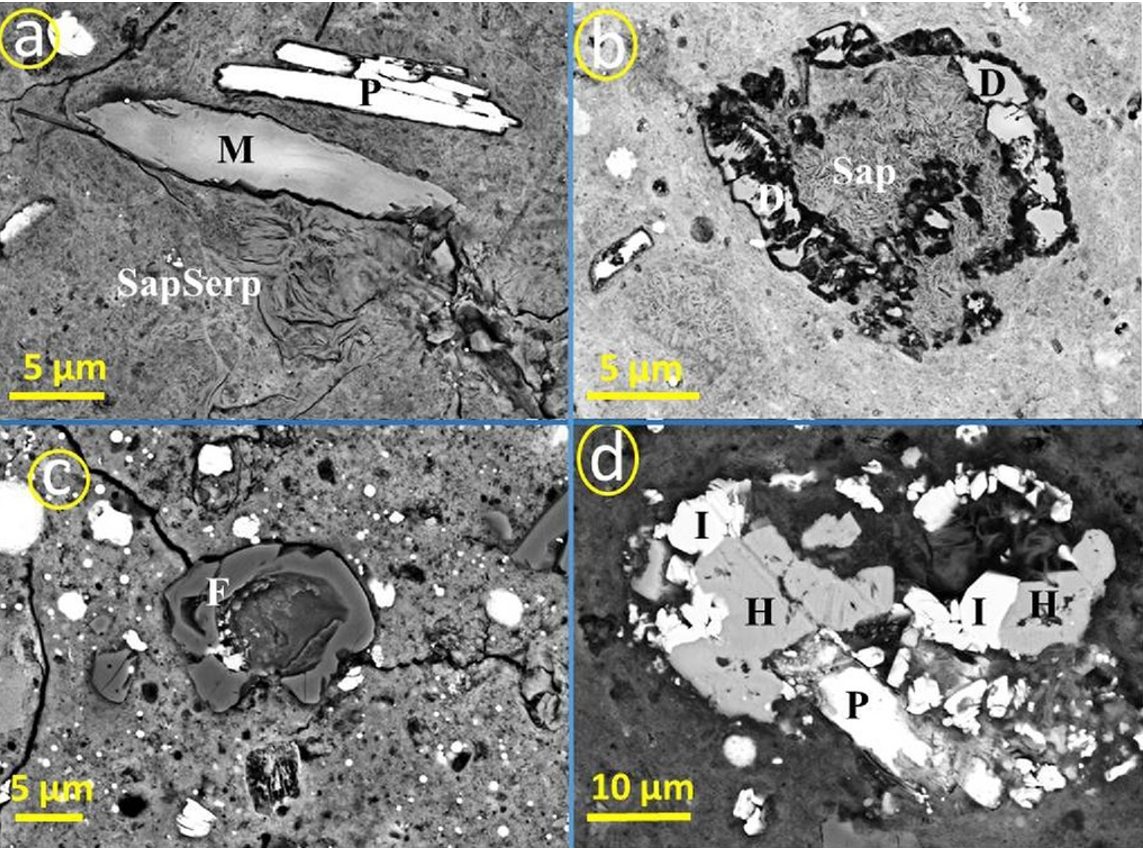
The recent return of pristine samples from asteroid Bennu by NASA's OSIRIS-REx mission in September 2023 has provided an extraordinary opportunity to compare a fresh asteroid sample with well-known and amply studied meteorite specimens like Orgueil. The similarities are striking – both Orgueil and Bennu contain the same fundamental mineral assemblage of mixed serpentine-smectite phyllosilicates (81-84% by volume), magnetite (6-10%), sulfides (4-7%), and carbonates.
Before its sample return, spectroscopic observations of Bennu from Earth suggested a correspondence with CI and CM carbonaceous chondrites, and the returned samples have confirmed this prediction. Both materials contain hydrated phyllosilicates, magnetite, organic compounds, carbonates, and trace amounts of anhydrous silicates, representing the same basic recipe of materials that formed in the cold outer regions of the early solar system.
However, the Bennu samples have revealed some intriguing differences that highlight the value of studying fresh, uncontaminated asteroid material. Bennu samples are notably richer in volatile compounds than most meteorites, containing more carbon, nitrogen, and ammonia than samples from asteroid Ryugu and typical meteorite falls. Like Orgueil, the Bennu samples contain water, amino acids, and nucleobases—key ingredients for life as we know it.
Comparing the 160-year-old Orgueil meteorite and the recently returned Bennu samples shows the remarkable consistency of carbonaceous materials across our solar system while highlighting how direct sample return missions can preserve volatile compounds that might be lost during a meteorite's fiery passage through Earth's atmosphere. Together, these samples provide complementary windows into the chemistry and conditions of the early solar system.
For mineral collectors and enthusiasts, meteorites like Orgueil remind us that some of the most unassuming specimens can hold important secrets. This dark, fragile rock that streaked across the sky and landed in France in 1864 provides a remarkably clear window into the cosmic processes that shaped our solar system.